Reading
This week I finished The Snow Leopard by Peter Matthiessen. It felt neat to approximately match the dates of his expedition with the time of year I’m in. A few quotes I transcribed:
And then, almost everywhere, a clear and subtle illumination that lent magnificence to life and peace to death was overwhelmed in the hard glare of technology. Yet that light is always present, like the stars of noon. Man must perceive it if he is to transcend his fear of meaningless, for no amount of “progress” can take its place. We have outsmarted ourselves, like greedy monkeys, and now we are full of dread. (p 59)
This is closer to my own idea of freedom, the possibility and prospect of “free life,” traveling light, without clinging or despising, in calm acceptance of everything that comes; free because without defences, free not in an adolescent way, with no restraints, but in the sense of the Tibetan Buddhist’s “crazy wisdom,” of Camus’s “leap into the absurd” that occurs within a life of limitations. The absurdity of a life that may well end before one understands it does not relieve one of the duty (to that self which is inseparable from others) to live it through as bravely and as generously as possible. (p 107)
I long to let go, drift free of things, to accumulate less, depend on less, to move more simply. Therefore I felt out of sorts after having bought that blanket - another thing, another burden to the spirit. (p 121)
This is the last Buddhist village we shall see, and even here, the faith is dying out; the prayer walls are ancient, and no one has added a new stone in many years. For this is the Kali Yuga, the Dark Age, when all the great faiths of mankind are on the wane. (p 300).
Googling Matthiessen out of curiosity to know a little more from his biography, there is this quote of his excerpted from The Paris Review, on Wikipedia:
Like anything that one makes well with one's own hands, writing good nonfiction prose can be profoundly satisfying. Yet after a day of arranging my research, my set of facts, I feel stale and drained, whereas I am energized by fiction. Deep in a novel, one scarcely knows what may surface next, let alone where it comes from. In abandoning oneself to the free creation of something never beheld on earth, one feels almost delirious with a strange joy.
I like how opposite this is to my own feeling about writing non-fiction; and he’s all the more admirable a writer for having applied himself to both genres and therefore being able to express the difference he feels in so doing. But I also like how he expresses the feeling… the “strange joy”!
Watching
My brother recommended this documentary, and I did a double-take when I noticed it was seven hours long. But those seven hours pass agreeably well, and Noah Caldwell-Gervais’s narration is extremely thoughtful. The video begins:
The way people talk about history is usually with a line; a line of argument drawn across time and data, a line of progression from monarch to monarch - or administration to administration -, a line of connection, to tie the importance of something that seems minor to a major world event. One of the least common lines to draw when talking about history is a physical one, drawn across the landscape itself, taking whatever crosses its path into account.
Thus does Caldwell-Gervais take the viewer along the Lincoln Highway, melding history and observation from the dash of 1978 Ford Thunderbird.
I like his thoughts on nostalgia (about 3:31:00), the forgotten omnipresence of mud in the past (about 4:03:00), how he talks about abandoned buildings while passing by the Packard plant in Detroit (about 4:27:00), and his explanation of the difference between earnestness and artistry as he walks through a wax figure museum (around 5:07:00).
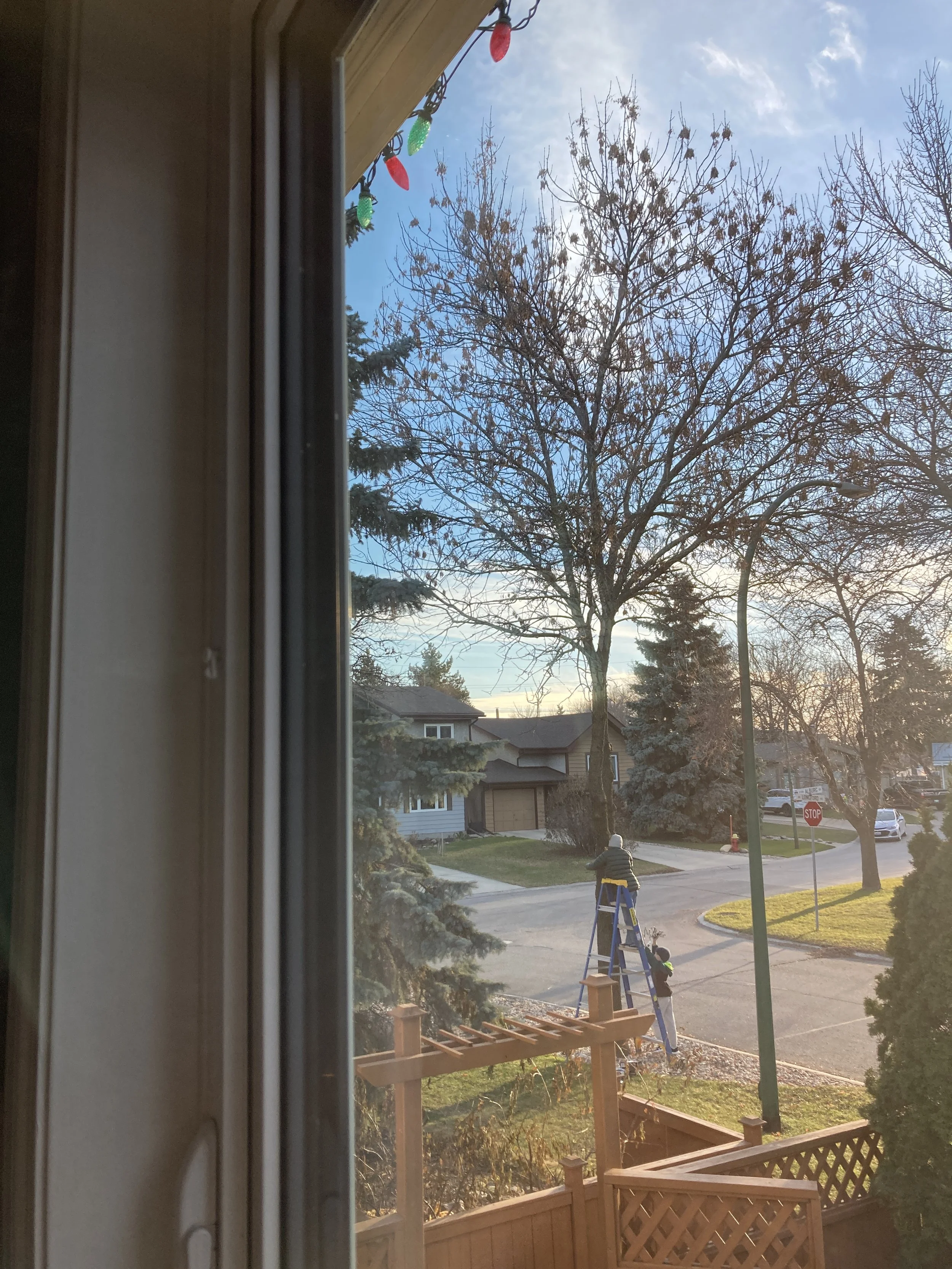
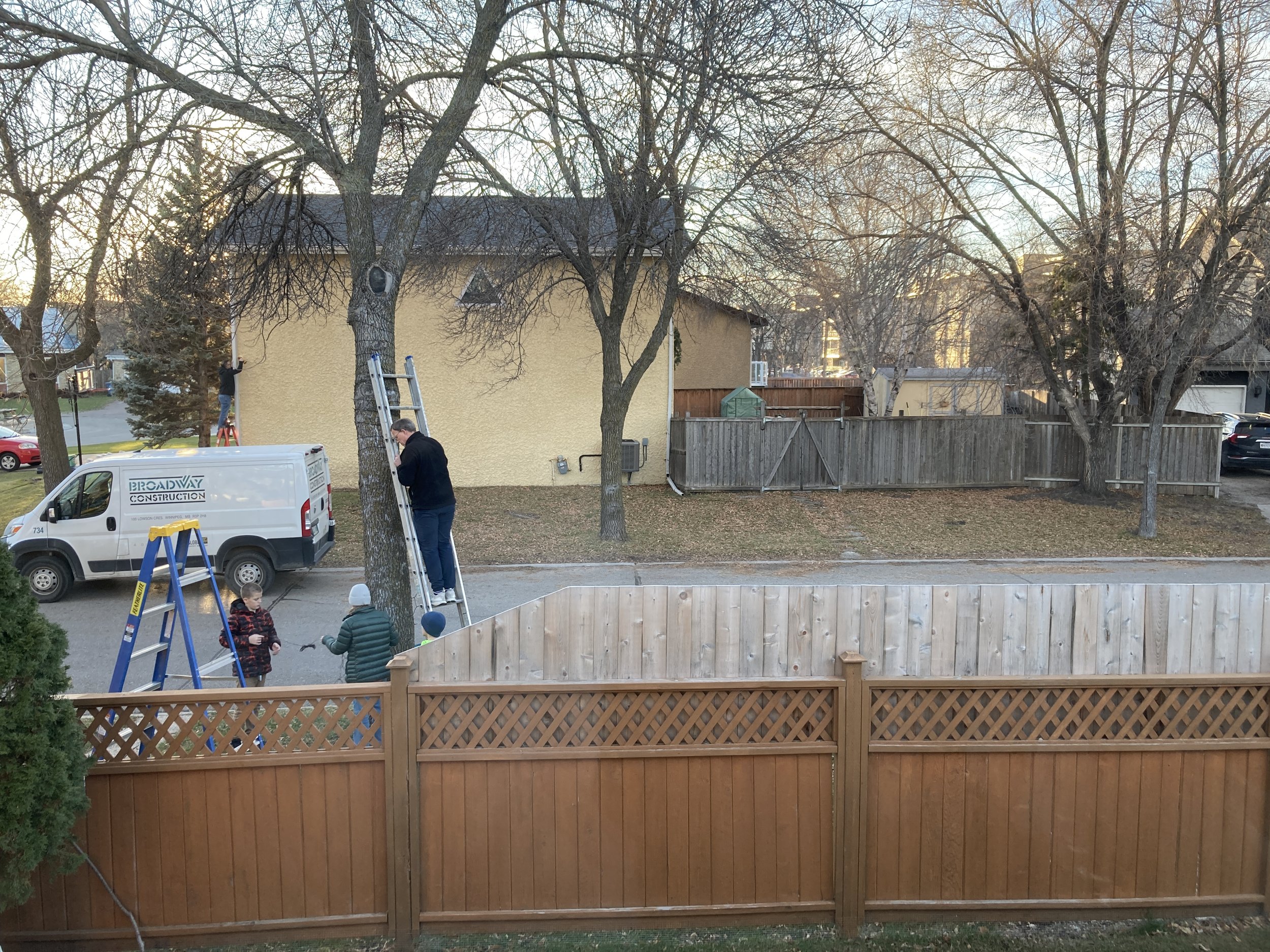
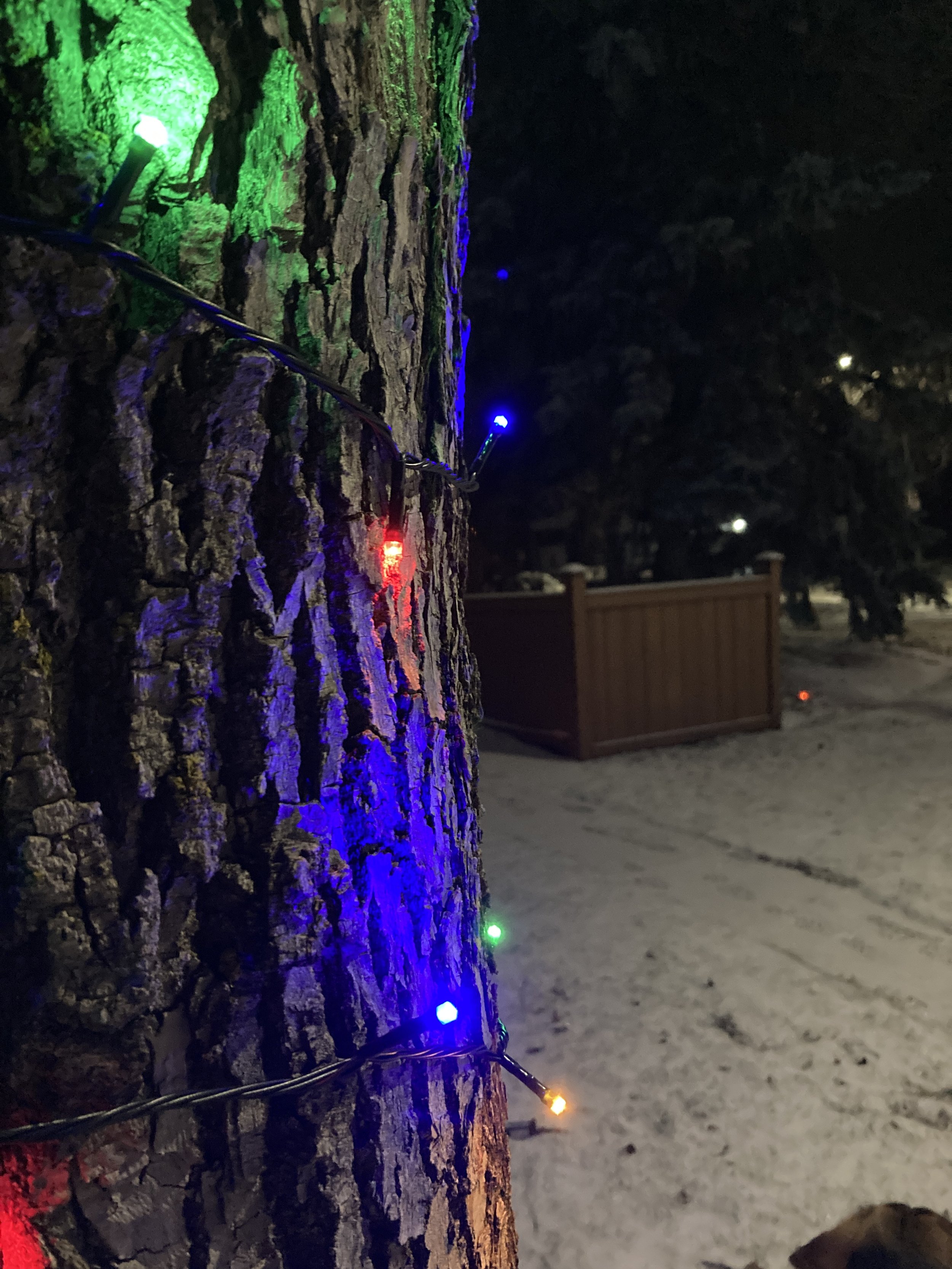
The lights are up!
I used to have firm opinions about how things should look. It was a pastime in my childhood to mentally criticize decor and imagine how I would do a thing in my hypothetical future house. But time smooths these hard edges, and I realize that my perfectionist ideas are hollow compared to the happy family spirit of group-effort decorations. Last week I could look out the kitchen window at the tree-trunks getting outfitted and feel happy knowing the effort was made with a sense of agency and belonging. The kids are proud of our house!
Eating
It was Christian’s birthday last week and he requested a family favourite: Ricardo’s “Penne with Italian Sausage”… I’ve made this recipe so often that I’d assumed I’d already mentioned it here, but a quick search gave no such result. To rectify that, the official mention now!
Over time we’ve made some modifications that have improved the recipe by making it easier. First, I rarely use freshly peeled tomatoes. We like eating this when tomatoes from the garden are a memory under three feet of snow, just as much as mid summer, when tomatoes are still green, so in either case, we use a can of San Marzano, bought in packs of six from Costco and roughly chopped before being added to the pan.
Also, in lieu of hot sausages, we use mild, and I don’t bother to slice them for cooking… Instead I remove the casing and add them to the pan after the onion and garlic have softened, and break them up as they brown. And if I could add a third comment… there’s no hurry to “serve immediately”. It’s ok if this sauce simmers a bit as you get around to dressing a salad, or slicing a baguette, or you know… waiting for the pasta to cook.
Postcard
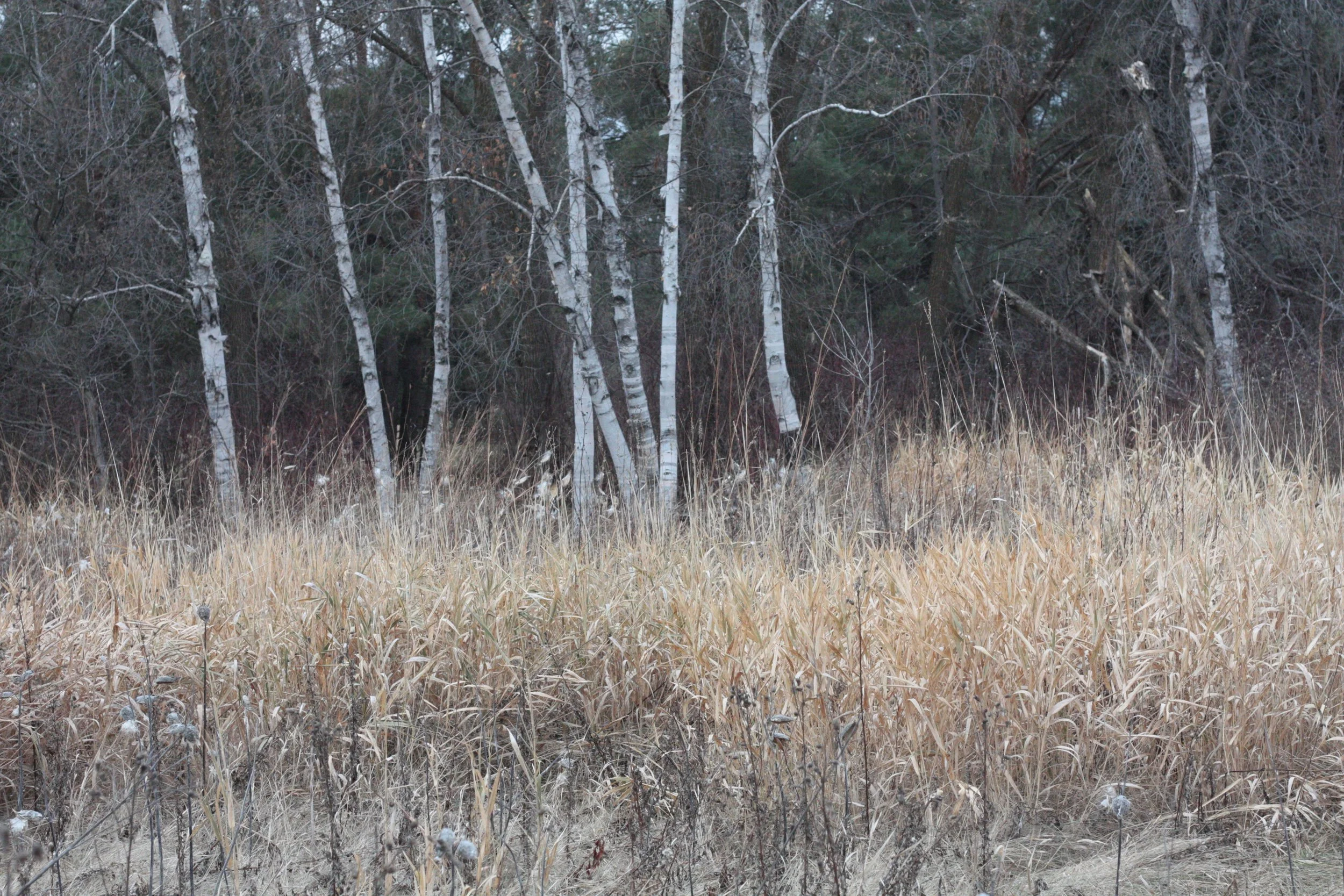
The skies were heavy with potential snow this week, and so the landscape looks especially dreary. One thing though is the bleached grass… it rustles nicely in the wind…
Happy Sunday!