Intro
It’s cold here right now… colour is found in gifted bouquets…
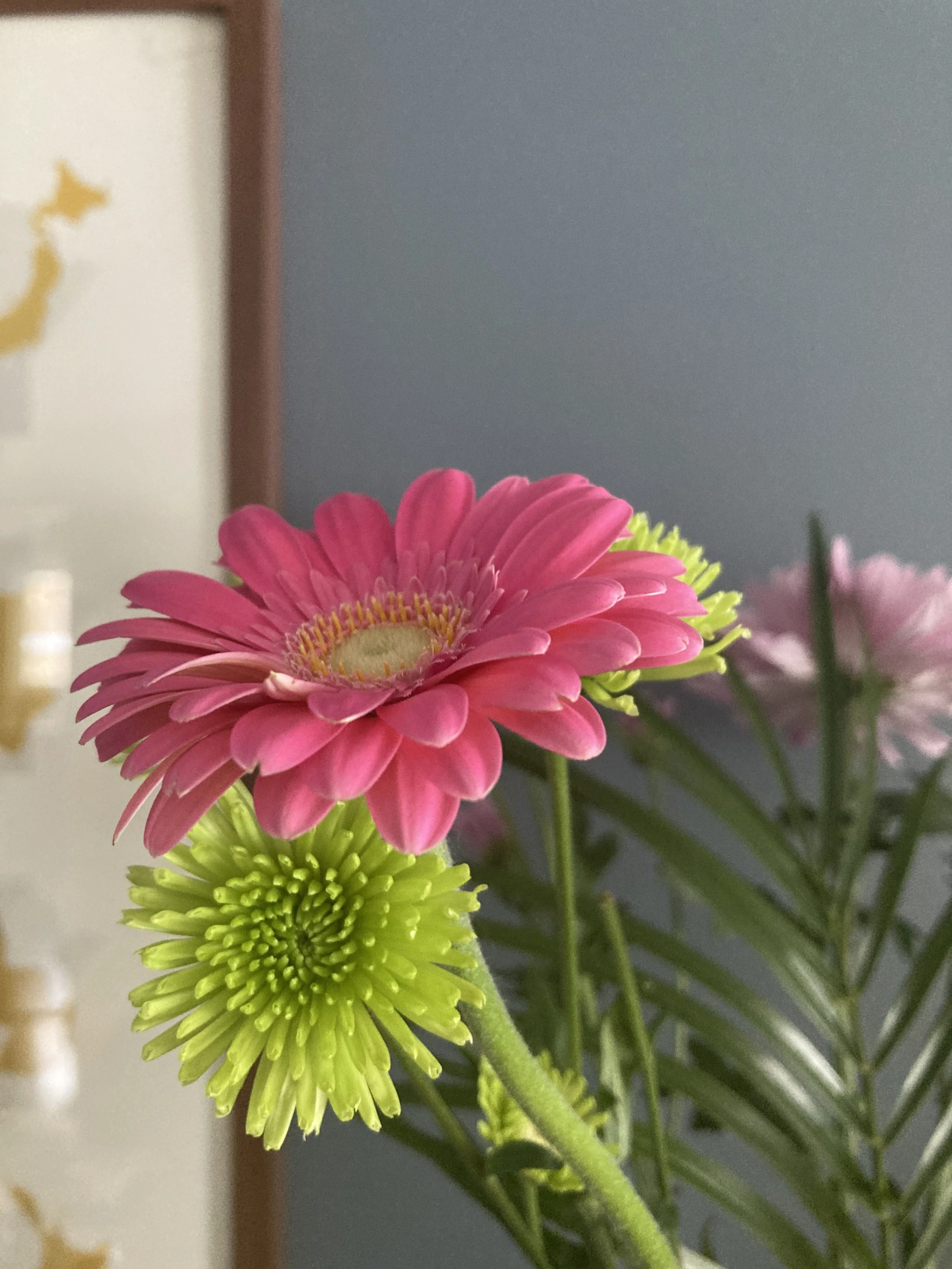
and sunsets observed from indoors…
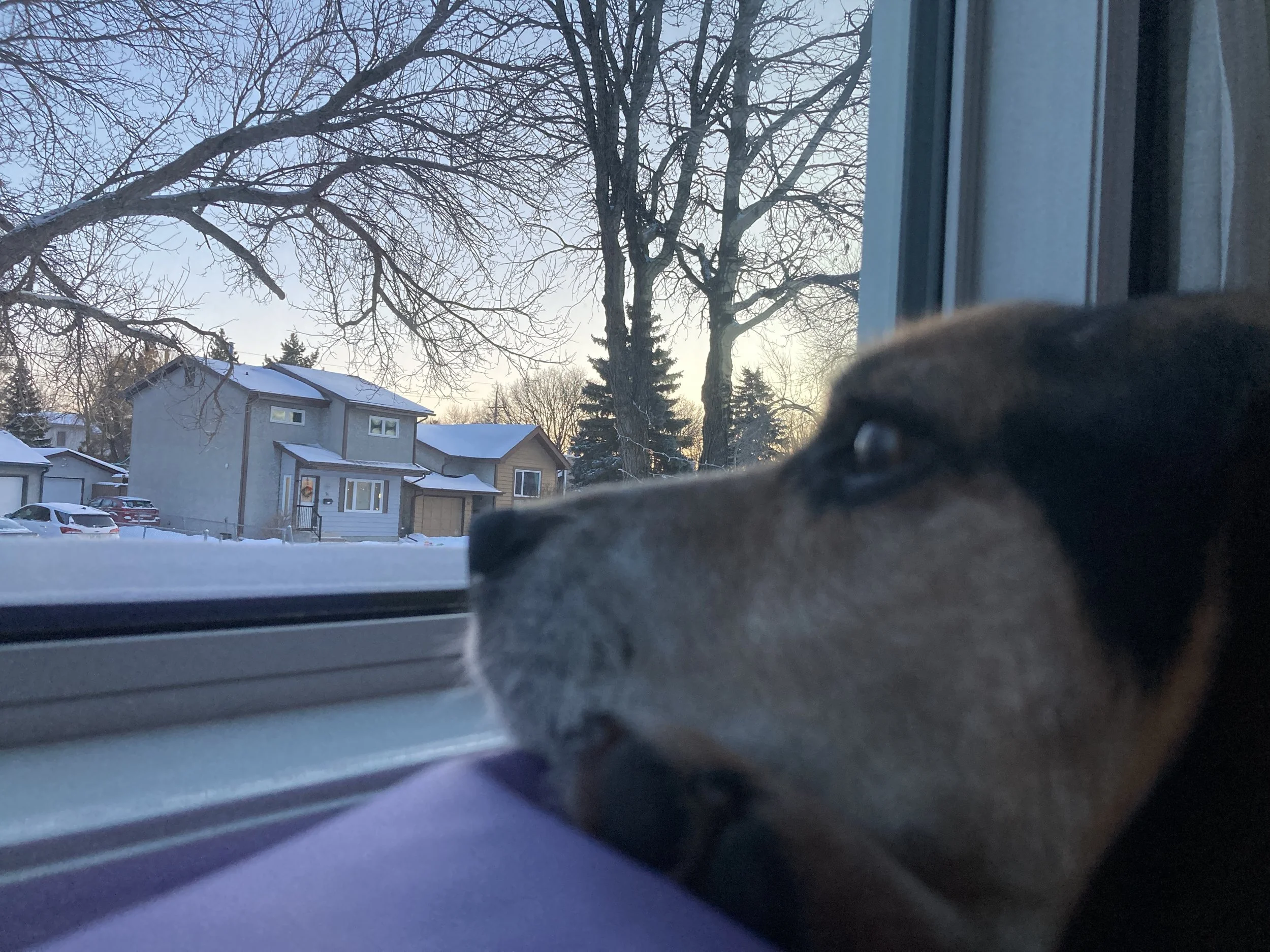
This week, an overview of a hobby-project, quotes I liked from podcasts I heard lately, and what I’ve baked and cooked in the kitchen.
Genealogy as a puzzle
I’m not that interested in my own genealogy, so much as I am in other peoples. Delving into ancestry reveals first, that it exists… that a person is descended from a long line of individuals within families; and second, little else. The satisfaction comes from filling in a table, which, in the scientific language of academic research, is called “family reconstitution”. It’s a method of filling-in information about a family in an organized way. It has at the top the couple’s name, their parents’ names, their marriage date, and births and deaths; and then it lists their children with all the dates of their birth and death and marriage and who they married.
This past little while, I’ve been gathering information from registries online, to fill in a table for my mother-in-law’s great-grandparents. It is possible to do so because her great-grandparents lived in Quebec, where Catholic parishes kept excellent records. It is also possible because the “Bibliothèque et Archives nationales du Québec” has made these registries available online. (See St. Zéphirin-de-Courval, for example. A map of parishes in the province of Quebec can be found here.)
Filling in the table for her great-grandfather’s family looks like this:
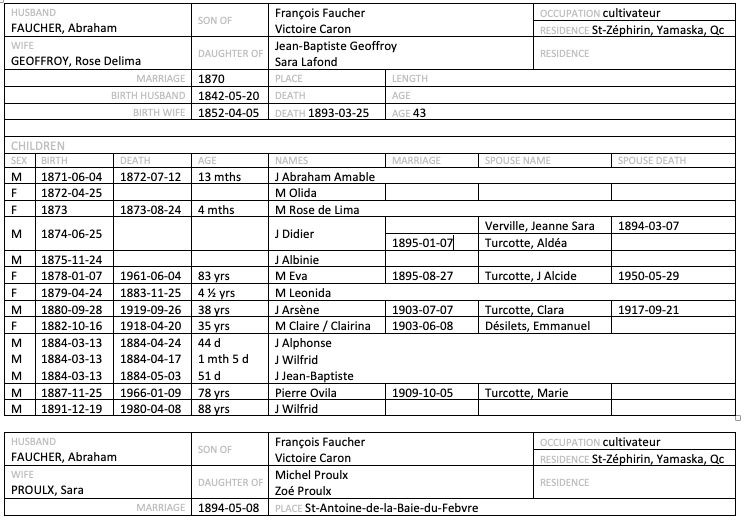
A table allows me to summarize facts like this: Abraham Faucher and Rose Delima Geoffroy married in 1870 and in their 23 years of marriage, they had 14 children, among whom were a set of short-lived triplet boys. Three of their four surviving sons came to Manitoba: Didier, Arsène and Wilfrid. Didier brought his family. Arsène, recently-widowed, brought his children. Wilfrid was a bachelor. The recently-widowed Arsène met with ill-fate. His arrival in St. Boniface coincided with the outbreak of the Spanish Flu, and he, along with 60,000 other Canadians, became one of its victims. His son, Arthur - Rose-Marie’s father - was 4 years old when his mother (Arthur’s wife) died. He was 6 when, two years later, almost to the day, he lost his dad.
Listening
I find narcissism interesting and appreciated this observation in passing by Diarmaid Macculloch on Conversations with Tyler:
[Thomas] Cranmer survived, remember. He survived by loyalty to King Henry VIII, and I think he genuinely loved Henry VIII, and so served him with a good conscience.
Trouble about that is that a man like Henry VIII is a narcissist. […] The thing about narcissists is that they make good people do bad things. Henry VIII was talented at making good people, such as Cranmer and, I would say, Thomas Cromwell, do bad things.
I have a theory that persons with a narcissistic disorder build up an image of themselves that they constantly maintain and demand to be maintained. So, indirectly, I feel like Kevin Townley’s comment (here) on the subject of personal brand is indirectly related to narcissism. He says “[…] the attempt to codify and maintain a branded identity is an act of violence. It requires a kind of aggressiveness that is detrimental to you, and I would venture to say others as well.”
But I also liked his descriptions of art and creativity: “Art is a liberation from being a self. You can do anything.” And:
The writer Robert Olin Butler talks about how creativity is hard. It’s really hard to do. And quite often, we avoid doing it because to delve down into the unconscious realm where the creative impulse seems to simmer is literally hell for a lot of people. For most people, it’s hellish. Even if you’re trying to write a joke, it’s torture.
So the idea is like, if you’re looking at a masterpiece, then you are engaging with a work made by somebody who is doing this all the time. […] you are looking at something that went through this kind of rigorous practice, it’s a practice of not knowing, of transforming negativity into something colourful, something with shape, something with tone, somebody who is able to handle the heat, the white hot heat of the creative process, and bend it […] into some other medium.
Approving
Any new article that makes the case for blogging is one I’ll read! This one from Joan Westenberg.
Eating
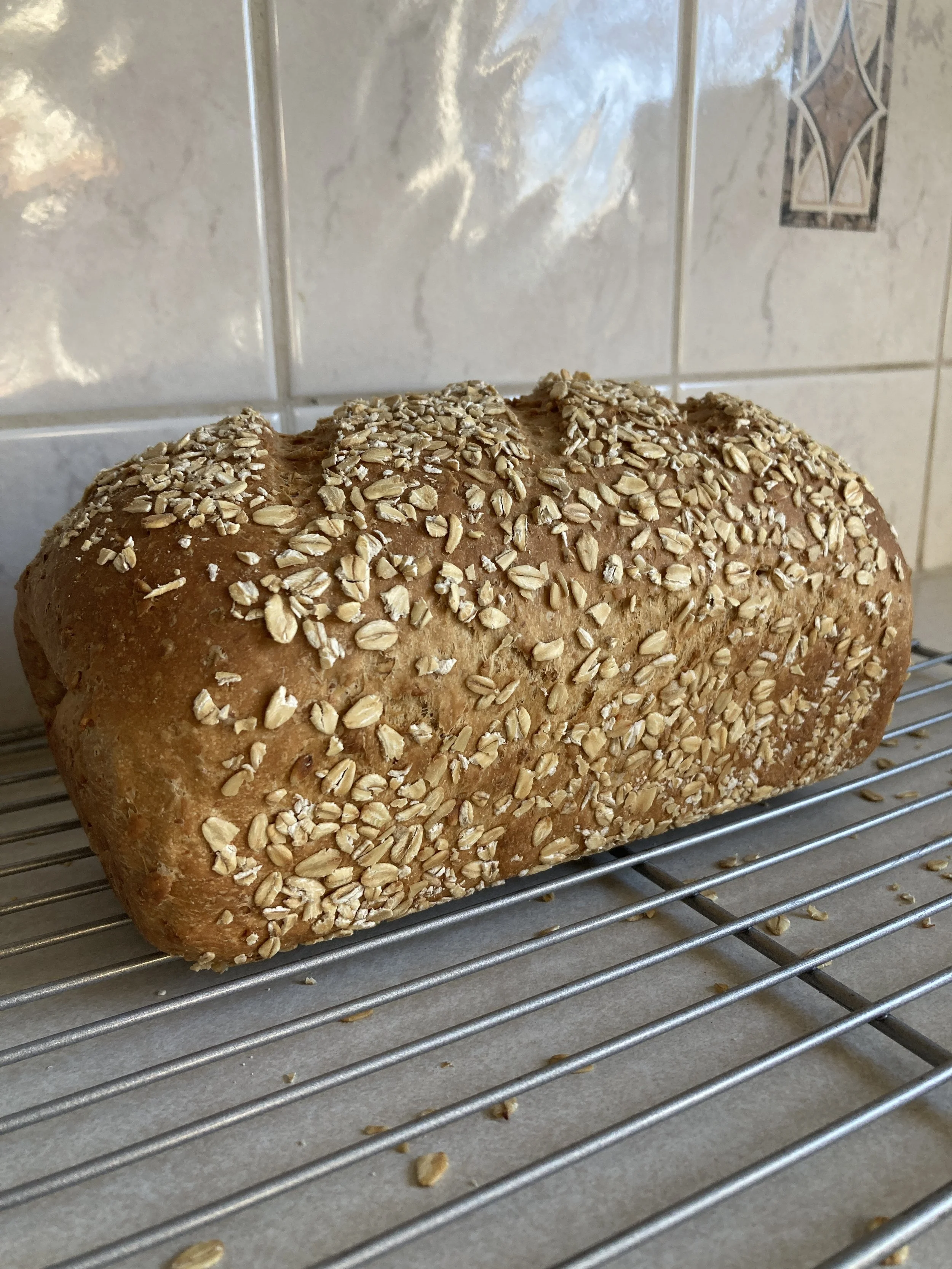
The foray into bread-making continues! This week, a lovely brown “Oat and Molasses” loaf.
Winter is a wonderful time for ragu-type recipes… A slow-simmering meat sauce served over pasta felt like the perfect way to welcome Christian home after his class’s 3-day camping trip. Molly Baz’s recipe in Cook This Book, titled “Paccheri with Pork and Lentil Ragù” (see an iteration on Instagram) uses anchovies for depth of flavour and red lentils for creaminess. I think I preferred it over other group-pork-based ragù recipes that simmer with milk and vegetables. It’s proof, I would argue, that recipe collecting is a good thing, because you get to discover variations on a theme!
Postcard
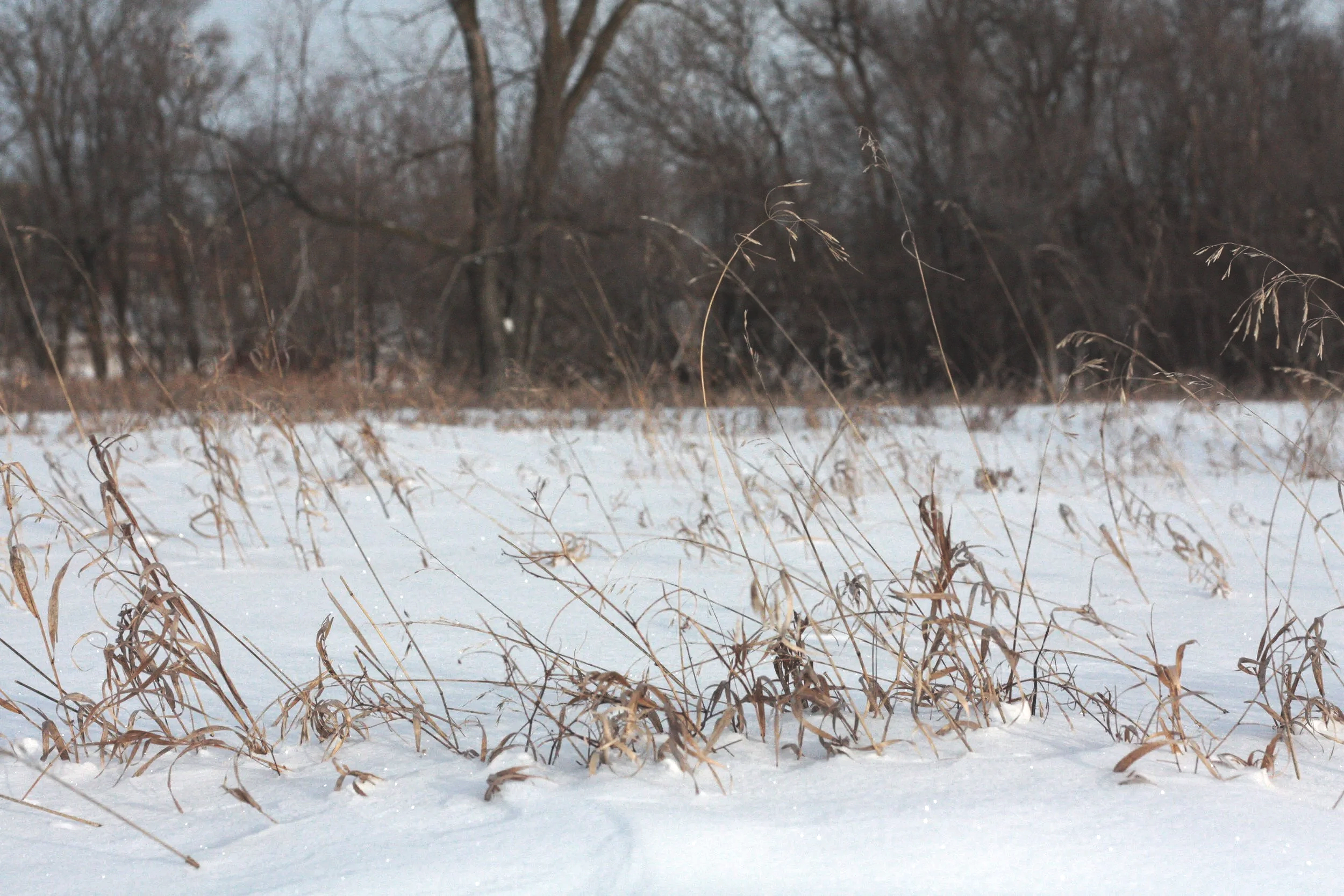
On cold days, when temperatures don’t invite much more than a glance at the landscape as you trudge through the snow, it’s the golden colour of the grass that draws my eye.
Happy Sunday!