Perfectionism
So I was listening to this podcast (The Good Ship Illustration) because it featured an interview with an artist I follow on Youtube, Sandi Hester. In the course of the interview, Hester put her finger on why I enjoy watching her Youtube videos so much… She says:
You just get to be a fly on the wall over the years that I’ve been a professional artist, just working through [negative self-talk] and working on muscles to think rightly about my creative process. It’s not as draining anymore. I don’t feel like every single piece I create has to be a masterpiece.
I think negative self-talk and perfectionism are two sides to a coin, but each one reminds me of people who’ve discussed these two aspects on two different podcasts. The first is Stephen Dubner on Design Matters back in September (I mentioned it here) when he was reflecting on having worked with Angela Duckworth:
The very basic thing that I came away with is that […] I know the brain is a muscle. I know that. But I never treat it like a muscle. I treat it more like a trampoline, that things will bounce off it and send you into some other direction, right? Someone will say something or do something. You will have an involuntary emotional response. And all of a sudden, you say or do something that is far from the thing that you really wish you had said or done.
But in fact, your mind or brain is a muscle and you can control it. And I can say, you know what? I recognize what’s happening right now. I just hit a bad shot. I just gave a bad talk. I just embarrassed myself. I was just unkind to someone. And you can say, okay, that’s done. What am I going to do now? I’m going to process that for a minute, see why I did it, try to figure out how to not do that very thing again. And then I’m going to direct my mind, my brain, back to what I want to be working on. […]
And I think that being a little bit more intentional with your brain as a muscle is a huge, easy win for just about all of us, whether it’s a cognitive thing we’re doing, physical thing, whatever. But you know, the fact that it took me 50-some years to learn that, tells me, at least for me, it’s pretty hard.
The second is an interview on the Longform podcast from 2018 with another artist, Liana Finck. In it, she describes having evolved her drawing style, from slow and careful, to fast. The podcast host, Evan Ratliff, asks why. She answers:
[…] I decided that I didn’t want to redo things a million times anymore. It’s just, it’s a sin, I think. And so I started drawing very fast. So what people think of as my style is me drawing really fast, and it’s a way to combat the perfectionism.
Ratliff asks why she calls it a sin. Finck says that a preoccupation with perfectionism is like circular thinking…
It’s this very, very minor thing that’s not even like a real bad thing that’s just getting in the way of you being a person. And it’s kind of a way of incapacitating yourself so that you don’t contribute to the world at all. And I think it’s a way certain people are kept down. And if you indulge in it, you’re collaborating with the people who want to keep you down or the forces that want to keep you down.
I find these thoughts so instructive.
Drawing
I find drawing from memory a challenge. It can lead me to think I have a terrible memory, and to give up (still at the stage of what Martin Salisbury calls “the inevitably demoralizing early results” in Drawing for Illustration). But Andrew Tan’s recent Youtube captures an encouraging tip.
Holiday card tip
I 100% agree with Caroline Chambers advice, having adopted the practice of asking a friend to take our picture for many of our Christmas cards in the past.
Lamp posts (or one thing leads to another)
I liked this video spotted a few weeks ago shared online… Then Dense Discovery shared a link to Thomas Moes’ project “52 Weeks of Obsessions” which lead to “Why did we stop building places we want to live in?” which summarizes an article by Nathan J. Robinson.
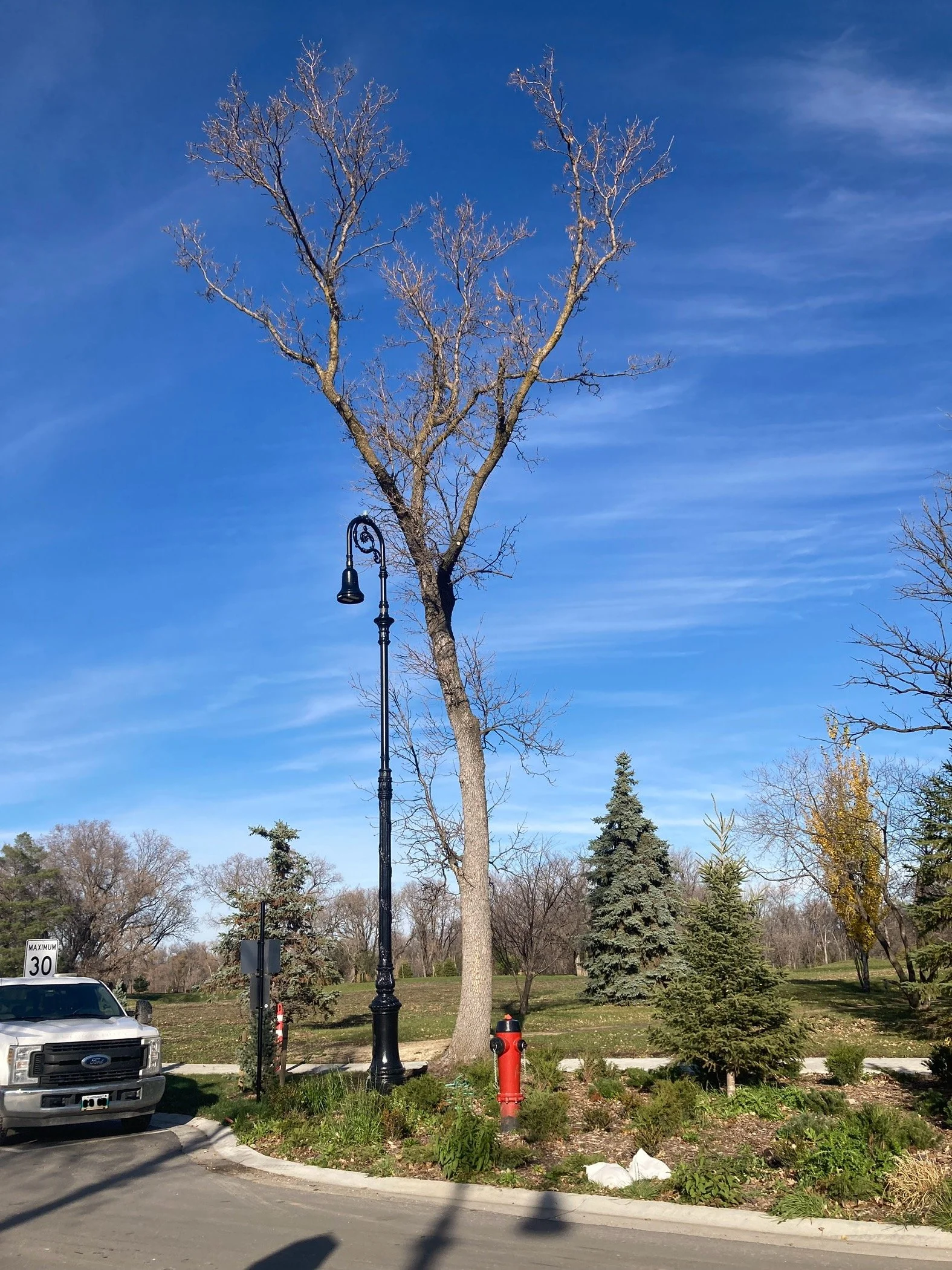
I think that’s why I’m especially happy to notice that the improvements being made on the University of Manitoba campus are looking pretty. Look at these lamp-posts!
Eating
This week I made “Roasted Salmon with Lentils” from Dorie Greenspan’s Around my French Table, satisfying a craving for the “hominess” of this meal, which is simple and tasty. The recipe can be found here.
Postcards
Winnipeg has been getting lots of rain this fall… I’m happy for the trees. This autumnal humidity brings no mosquitoes with it, only saturated scenes and maybe more mushrooms.
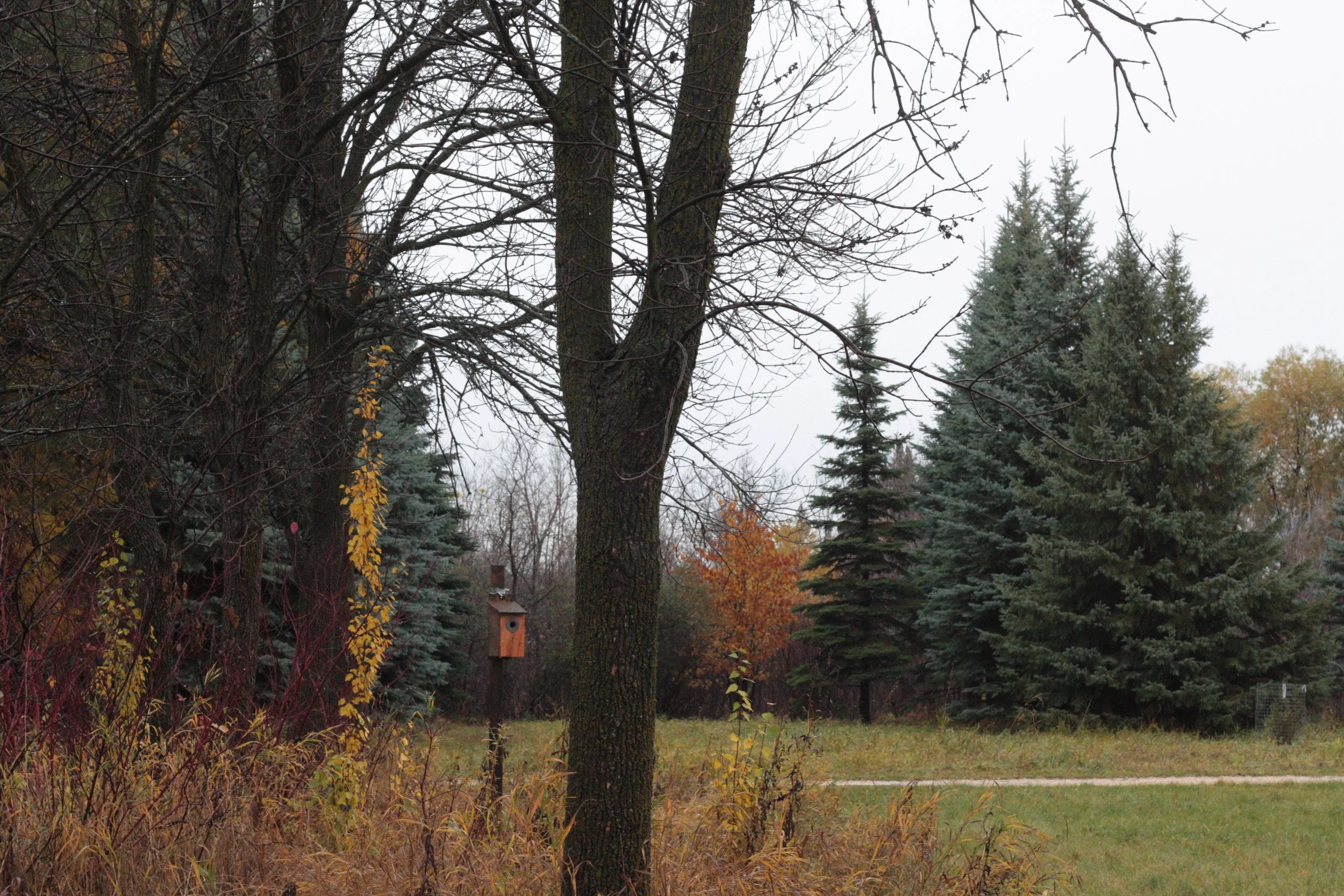
And although I should restrain myself and stick to just one postcard, I can’t help but include these willow trees… Their slender silvery leaves almost make them look soft from a distance. But their trunks? Their strangely wavy branches? It looks like they caught cotton candy clouds in their net.

Happy Sunday!


