A Week on Sunday (no. 41)

Reading

Contrast can serve to highlight appreciation for something and this was the case when I was reading Bonnie Tsui’s book On Muscle, and also reading a short story collection by Tatyana Tolstaya. In “Serafin” Tolstaya writes from the character’s point of view of disdain for humanity: “Fat is nauseating muck. The whole world of flesh - is fat. Fatty, sticky children, fatty old ladies, fatty redheaded Magda.” (p 48) But Tsui, focusing on muscle, delves into its various intricacies with an infectious appreciation. Here is a collection of quotes from the book that I liked:

Being a writer as well as a lifelong athlete, I can’t help but notice how language is telling. Muscle means so much more than the physical thing itself. We’re told we need different metaphorical muscles for everything: to study, to socialize, to compete, to be compassionate. And we’ve got to exercise those muscles - putting them to use, involving them in a regular practice - for them to work properly and dependably. (p 4)

The way you build muscle is by breaking yourself down. Muscle fibres sustain damage through strain and stress, then repair themselves by activating special stem cells that fuse to the finer to increase size and mass. You get stronger by surviving each series of little breakdowns, allowing for regeneration, rejuvenation, regrowth. (p 5)

In big ways and small, life is a movement-based relationship with everything around us. Muscles make my fingers fly across these keys, knit my brow in concentration, correct my seated posture, shift my gaze to the window, square my shoulders, tap out the rest of this sentence. So much has become virtual, and yet my body still very physically influences my thoughts even as it conveys them to you. Your own muscles allow your eyes to take this in, to blink thoughtfully and tuck your chin in hand and tilt your head in consideration. We haven’t said a word, but our bodies are talking to each other - even through the page (…). (p 12)

Exerting our influence on the world: That’s the modern-day definition of a flex. (p 13)

Maybe that’s what makes some people uneasy: muscle as potential. And sometimes we don’t know our own power, until, finally, we are given the opportunity to discover it. (p 27)

For all its nobility, the pursuit of mightiness remains grounded in the body and all of its appetites. But the strength community’s insatiable curiosity about the human body is something I find surprisingly moving. To know one’s own strength: I’ve come to understand the meaning of these words not as a binary statement, an “I do” or an “I don’t,” but as an ongoing process of discovery. Muscles matter - they allow us, in an observable way, to see what we can do. Though you may not initially know what you’re capable of, you have vast reservoirs of potential, waiting to be tapped. For just the right moment to be revealed. (p 44)

(…) there is a process in place for human donor dissection, and with that process comes a reverence that helps you to understand the privilege of getting to look. Head, hands, and feet are wrapped before dissection. And at the end of every academic year, a special memorial is held (…). (p 52)

Interoception is your body’s ability to sense itself from inside. (p 142)

All these quotes show a respect for the human body that the character in Serafin does not want to see and both writers make their point with the deft use of language. Words can be so strong…

Cards

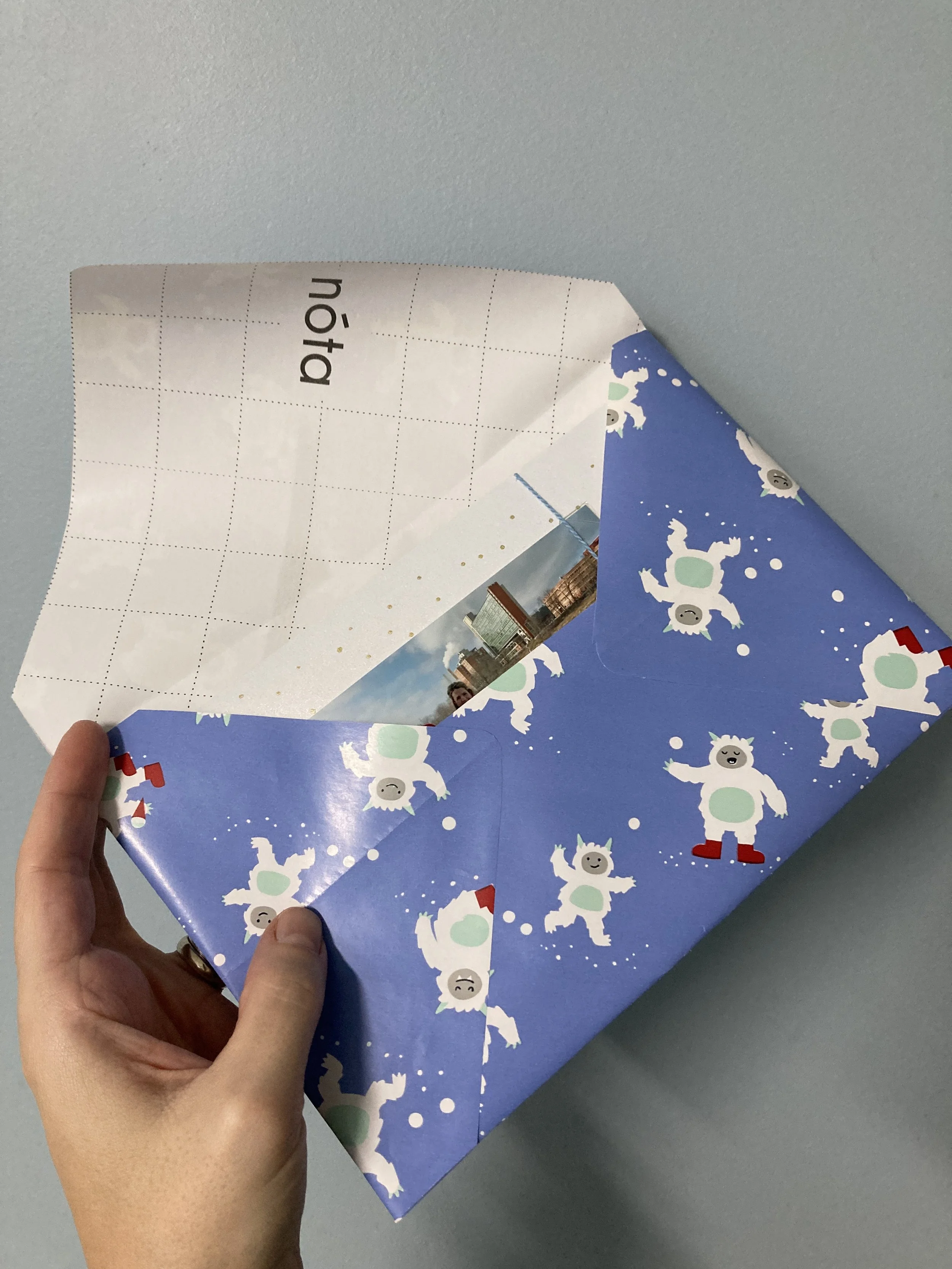
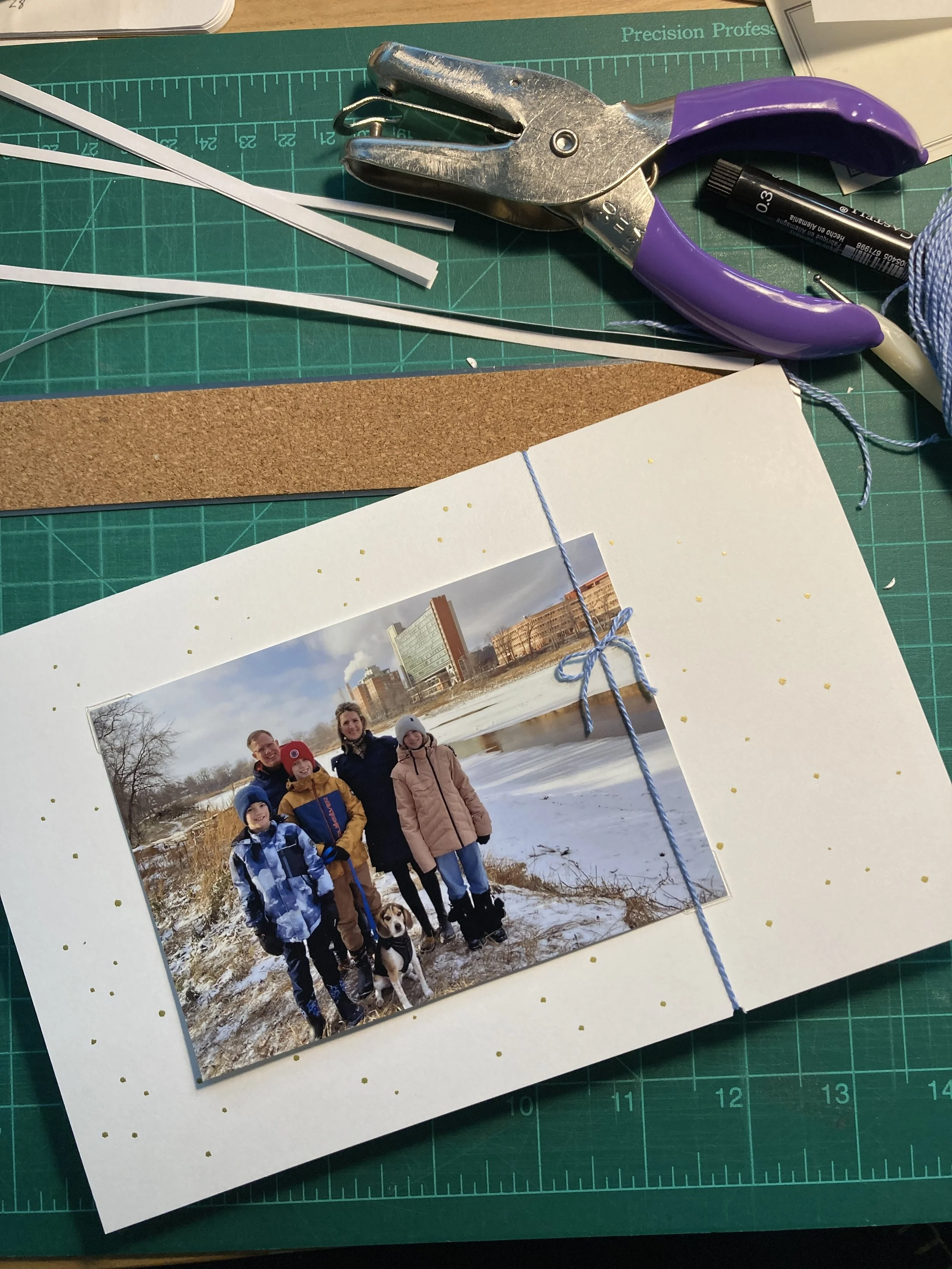
Cards are divisive. The postal service has only to go on strike for a debate to flare up dramatically in the news. Cards are important. Cards don’t matter… Cards take time. My grandma could dash off a stack of 80. Or was it 100? But cards are like everything else: cookies and food and Christmas trees…  home-made or store-bought or real or fake. There are hundreds of permutations for celebrating Christmas and just as many ways of dispersing one’s energy for this demanding season. And so with all that in mind, juggling our own list of pros and cons, I made this year’s Christmas cards by hand and cut the envelopes from old wrapping paper. (This envelope tutorial was perfect!) At a time when AI is spinning reality to ever greater heights of improbability, a return to basics felt reassuring and solid. (I think this is what B. Dylan Hollis is getting at in his appreciation of vintage cards here on Instagram.) 
Baking

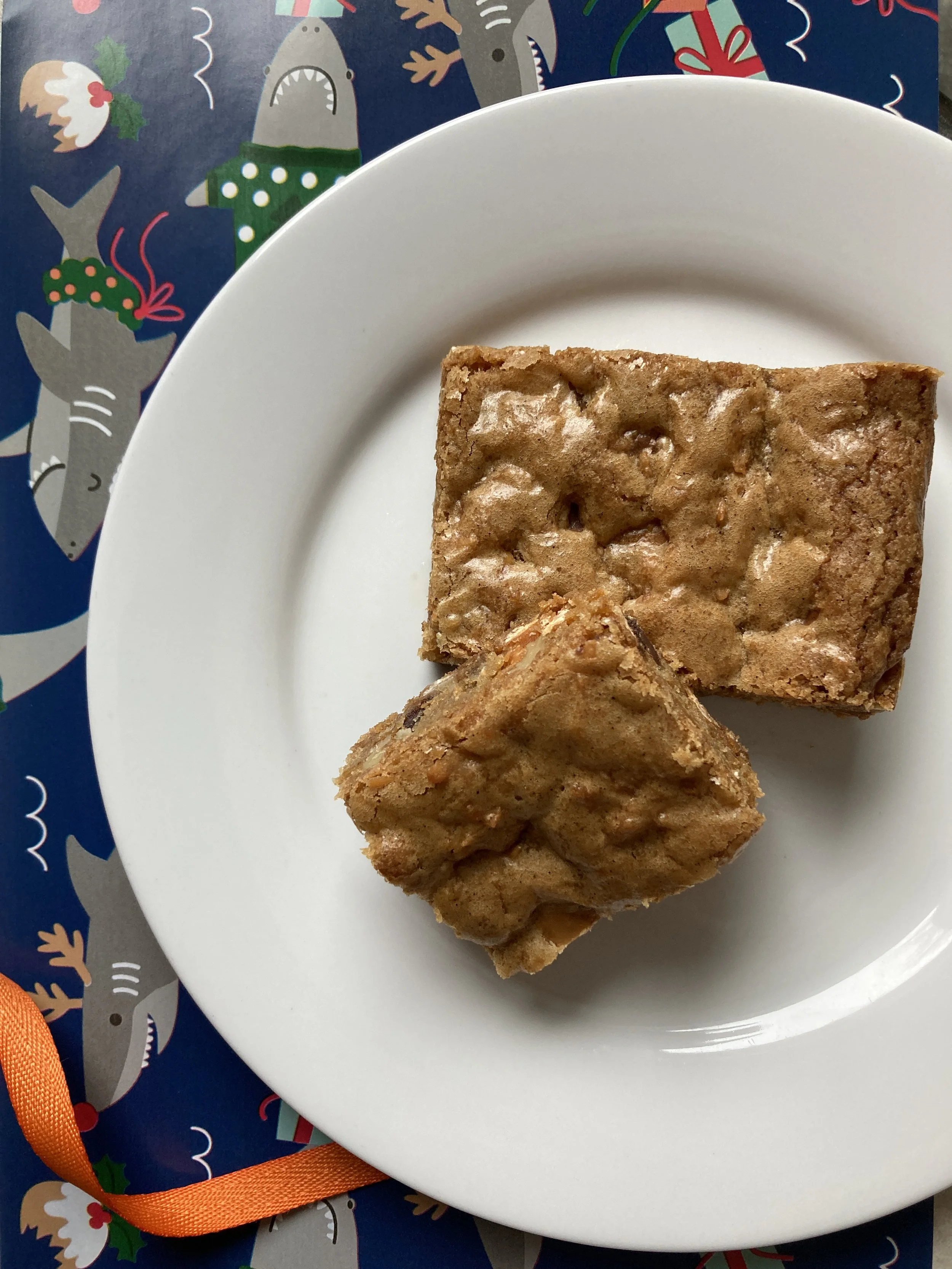
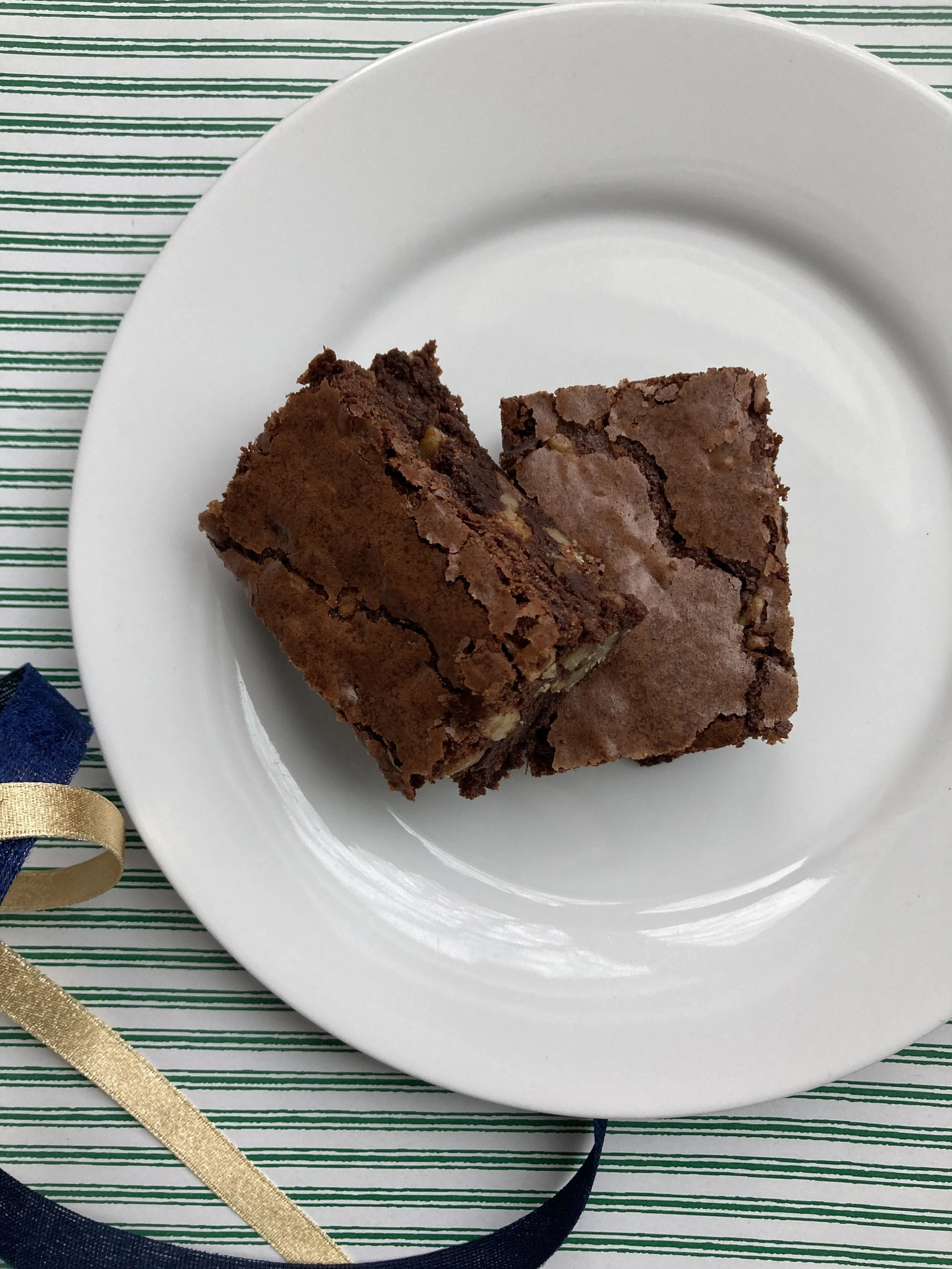
There’s a Nanaimo bar chilling in the fridge, but earlier this week, I tackled the start of this year’s baking with blondies and brownies…
Eating

Making things a little less demanding in the kitchen while I concentrate on cards and baking, are old favourites, like Jamie Oliver’s “Mini shell pasta with a creamy smoked-bacon and pea sauce.”

Postcards

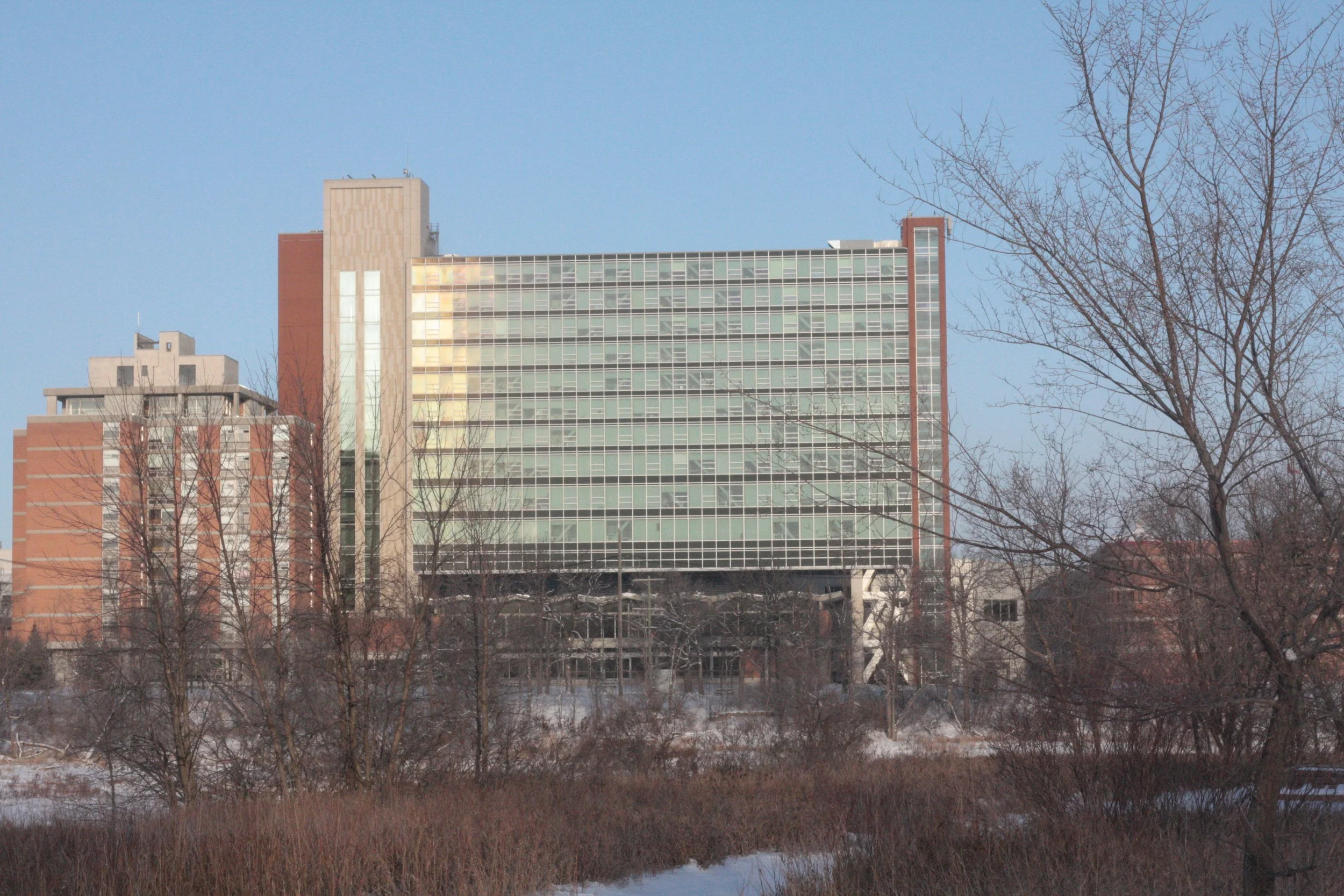
This week, there were two days featuring a sundog in the sky, and Friday’s was so big, it reflected itself on the windows of the U of M’s Pembina Hall student residence.

Happy Sunday!

Friday Five

Welcome to another end-of-week round up, with a quote, appreciation for food, a book I finished, a competition with Chat GPT, and more pictures from my dog-walks. It’s Saturday, but I refuse to rename the post granting myself a pass for the busy day yesterday…

1.

I love the prairies. In the course of reading for my paper I came across Kenneth Michael Sylvester’s description in The Limits of Rural Capitalism: "My strongest memories are of the scale of the countryside, of fading towns with weathered false-front buildings and of cities that appeared without reason, out of nowhere, like distant harbours in a vast agricultural ocean." (p 3) Sometimes I wish academic writing encouraged more lyricism.

2.

In praise of the traditional meal. I've tended for the past four months or so, to build menus that rely less heavily on meat as a main, or to space them out a bit... Fried rice, wonton soup, creamy pasta with peas and bacon... those sorts of meals. But earlier this week, I breaded pieces of chicken (flour, egg, panko crumbs), shallow fried them, and made a side of perogies (boiled then lightly pan fried), lingonberry sauce (from IKEA!) and boiled edamame and remembered how comforting it is sometimes to come back to a traditional meal. Dress it up a bit, and you have Jamie Oliver's "Super Schnitzel" from his book Jamie's Comfort Food, with breaded veal cutlets and a special "sprinkle" (made of finely chopped shallot, pickle and parsley), potato salad and apple salad. 

3. 

A good book. Thanks to the podcast “People I Mostly Admire,” I learned about the work of historian Brad Gregory. (I wrote about a quote I liked from that podcast episode here). Last week, I finished reading his book The Unintended Reformation. I liked it so much, I wrote a summary of it here. Gregory’s approach with a book on “how the distant past remains influential in the present” [p 14] is unusual, as he points out in the introduction, and perhaps this is another reason why I appreciated the book so much.  

4. 

A competition with AI. I asked Chat GPT to take over this edition of Friday Five with the query “Write me 5 short paragraphs, each with an interesting idea on random subjects.” This was the result:


One interesting idea is the concept of "forest bathing," which is a practice that originated in Japan and involves spending time in nature to improve physical and mental well-being. Studies have shown that spending time in nature can lower stress hormones, improve mood, and boost the immune system.

Another interesting idea is the concept of "pre-suasion," which is the art of preparing people to be more receptive to a message before the message is even delivered. This can be done through a variety of techniques, such as using certain words or images to prime the audience's subconscious.

An interesting idea in the field of psychology is "change blindness," which is the phenomenon where people fail to notice significant changes in their visual environment. This can have important implications for fields such as advertising, as people may not even notice changes in a product or brand.

An interesting idea in the field of economics is "behavioral economics," which is the study of how psychology and cognitive biases influence economic decision-making. This field has shown that people do not always make rational decisions when it comes to money, and that understanding these biases can help to improve economic policy.

An interesting idea in the field of technology is the concept of "smart cities," which use technology to improve the efficiency and livability of urban areas. This can include things like smart traffic lights, air quality sensors, and public transportation systems that are connected to the internet. By using technology to improve the functioning of cities, it is believed that smart cities can help to reduce pollution, improve quality of life, and increase economic productivity.

Isn’t it comforting to know this blog hasn’t been taken over by robots? That bit about change blindness is intriguing though… I’ve often tended to feel the opposite. More like Homily in The Borrowers, which my daughter and I are reading right now. In the story, a boy is bringing the family pieces of furniture from a doll’s house and Homily, the mother, is excited about all this new décor:

…Homily was tireless; bright-eyed and pink-cheeked, after a long day’s pushing and pulling, she still would leave nothing until morning. “Let’s just try it,” she would beg, lifting up one end of a large doll’s sideboard, so that Pod [her husband] would have to lift the other; “it won’t take a minute!” But as Pod well knew, in actual fact it would be several hours before, disheveled and aching, they finally dropped into bed. Even then Homily would sometimes hop out “to have one last look.” (p 131).

I so recognize this excitement! Re-organizing a corner, changing a paint colour, or styling things a different way have the opposite effect of change blindness, instead sparking my attention every time I walk by. Cup of Jo once called this a fakeover.

5.

Pictures. Care for some Winnipeg scenery? Last week was warm and cloudy, but this week brought dipping temperatures and fresh snow. It’s a game of “would you rather…” Option 1: warm weather, no sun; option 2 cold weather, bright sun! What do you pick?

Look how the sun makes a difference:


And check out the “Loch Ness tree” in winter… (I’ve taken a picture of it in other seasons here.)

Earlier this week I spotted deer. Enzo, not having picked up their scent, didn’t notice them!

Happy weekend!