A Week on Sunday (no. 35)

Perfectionism

So I was listening to this podcast (The Good Ship Illustration) because it featured an interview with an artist I follow on Youtube, Sandi Hester. In the course of the interview, Hester put her finger on why I enjoy watching her Youtube videos so much… She says:

You just get to be a fly on the wall over the years that I’ve been a professional artist, just working through [negative self-talk] and working on muscles to think rightly about my creative process. It’s not as draining anymore. I don’t feel like every single piece I create has to be a masterpiece.

I think negative self-talk and perfectionism are two sides to a coin, but each one reminds me of people who’ve discussed these two aspects on two different podcasts. The first is Stephen Dubner on Design Matters back in September (I mentioned it here) when he was reflecting on having worked with Angela Duckworth: 

The very basic thing that I came away with is that […] I know the brain is a muscle. I know that. But I never treat it like a muscle. I treat it more like a trampoline, that things will bounce off it and send you into some other direction, right? Someone will say something or do something. You will have an involuntary emotional response. And all of a sudden, you say or do something that is far from the thing that you really wish you had said or done. 

But in fact, your mind or brain is a muscle and you can control it. And I can say, you know what? I recognize what’s happening right now. I just hit a bad shot. I just gave a bad talk. I just embarrassed myself. I was just unkind to someone. And you can say, okay, that’s done. What am I going to do now? I’m going to process that for a minute, see why I did it, try to figure out how to not do that very thing again. And then I’m going to direct my mind, my brain, back to what I want to be working on. […] 

And I think that being a little bit more intentional with your brain as a muscle is a huge, easy win for just about all of us, whether it’s a cognitive thing we’re doing, physical thing, whatever. But you know, the fact that it took me 50-some years to learn that, tells me, at least for me, it’s pretty hard. 

The second is an interview on the Longform podcast from 2018 with another artist, Liana Finck. In it, she describes having evolved her drawing style, from slow and careful, to fast. The podcast host, Evan Ratliff, asks why. She answers:

[…] I decided that I didn’t want to redo things a million times anymore. It’s just, it’s a sin, I think. And so I started drawing very fast. So what people think of as my style is me drawing really fast, and it’s a way to combat the perfectionism. 

Ratliff asks why she calls it a sin. Finck says that a preoccupation with perfectionism is like circular thinking…

It’s this very, very minor thing that’s not even like a real bad thing that’s just getting in the way of you being a person. And it’s kind of a way of incapacitating yourself so that you don’t contribute to the world at all. And I think it’s a way certain people are kept down. And if you indulge in it, you’re collaborating with the people who want to keep you down or the forces that want to keep you down.

I find these thoughts so instructive.

Drawing

I find drawing from memory a challenge. It can lead me to think I have a terrible memory, and to give up (still at the stage of what Martin Salisbury calls “the inevitably demoralizing early results” in Drawing for Illustration). But Andrew Tan’s recent Youtube captures an encouraging tip.

Holiday card tip

I 100% agree with Caroline Chambers advice, having adopted the practice of asking a friend to take our picture for many of our Christmas cards in the past.  

Lamp posts (or one thing leads to another)

I liked this video spotted a few weeks ago shared online… Then Dense Discovery  shared a link to Thomas Moes’ project “52 Weeks of Obsessions” which lead to “Why did we stop building places we want to live in?” which summarizes an article by Nathan J. Robinson. 

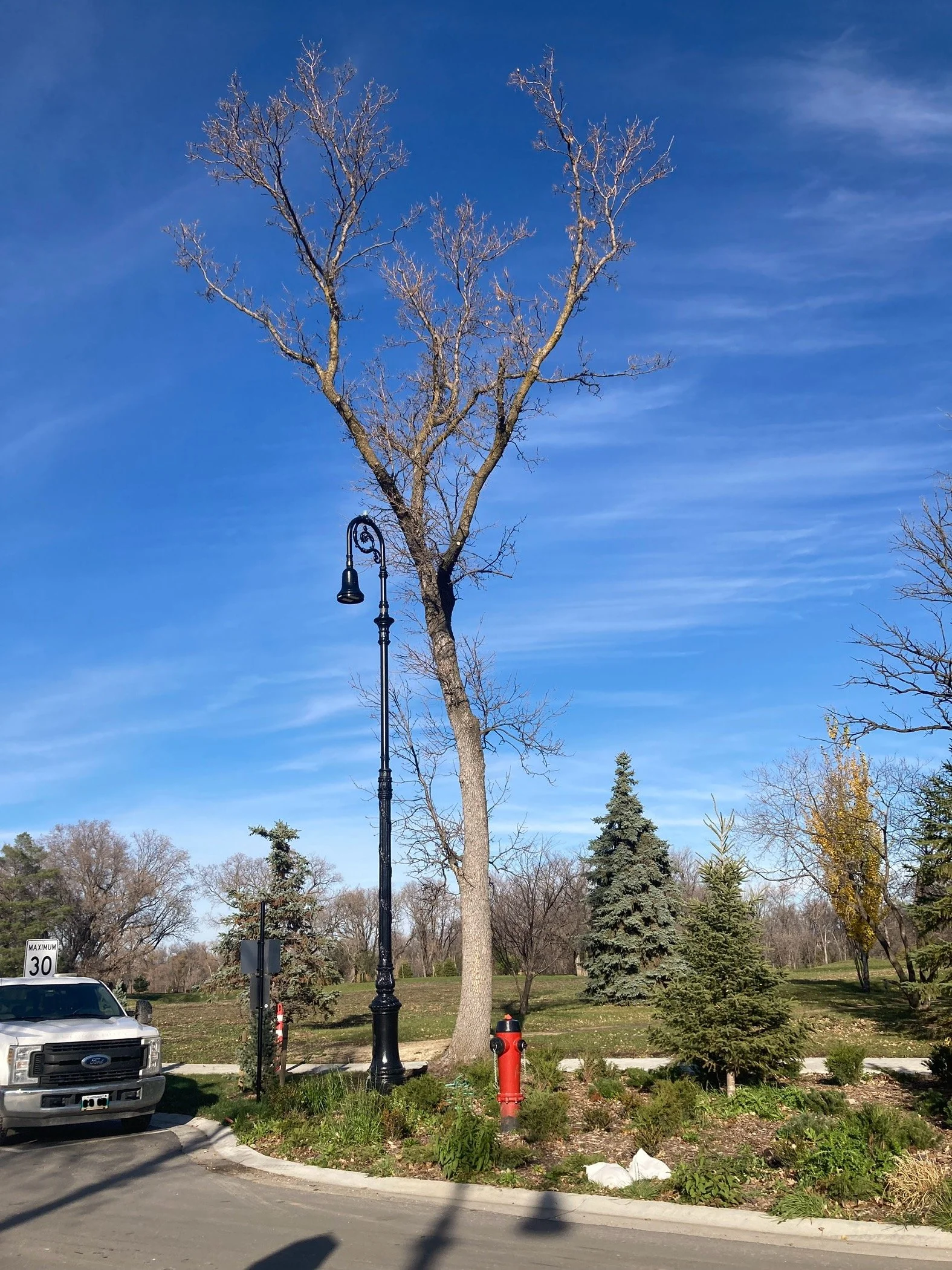
I think that’s why I’m especially happy to notice that the improvements being made on the University of Manitoba campus are looking pretty. Look at these lamp-posts! 
Eating

This week I made “Roasted Salmon with Lentils” from Dorie Greenspan’s Around my French Table, satisfying a craving for the “hominess” of this meal, which is simple and tasty. The recipe can be found here.

Postcards 

Winnipeg has been getting lots of rain this fall… I’m happy for the trees. This autumnal humidity brings no mosquitoes with it, only saturated scenes and maybe more mushrooms.
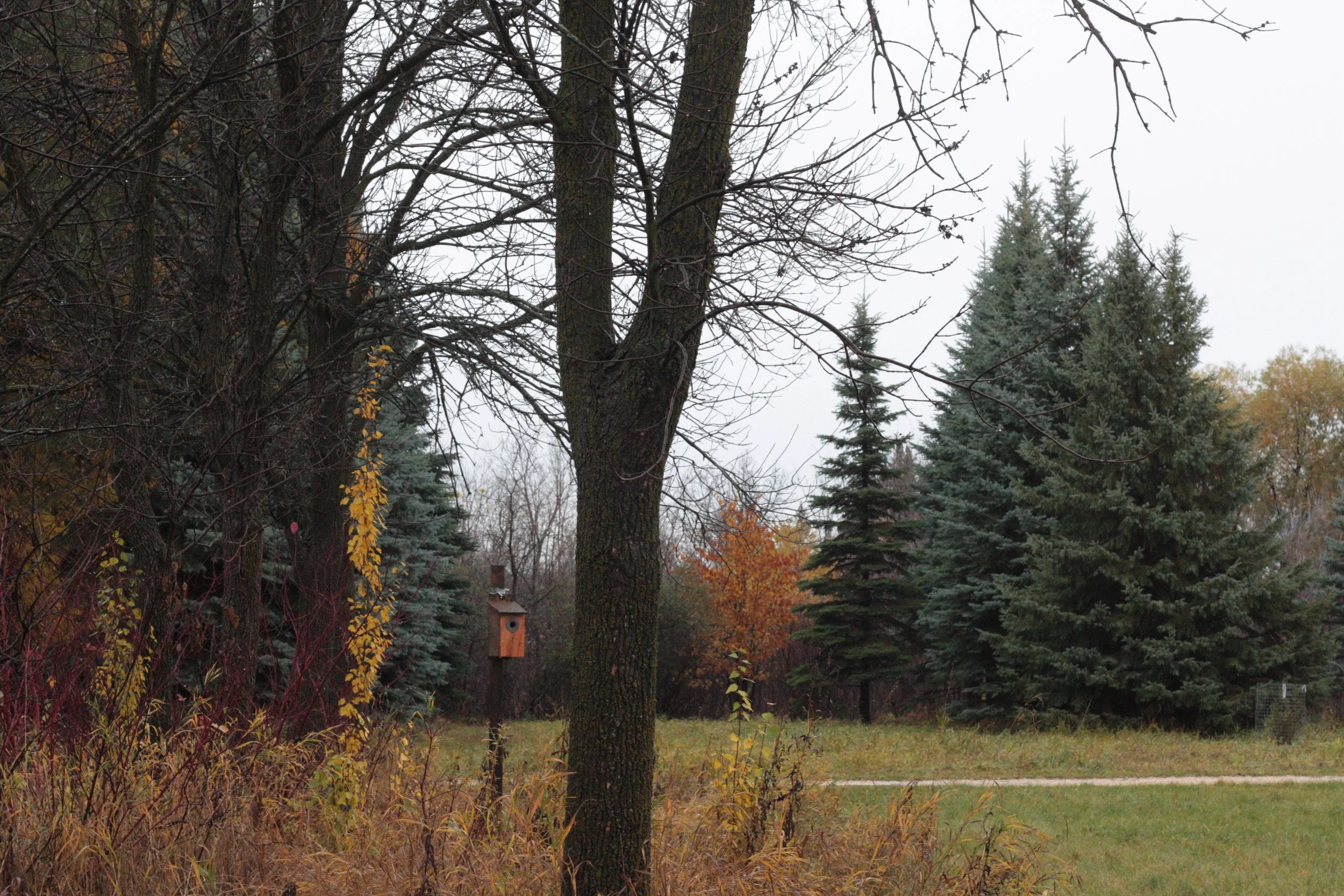
And although I should restrain myself and stick to just one postcard, I can’t help but include these willow trees… Their slender silvery leaves almost make them look soft from a distance. But their trunks? Their strangely wavy branches? It looks like they caught cotton candy clouds in their net.

Happy Sunday!

Friday Five

Welcome to this week’s edition of things I’ve enjoyed and thought about… And while I hone my conversational writing to match Nigella Lawson’s, this rambling and the links from which it is inspired is all free!

1. Drawing, again

Drawing for Illustration by Martin Salisbury, mentioned last week, had these two inspiring quotes from illustrators, on the subject of drawing:

David Humphries:

"When I was a student, I remember visiting an exhibition of drawings at the Royal College of Art by Sir Isaac Newton and his contemporaries. I was really annoyed  that all of the scientists could draw better than me. After the exhibition, when I was sitting under a tree in Hyde Park, an iPhone dropped out of the sky and hit me on the head. At that moment it occurred to me that very few modern illustrators have the technical ability to make drawings of that quality, and it is the advent of photography that has allowed drawing to disappear from the science curriculum (and the majority of art schools). But the real loss is that the act (and discipline) of describing things visually helps us understand their function and appreciate their beauty; merely pressing a button on a camera or a phone just isn't the same."

Kerry Lemon:

"I'm evangelistic about drawing. Always on a mission to get people to draw. The tragedy of art education is the quick determination of who is 'good' at drawing and who is not. An obsession with product, rather than the process of creation. Finding joy in the process, the sound and texture of dragging pen, brush or pencil across a page will mean you will continue to do it and, as in all things, the more you actually draw, the more you WILL automatically improve - your finished drawings will become better and better. There are no shortcuts. No expensive pens or expert tuition will get you there. Just draw. Draw constantly. Draw everything, all the time. Drawing is all about looking and a regular drawing practice will alter your view of the world. You will begin to see things that you previously ignored. Sitting on the train, you will be acutely aware of the pattern of the seat, the light on the metal railing, the profile of the commuter opposite, the weave of their scarf. Drawing is magic, and I am bewitched by it.

2. A thing I learned about rhubarb

It's nice sitting down with a cookbook written by Nigella Lawson. She's a very chatty cook and were you to compare recipes to all the thoughts she pens along with them, I wonder if the latter wouldn't outweigh the former. But I like listening to her.... she writes so well, it does indeed feel like listening, I swear I can even hear her British accent. Her recipe books have photos, and I always find them very colourful, almost over-saturated. She has a chapter on rhubarb, accompanied by bright pink rhubarb photo-subjects... in a trifle, all soft in a tray, fresh from being roasted. Until I read the chapter though, I didn't know that there are two kinds of rhubarb... In Cook, Eat, Repeat, she writes:

For much of the world, the coming of rhubarb heralds the arrival of spring; for those in England, it appears brightly in the bleak midwinter, absurdly, improbably pink, the color of hope, filled with all the light that is missing from our skies. My heart lifts every time it comes into season towards the end of December. How could it not? Yorkshire forced rhubarb, which is started off outside, but then transplanted inside, cultivated in the dark and harvested by candlelight, is one of our greatest culinary treasures: hot pink from the cold earth, its stalks are more tender, their texture more delicate, and the taste purer and more vibrant than the hefty red rhubarb that comes later, out in the open, and which, as the year moves on, and the stalks grow thicker and greener, all too often cooks into a fibrous khaki mush (p 127).

Mystery solved! I will no longer worry where all the pretty pink colour goes... it was never really there to begin with!

3. Tiktok is still fun

Sometimes I abandon a social media platform for awhile... I scrolled through Tiktok recently and it made me feel happy that Hank Green's office has been redecorated since I last visited the platform. And a ceramicist got accepted into a market after being turned down again and again. Feeling "heartwarmed" on social media should be celebrated!

4. Geraniums

Inspired by this post, I bought geraniums for inside the house. They remind me of the ones that lined the window sill behind our elementary school teacher's desk. For years, I disdained them, but my taste has changed, and now they make me think of coziness and comfort. 

5. The view here

It's been very warm this week. Leaves are sprouting, delicate and shiny like butterfly wings before they dry. I planted flowers in the garden a week earlier than in years past. Everywhere, the first dandelions of the season...

Psst! Happy Friday! This was sent just before the day ended, and doesn’t include a link to a recipe. But if you’d like a recommendation, we tried this soup on Wednesday, when it was chilly and rainy, and paired it with Buttermilk Biscuits and felt satisfied.

Friday Five

Welcome to another edition of “Friday Five” where I pause regular work to play around with words and try to be useful by sharing a few things I’ve enjoyed this week. Have a seat! This edition brings you an art book, a Netflix series, an audiobook, a cake and the tiniest of flowers. Happy Friday!

1. Drawing for Illustration by Martin Salisbury

This book is brilliant. I wish I hadn't read it so that I could enjoy reading it for the first time again. Books on drawing that I've read so far, fall into categories, like how-to or glimpses into artist's work and perhaps that's why this book felt so unique and fresh... it was neither of those things, even if basics are laid out in the first part, and quotes from illustrator/artists are interspersed throughout the book. 

Because having only recently ventured into this hobby, everything can feel overwhelming, having the steady voice of an experienced person feels like just the right kind of guidance. Although I knew that yes, everyone can draw, getting better at it is about learning to see. Seeing is a skill that develops with time and practice and Salisbury is direct about it. "While experimenting with a range of media is ultimately important, when trying to get to grips with the basics of drawing, it is advisable to focus on the process of learning to see rather than giving in to the distractions of the respective effects that can be created by the myriad drawing implements available."(p. 52) Seeing people's work online has positives and negatives: "On the one hand, there is now unprecedented instant access to an enormous array of influence from wide-ranging visual cultures and traditions. On the other hand, it is easier than ever to slip into imitative mannerisms by (consciously or unconsciously) for example, drawing foliage that owes more to the decorative patterns of a particularly admired picture-book maker than personal experience of the real world." (p 105) Teaching yourself to draw from memory is an exciting and challenging next step. 

I love how the book is written; everything is divided into categories, each heading gets a succinct text often containing description, historical context, advice and examples. Not just current illustrators are profiled, but ones from the past too; their qualities are highlighted as are the mediums in which they worked.

I so enjoyed reading this book!

2. Guilty pleasure

Indian Matchmaking (Netflix)

3. An audiobook that's fun to listen to

Unlike some podcasts, audiobooks have little in the way of special effects. (One narrator was described in the review as having a "nasal voice"!) Coming across a book read by the author is always a plus, but coming across an author who genuinely seems to enjoy narrating what they wrote is especially delightful. I didn't know this could exist to the degree it does until listening to Lucy Worsley narrate her book titled Agatha Christie: An Elusive Woman. It feels as though she read the entire thing smiling! She even seems to chuckle at parts! In the audiobook, she narrates "The early acidic Miss Marple is actually the Miss Marple I prefer. But perhaps that's because I'm a nasty old cat myself." I can't even imagine that is true.

4. A treat

If I were to bake myself a treat for Mother's Day, it would be this cake

5. The scenery here

The trees this week have all sent forth their seeds. Because I arm myself with a camera, I've been paying closer attention to the display this year and have enjoyed the variety and detail... 

Just look at these seeds! Black and white and pink and green! They look like they’ve put on a dress to go Flamenco dancing!

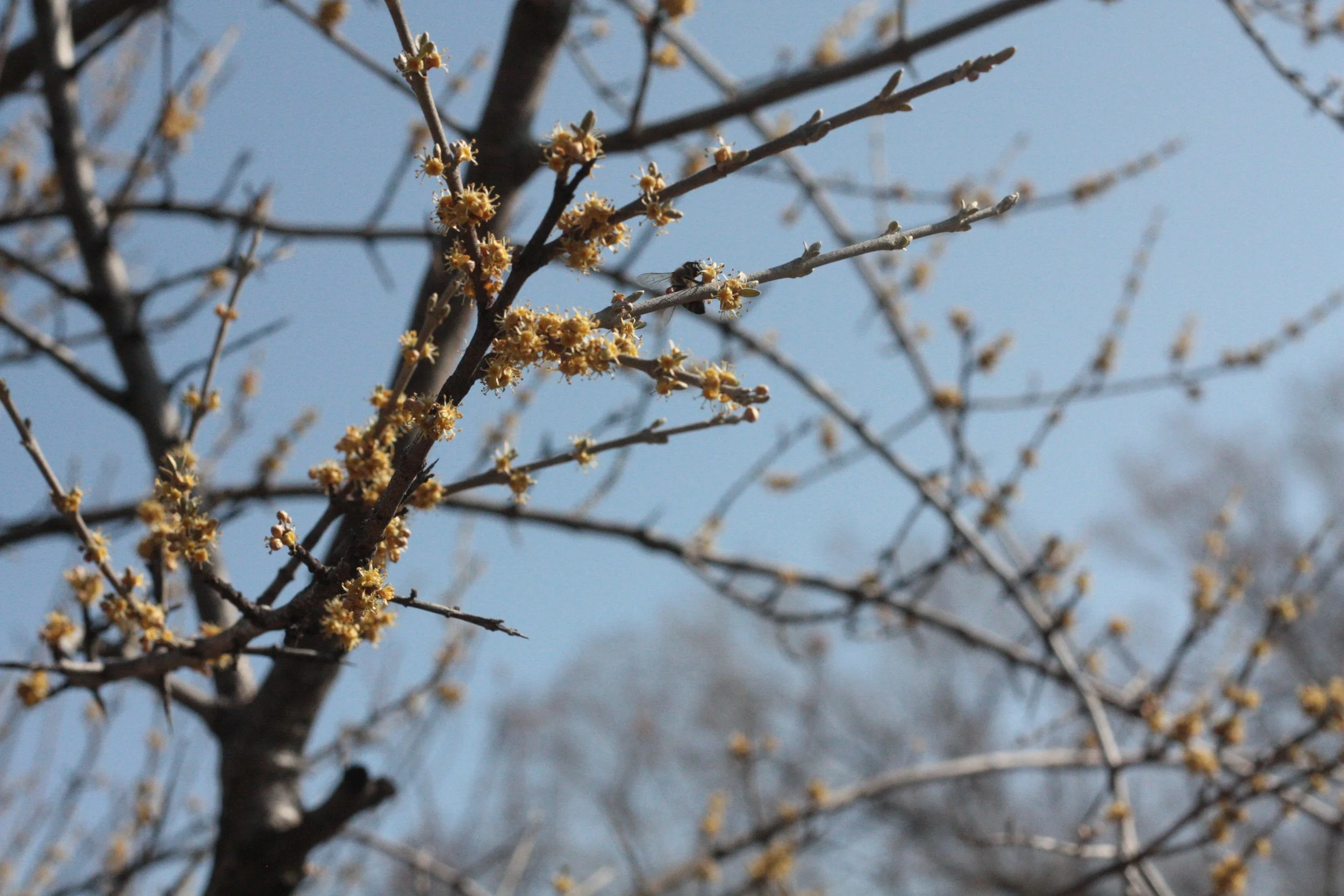
From a rainy day to a sunny day, this tree with its tiny buds went from quiet and modest to bright and buzzing, attracting to its tiny yellow flowers a swarm of happy bees.


Psst: Take care!