History (The Purpose of the Past, part 3)
Previously, I transcribed quotes from Gordon S. Wood’s book on the subject of ideas, and then on the subject of history in general. But I especially like what he writes about the benefits of learning/writing about history. From the introduction:
I don't believe that history teaches a lot of little lessons to guide us in the present and future. It is not, as the eighteenth century thought, "philosophy teaching by example." Yet by disparaging the capacity of history to teach lessons, I don't mean to suggest that studying the past can't teach us anything. If history has nothing to say to us, then it wouldn't make much sense to study or teach it or read about it at all. History is important to us, and knowledge of the past can have a profound effect on our consciousness, on our sense of ourselves. History is a supremely humanistic discipline: it may not teach us particular lessons, but it does tell us how we might live in the world. (p 6)
Done well, history can offer an appreciable usefulness:
Indeed, historical explanation is only possible because we today have different perspectives from those of the historical participants we are writing about. Most new historical investigations begin with an attempt to understand the historical circumstances that lie behind a present-day problem or situation. It is not surprising that our best recent work on the origins and nature of slavery coincided with the civil rights movement of the 1960s. Or that our recent rich investigations into the history of women grew out of the women's movement of the past three or four decades. This is as it should be: the problems and issues of the present should be the stimulus for our forays into the past. It is natural for us to want to discover the sources, the origins, of our present circumstances. (p 10)
Finally,
By showing that the best-laid plans of people usually go awry, the study of history tends to dampen youthful enthusiasm and to restrain the can-do, the conquer-the-future spirit that many people have. Historical knowledge takes people off a roller coaster of illusions and disillusions; it levels off emotions and gives people a perspective on what is possible and, more often, what is not possible.
An observation about being true
Lately, I’ve been thinking about the things that prevent us from being true… This could be a discussion of giant proportion, but I’m thinking of it very narrowly. I’m thinking of the mild anxiety I get in social situations that sometimes causes me to talk with less consideration than I wish I had. If truth reflects the goodness inside of ourselves, changing the manner in which we express ourselves, or performing insincerely are both ways that contravene the truth. Two minor examples from podcast-land come to mind: Mary Beard on Always Take Notes and Carlos Rafael on Catching the Codfather.
In the first, Mary Beard is talking about her academic career and how her writing changed…
I then wrote the seminar up for a kind of pretty prestigious, but also pretty traditional UK Classics magazine. And what I think was funny [when] I looked back at the article, [is that] it’s got all the arguments I want to make, but I could see that I was so intimidated by the Academy at that point; it’s all dressed up in academic language which makes me now want to throw something at it. […] What I did - I didn’t see it at the time, but I see it now - [is] […] I was pretending to be an elderly male academic. I was burying my own bright ideas in their language. And I eventually stopped doing that, but it took a long time.
In the second, Ian Coss, the podcast host, is contrasting two versions of Carlos Rafael, who speaks reasonably in interviews, but who is cut-throat on a secret recording. (47 minutes in here.) Coss concludes “I think both versions of Carlos are performances to some degree.”
It makes me think of Katherine Boo’s conclusion in Behind the Beautiful Forevers and the circumstances that can “sabotage [the] innate capacity for moral action.” Boo shows a situation in which corruption removes that innate capacity. But I’m intrigued by the degree to which we are responsible for building the strength of our innate capacity in even the smallest of ways.
Cooking
This week I made Caroline Chambers’ Beef and Sweet Potato Flautas, as I did last year. However, since I was making the meal for company, I doubled the filling, and they were less “flauta” and more “fagotto”.
Baking
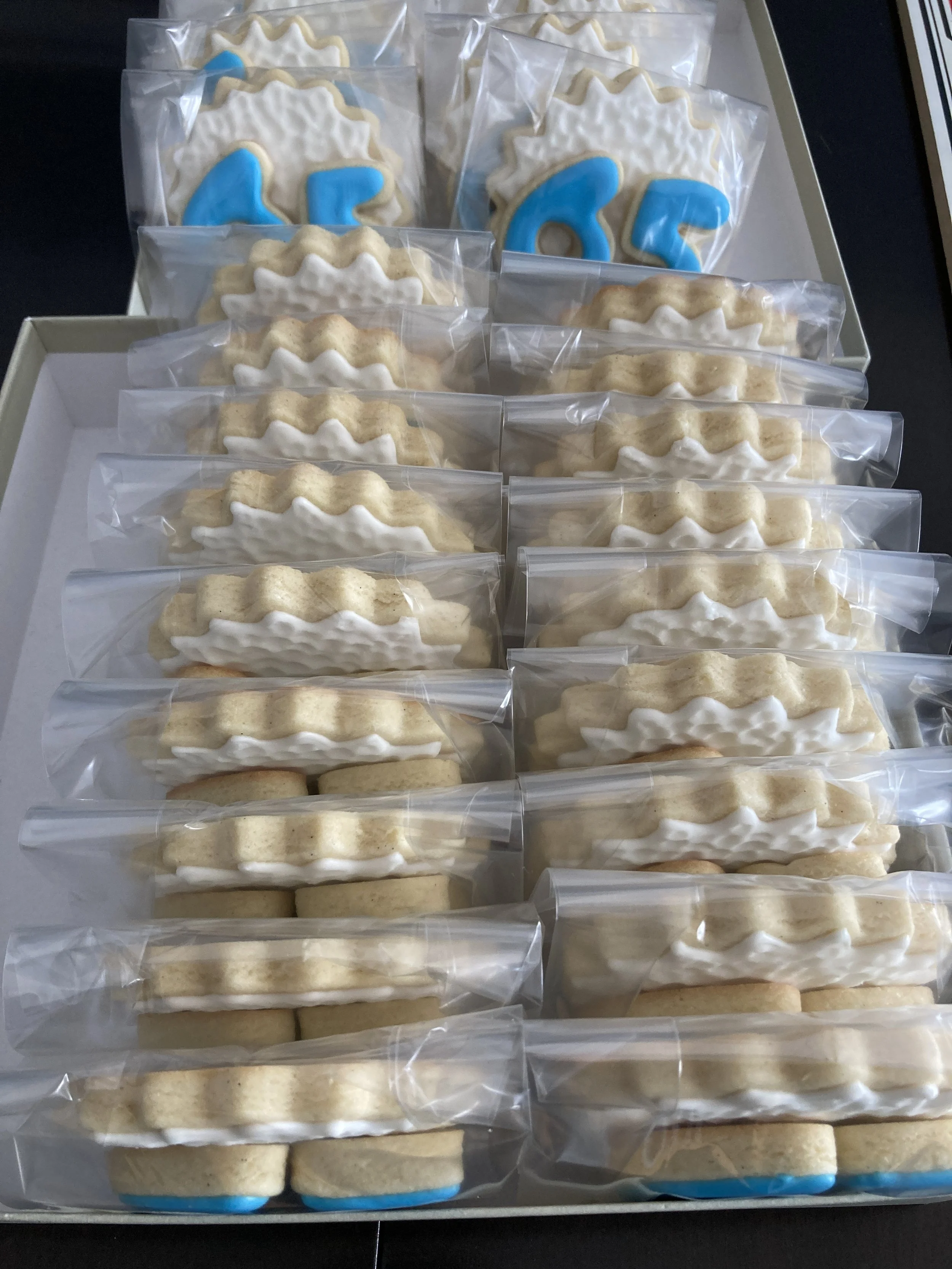
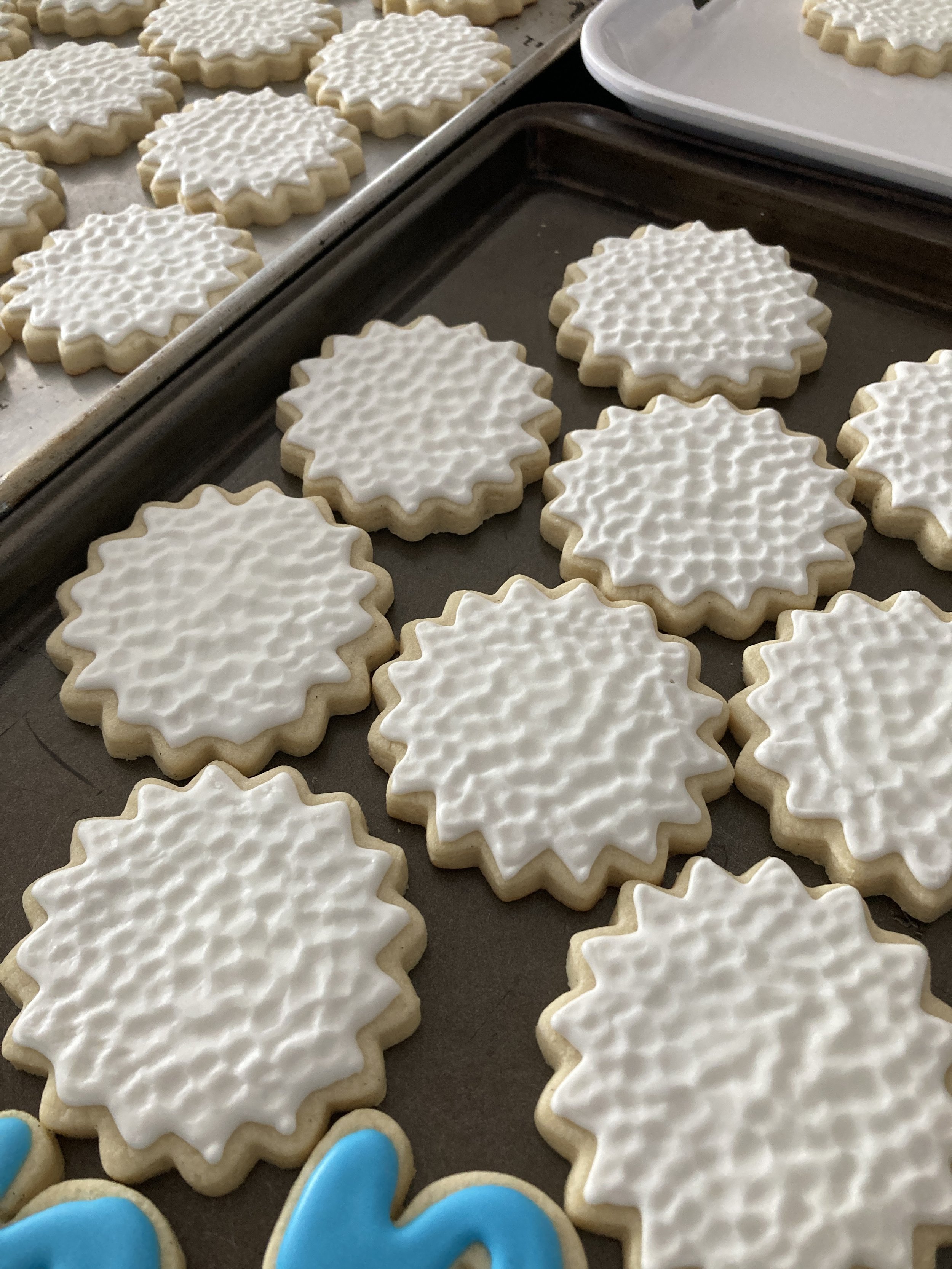
A friend of ours is celebrating a milestone birthday and I seized the occasion to work on sugar cookie decorating skills. I followed Grace Gaylord’s instructions for making the cookies and the icing on her blog The Graceful Baker. She’s very generous with her tips and it was just the kind of guidance I needed as an amateur. All in all, a fun project!

Enjoying
I like reading Rob Stephenson’s newsletter “The Neighbourhoods”. Sure, it’s about places I’ll never see, but I enjoy his writing and usually come away having learned something. I didn’t know castor oil was used as a laxative. And until reading Mussolini and the Pope, I didn’t know castor oil was used to torture clergy. What a contrast to its rosy promotion now!
I liked Guy Winch’s advice on preventing yourself from lengthy rumination: first, recognizing a thought that is a rumination (it’s upsetting), and second “converting the ruminative thought into a problem that can be solved.” (Here, at 20 minutes.)
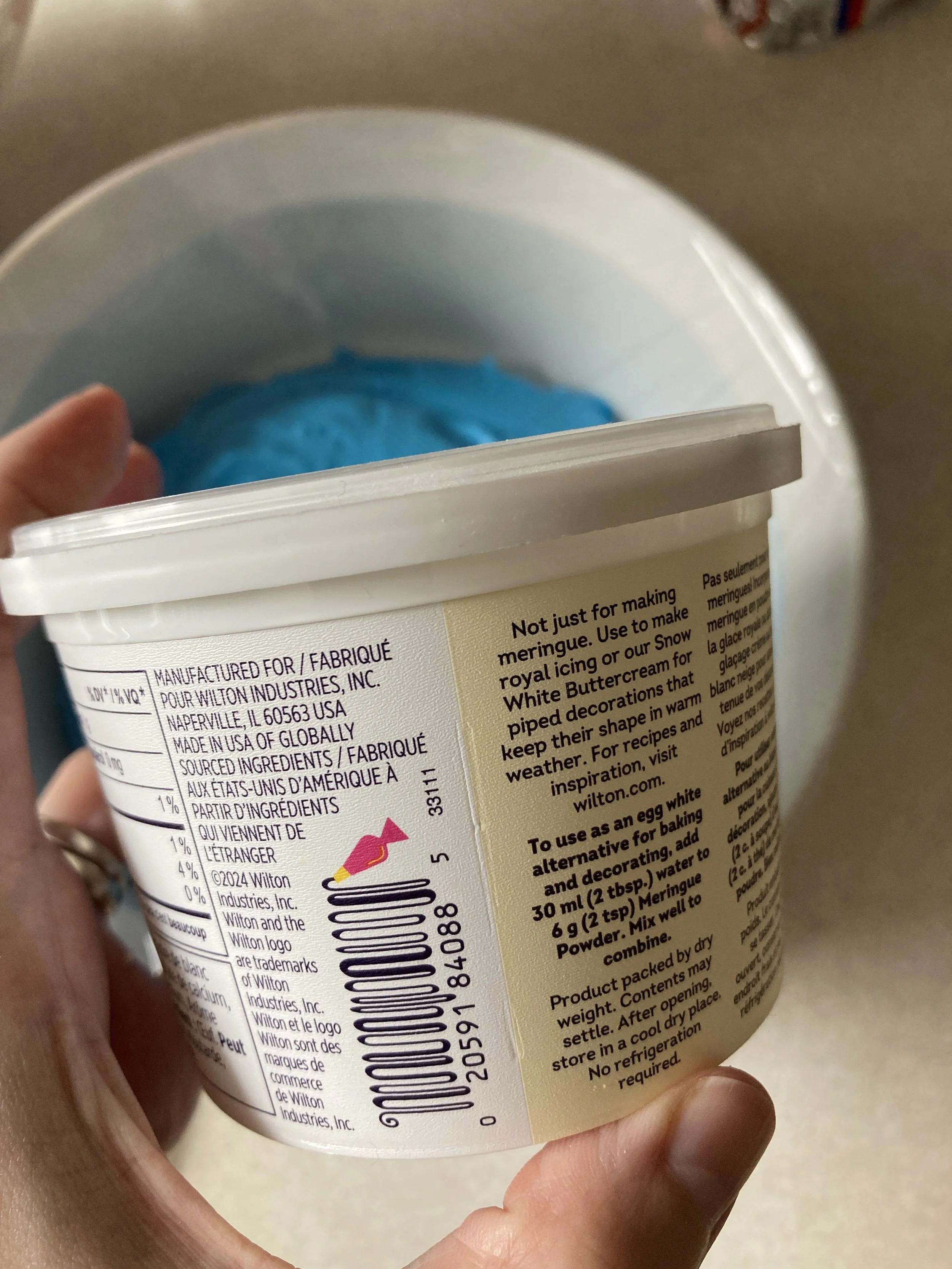
I like how the barcode on this container of meringue powder is illustrated as if made with icing!
Postcard
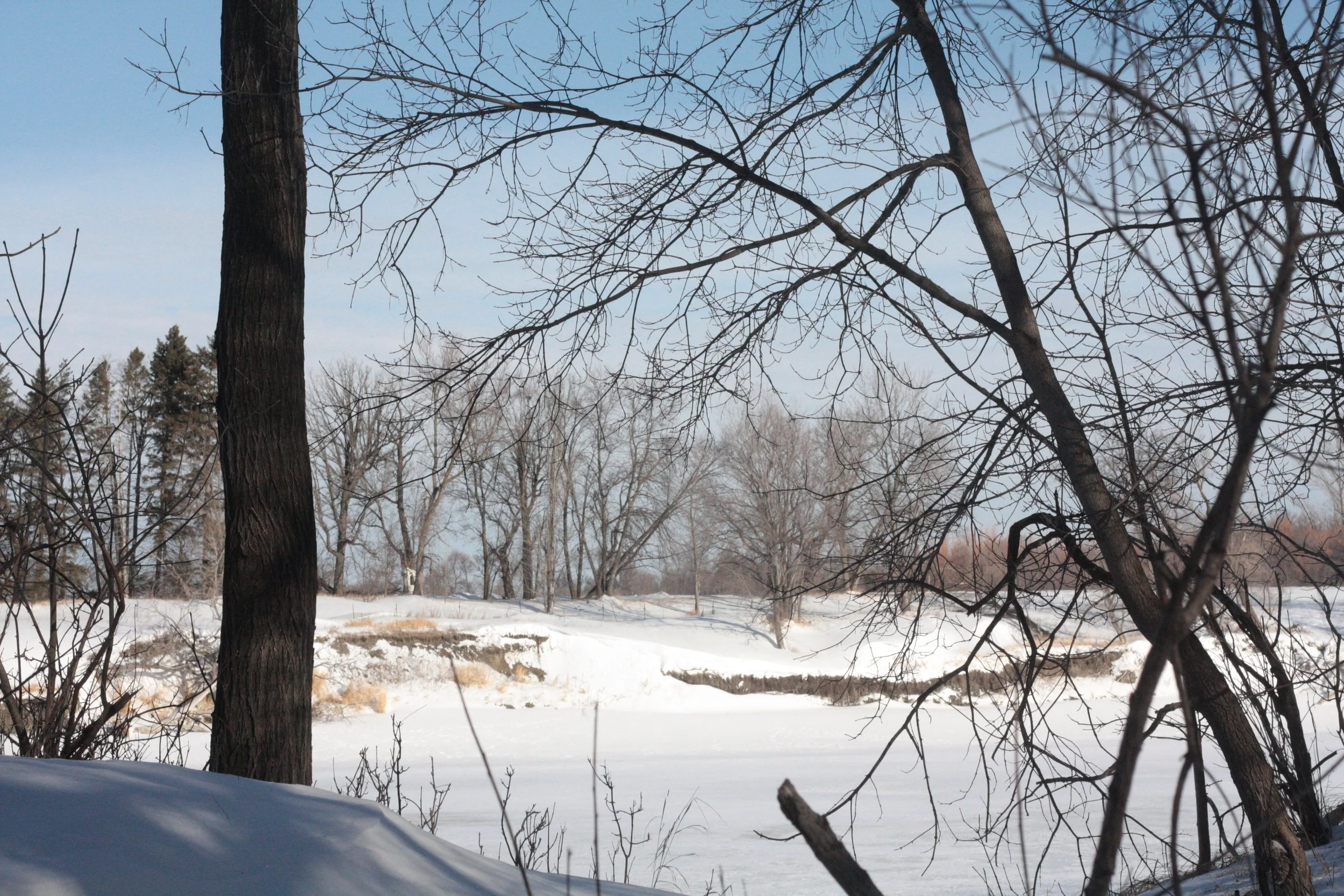
This week was 4/5 gray days… But I caught this bit of sun on Monday!
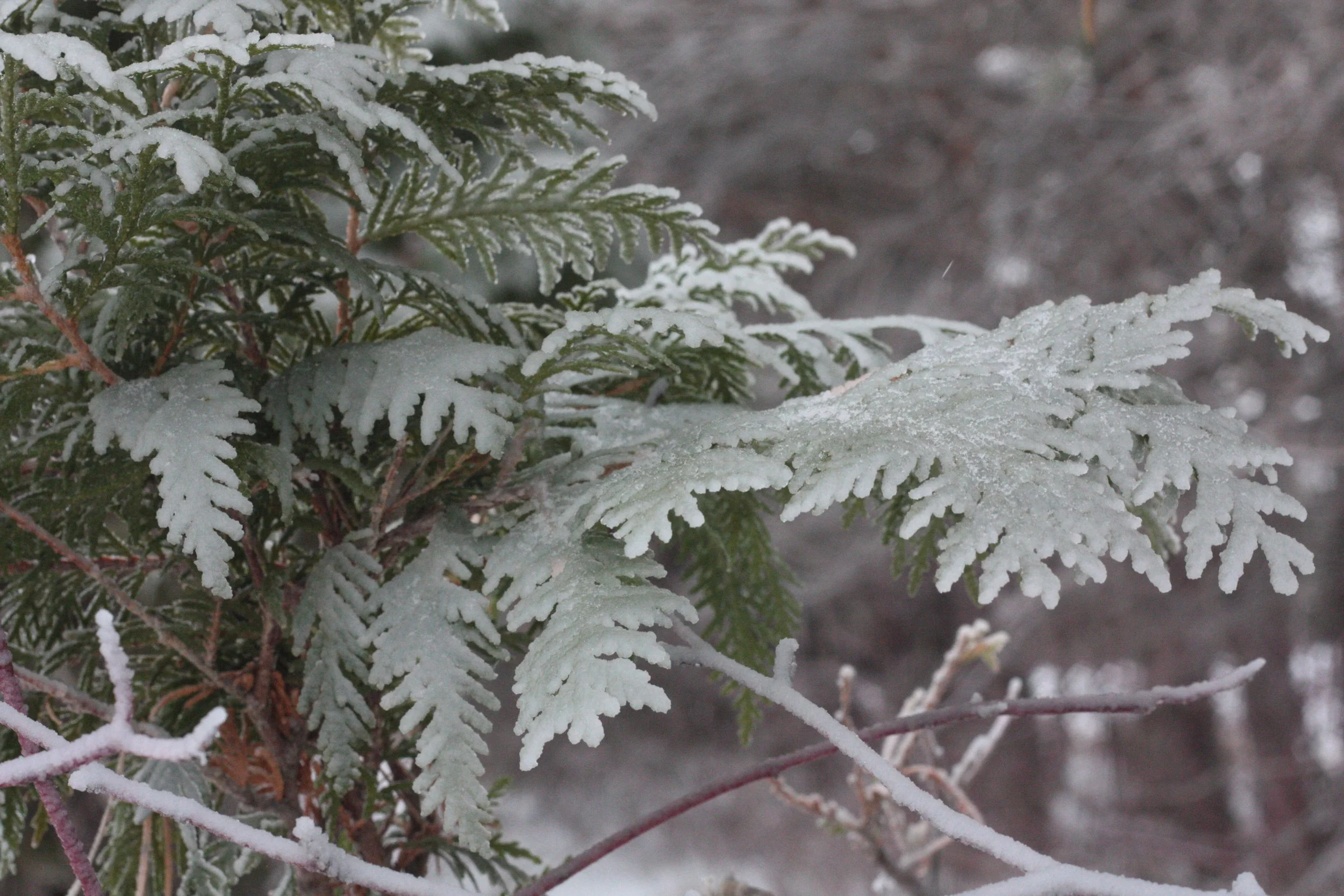
On Friday, there was freezing rain, and instead of being transparent, it looked gray and strange.
Happy Sunday!