A week on Sunday 17/52

Intro

Of what is a week composed? Of daily walks, and small routines. Of BBC News in the morning and bringing my 88-year-old mother-in-law to her eye appointment in the afternoon. Of making a shopping list on Saturday and dessert on Sunday. Of packing lunches in the evening and the impromptu visit of a nephew travelling through Winnipeg on his way elsewhere. Amidst these routines and events, the mind flits elsewhere, a stream of consciousness fed by podcasts and books and little projects. Here’s what caught my attention this week…
Intentional effort

When I was young, I thought that “bothering” was to be avoided, as in “bothering” people, and by extension that the point of life was to get to greater ease. I don’t think that way anymore, and the following quote from William James nicely contradicts the idea of wanting to get to “ease”:

Keep the faculty of effort alive in you by a little gratuitous exercise every day. That is, be systematically ascetic or heroic in little unnecessary points, do every day or two something for no other reason than that you would rather not do it, so that when the hour of dire need draws nigh, it may find you not unnerved and untrained to stand the test. Asceticism of this sort is like the insurance which a man pays on his house and goods. The tax does him no good at the time, and possibly may never bring him a return. But if the fire does come, his having paid it will be his salvation from ruin. (Via)

In a similar vein is are two interviews of Stewart Brand who is promoting his latest book titled Maintenance of Everything. There is the idea of care - caring for tools, of “honouring the process of taking care of things and yourself and others” and there is the contrast with a world that is increasingly automated. He says at one point: “we're going to spend more and more of our life arguing with robots. These things have automatic procedures based on somebody else's idea of what will be obvious and not obvious when you're messing with it.” Stuck in line at a bank for half an hour, then with a teller for an hour and 15 minutes to resolve a small issue made me think “here we are, arguing with robots!”. The intentional effort manifested in the form of equanimity - a kind of caring for each other as we’re dealing with these robots.

Environment

Beau Miles recently concluded a series of videos on four different rivers in Australia, ending with the Murray River. I like how he grapples with being unable to end the story on a satisfying note, and how he includes his conflicting feelings in the video… His friend, Brian Wattchow, suggests “Unfortunately it’s going to have to be managed and rules are going to have to be imposed until we can get a whole new set of values and values for the river. It’s sad but I can’t see personal choice and individual responsibility saving the river at the moment.” His argument is consonant with Andri Snær Magnason’s observation on humility toward nature (quoted here).  

On the subject of rivers, but in Canada, is the CBC’s Ideas podcast episode “What the River Wants to Be”. 

Baking

This week I made Vaughn Vreeland’s Lemon Blueberry Cookies.
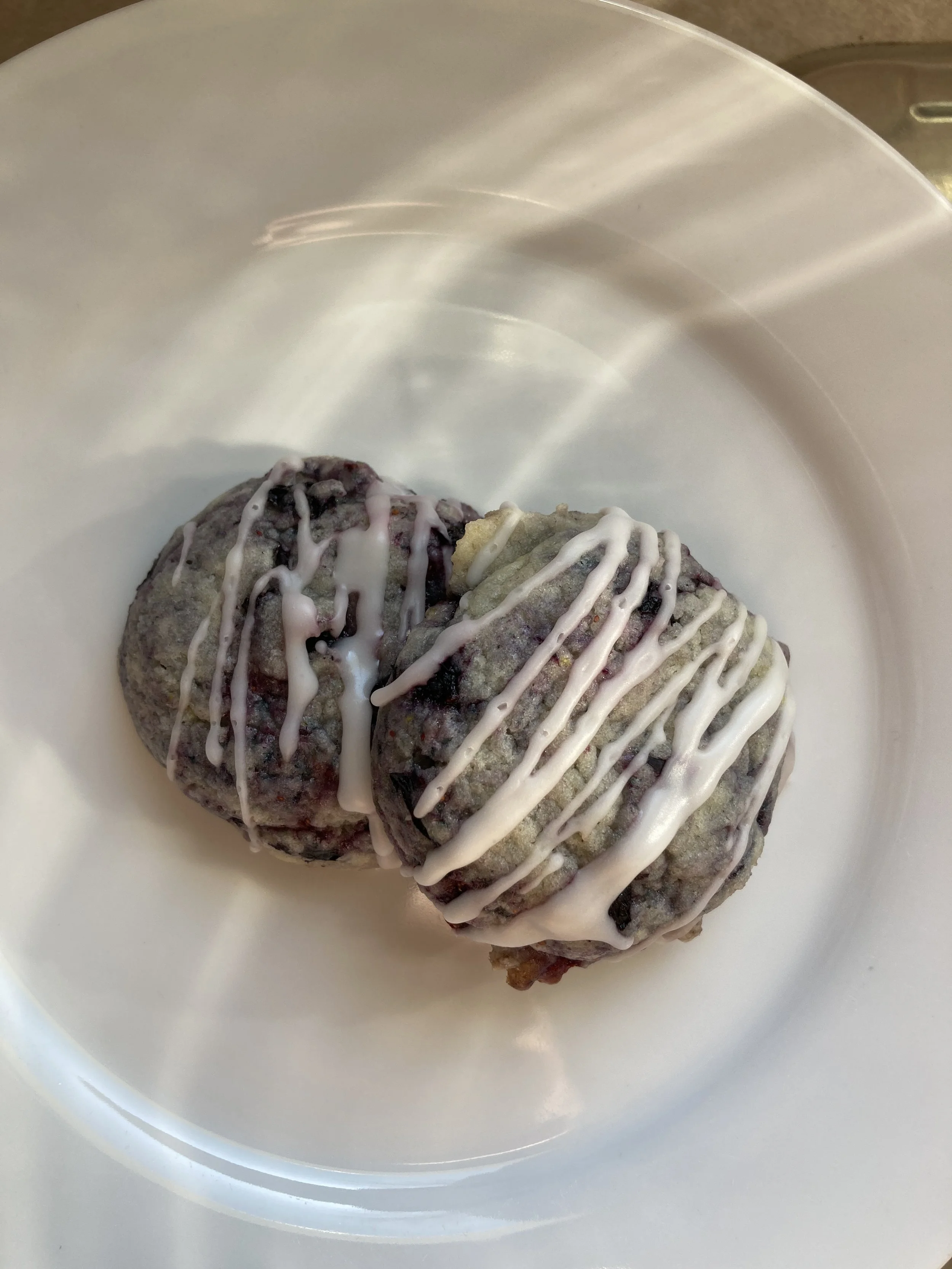
There remained, after this recipe, a lot of frozen blueberries left, and so I made a pie. The pie was unphotogenic, but delicious.

Walking the dog

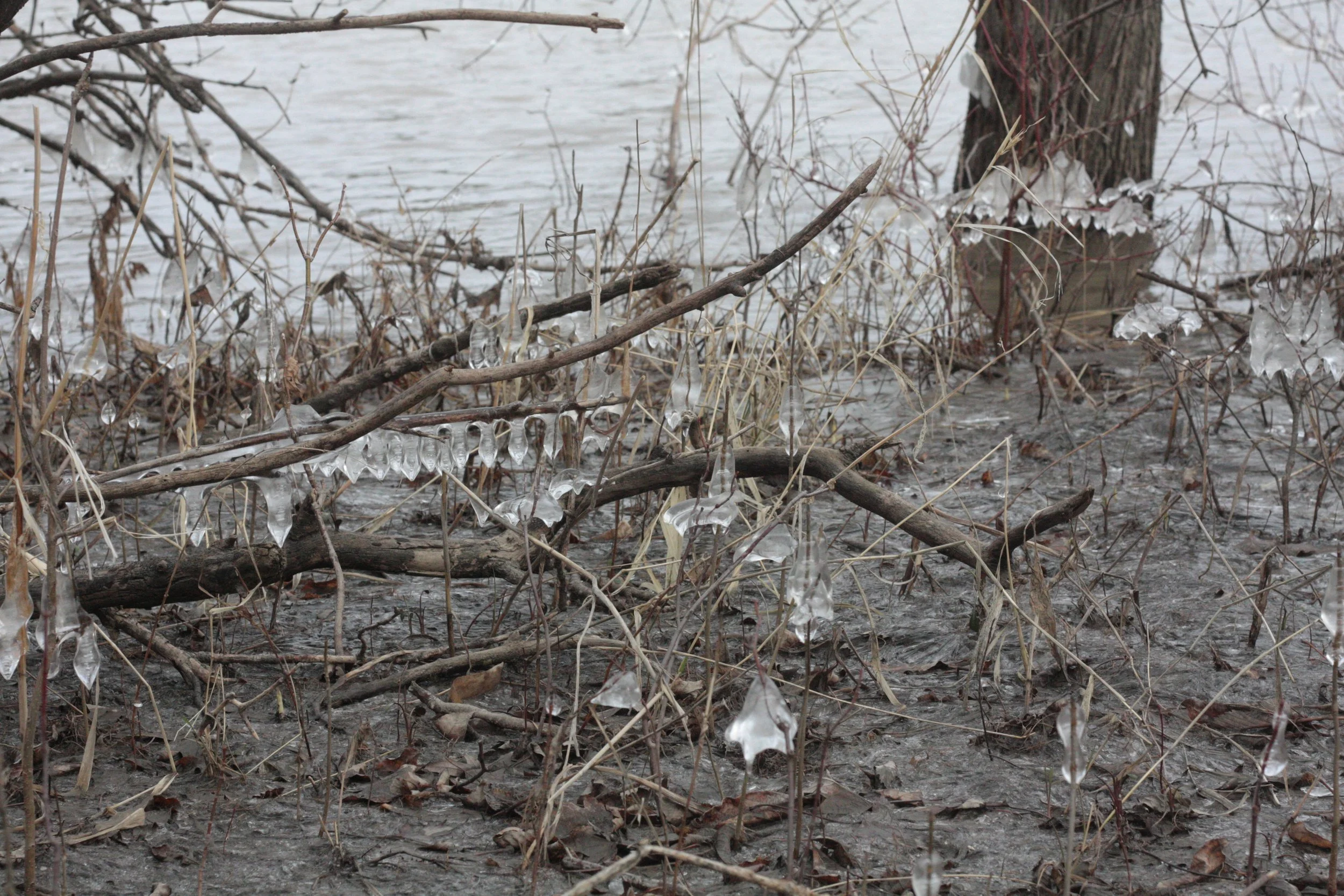
This week, there was a bit of cold weather leftover… just enough to take pictures of the icicles formed on the branches from the preceding days’ higher water levels.
The sun came out, and so there was the view across the water…
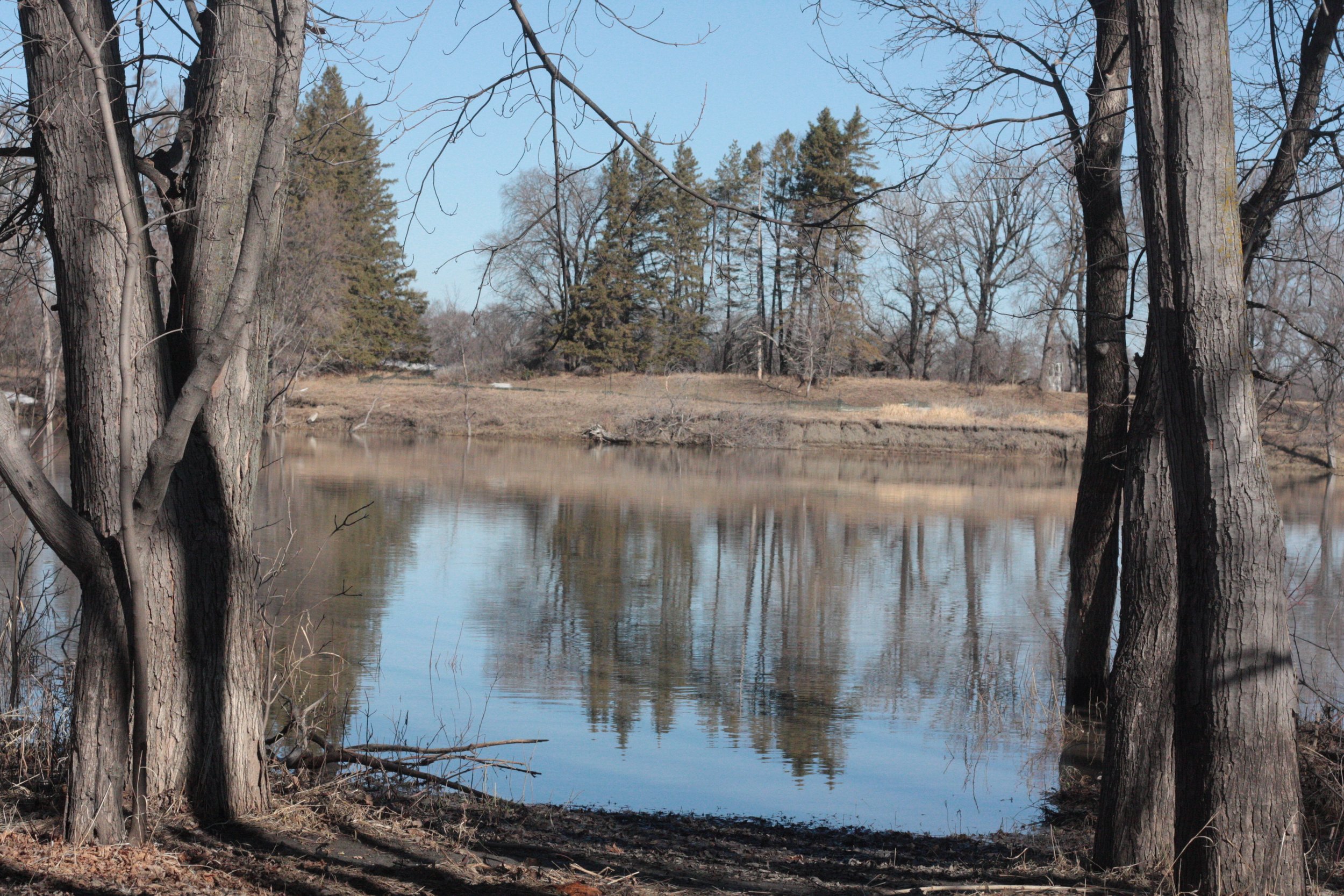
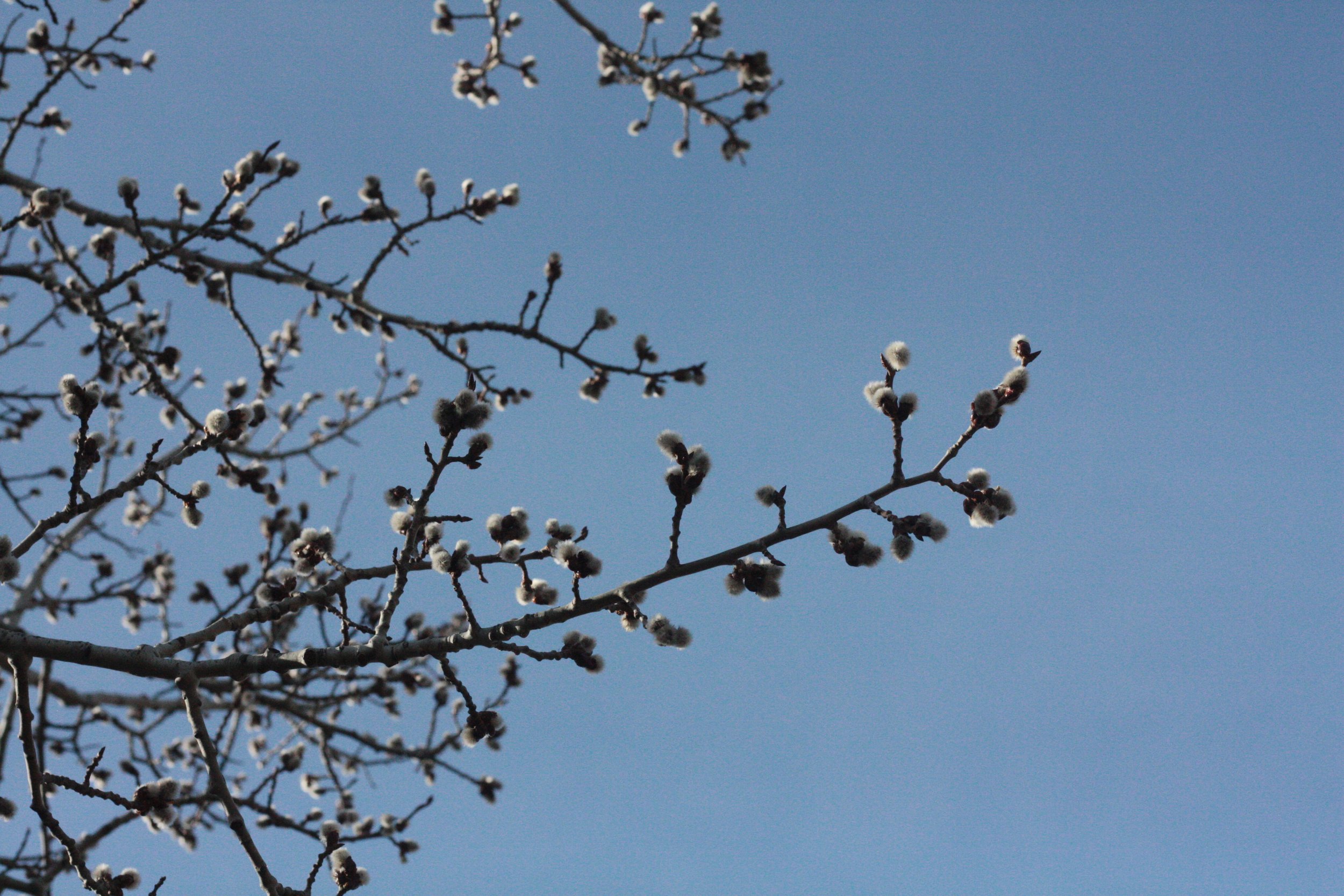
I look down when I walk, eyeing the ground, surveilling Enzo who follows his nose everywhere. At one point I looked up and was so delighted to see pussy willows!
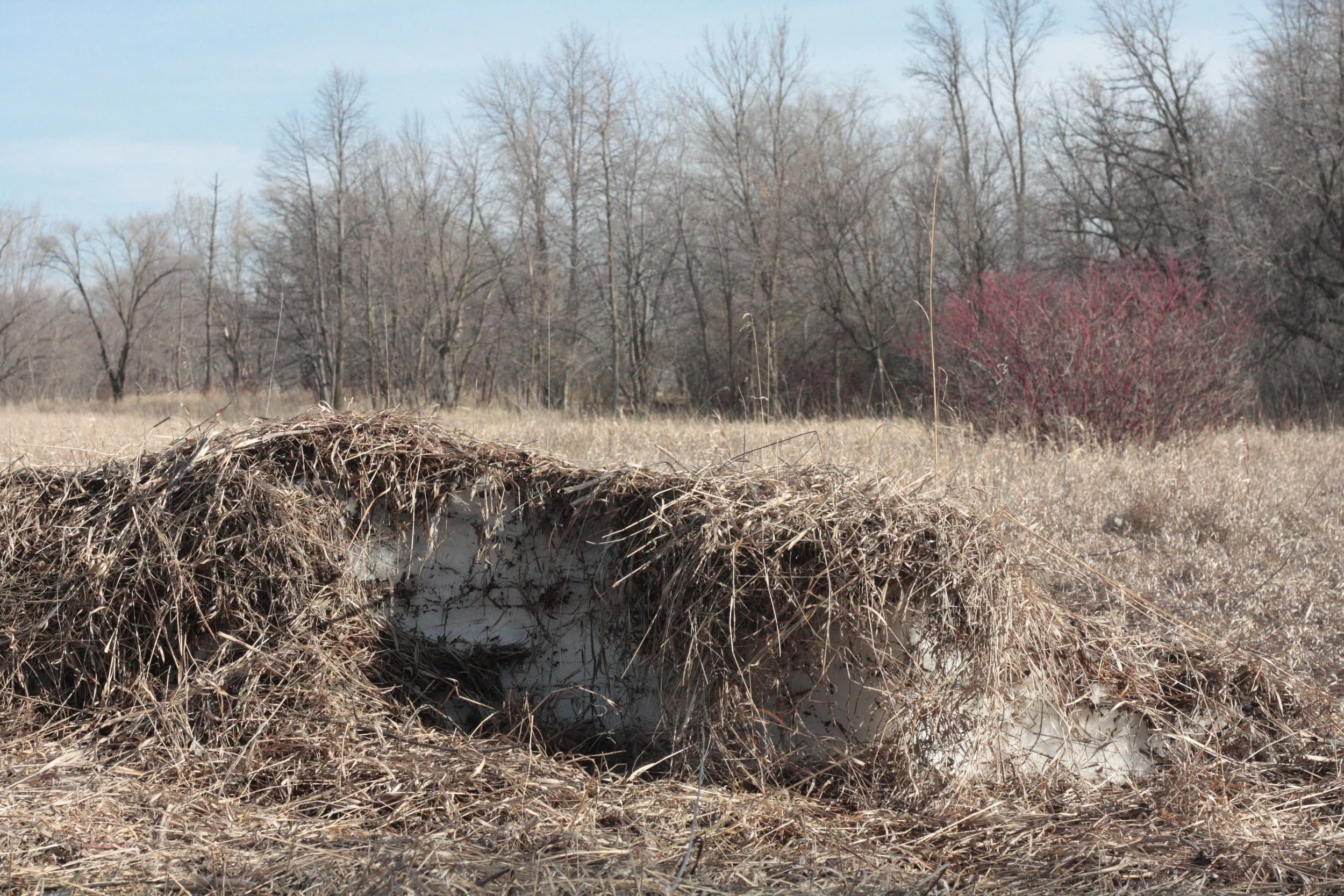
The last few mounds of snow that remain covered in grass look like wooly mammoths.
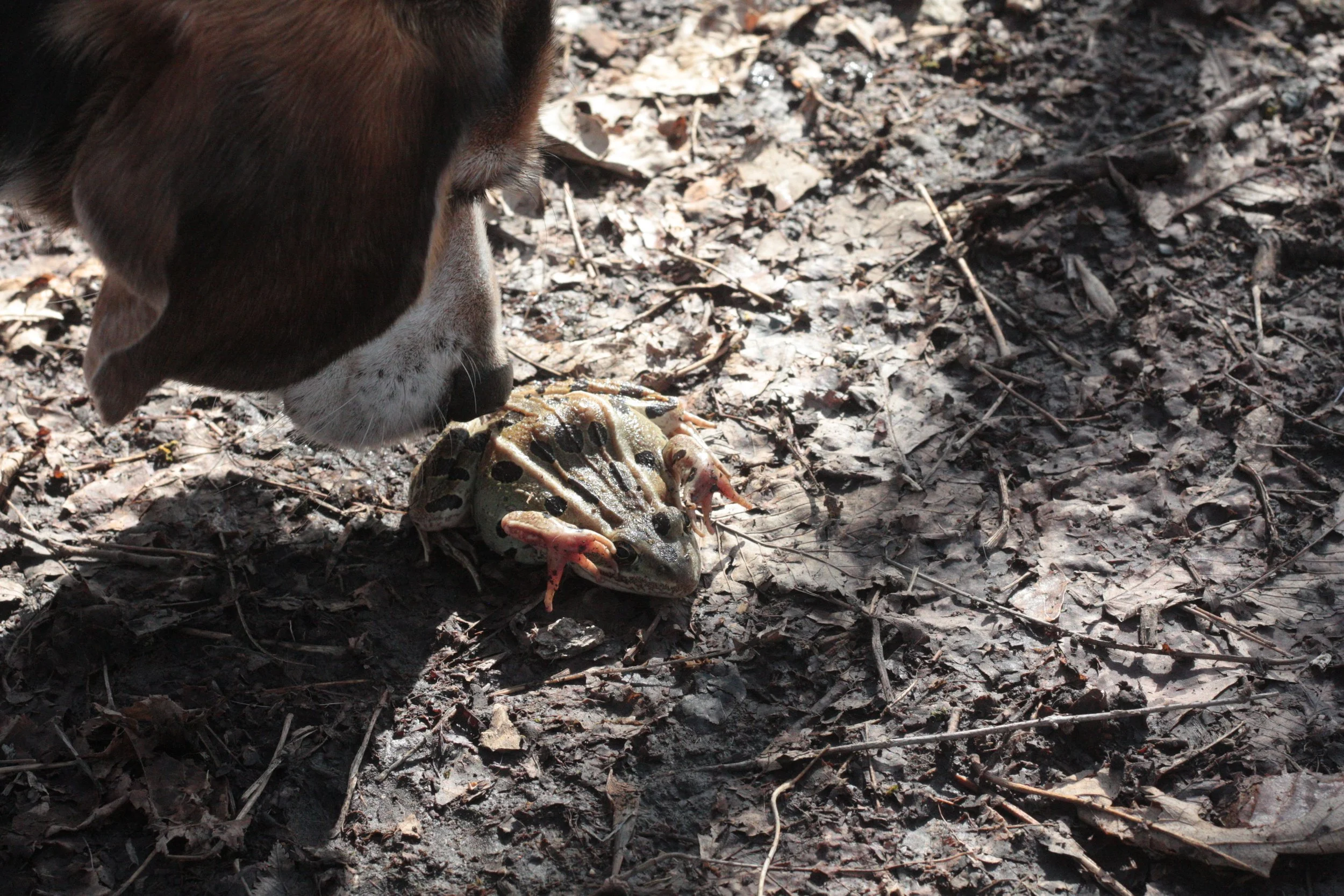
One day this week, we found a frog on our path! 
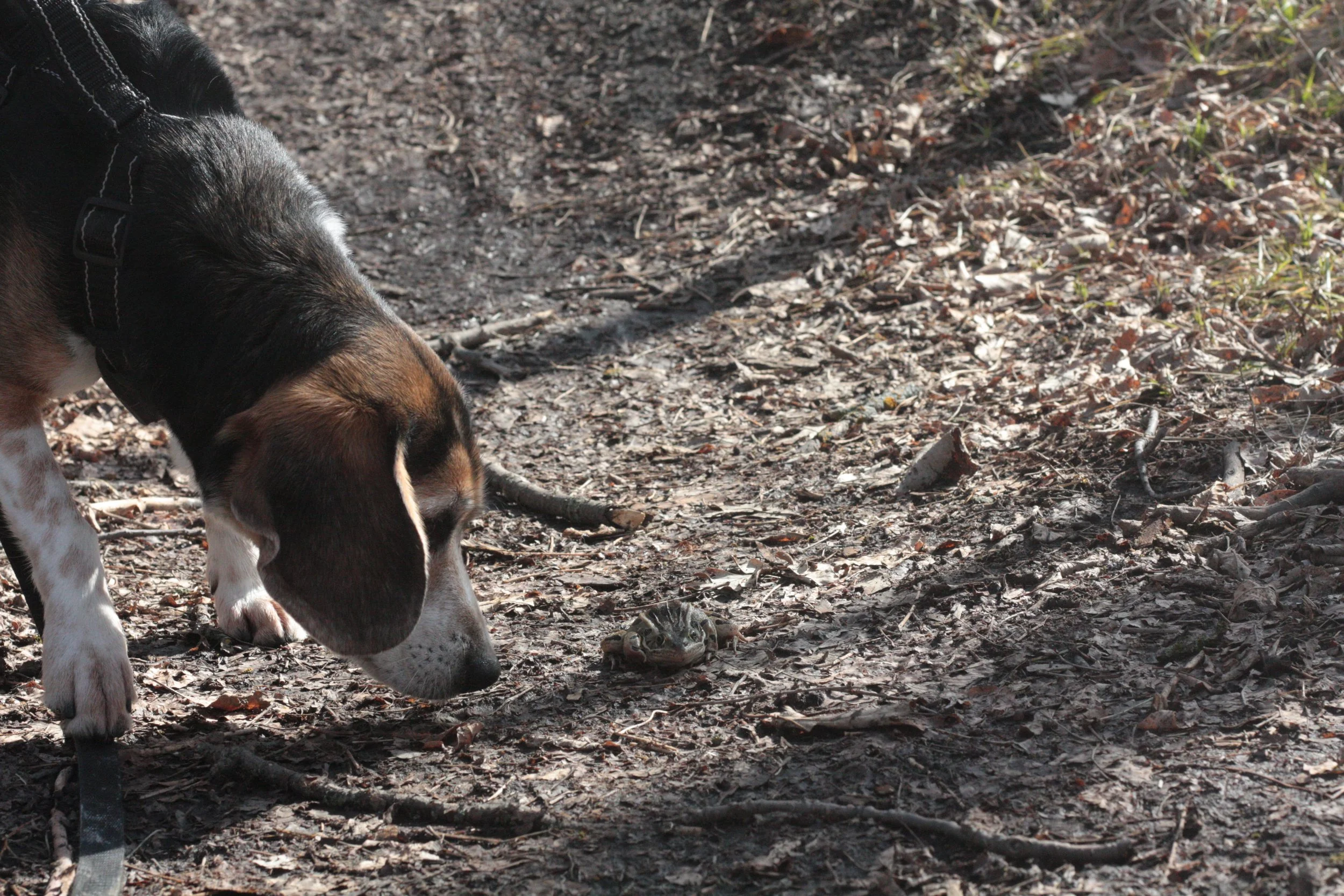
Enzo’s sniffing  caused it to raise its arms… “Leave me alone!” So we did…
Happy Sunday!

Friday Five

It’s Friday! It’s Friday! That means I plan a menu for tomorrow’s shopping and tonight Christian and I might mix a drink from gifted bottles of Vermouth and Campari from his birthday and settle down to watch the latest episodes from the shows we’re currently watching: Shrinking, Bad Sisters, and The Empress. Meantime, let’s clear some of the flotsam from my head…

1 Deep thoughts

Consuming a variety of media from a variety of free sources sometimes has the happy effect of creating a cohesion of ideas. It’s like media consumption can be a stroll in the garden, and I come back with a posy and put it on display here.

First, there are these thoughts on care from StevenScrawls via Dense Discovery. He writes that care cannot be scaled and that this fact elicits “a sense of insufficiency” because “it is tempting to view individualized work as something paltry or unimportant.” I am familiar with this feeling. I meet it anytime I have to peel myself away from a project in order to volunteer time somewhere else. It’s humbling in a way, which leads to the second flower in this posy… Brian Doyle’s words on humility via The Marginalian. He writes:

Humility does not mean self-abnegation, lassitude, detachment; it’s more a calm recognition that you must trust in that which does not make sense, that which is unreasonable, illogical, silly, ridiculous, crazy by the measure of most of our culture. You must trust that you being the best possible you matters somehow… That doing your chosen work with creativity and diligence will shiver people far beyond your ken. That being an attentive and generous friend and citizen will prevent a thread or two of the social fabric from unraveling. […]

This is what I know: that the small is huge, that the tiny is vast, that pain is part and parcel of the gift of joy, and that this is love, and then there is everything else. You either walk toward love or away from it with every breath you draw. Humility is the road to love. Humility, maybe, is love.

I find these words consoling. The same way that StevenScrawls ends his post with the words: “But if your goal is to care for the world, and in a given moment you’re deeply caring for one person, you’re doing the best it’s possible to do. There’s something oddly comforting about that.”

Care, love, kindness… There’s a third flower in this posy from podcasters’ discussion on the subject of Vasily Grossman’s book Life and Fate in which they quote a passage they find very moving. It is this:

The powerlessness of kindness, of senseless kindness, is the secret of its immortality. It can never be conquered. The more stupid, the more senseless, the more helpless it may seem, the vaster it is. Evil is importent before it. The prophets, religious teachers, reformers, social and political leaders are impotent before it. This dumb, blind love is man’s meaning.

Human history is not the battle of good struggling to overcome evil. It is a battle fought by a great evil struggling to crush a small kernel of human kindness. But if what is human in human being has not been destroyed even now, then evil will never conquer.

Care and love and even the more elementary kindness, come from humility, are acts of humility and if they do not scale, if recognizing that it is so brings some comfort, Grossman is convinced it triumphs.

2 Vignette

I’m at a table with older people eating a catered lunch of meat in a bun, plain salad on the side. They’re talking about a church that’s been repurposed as a hall and transported from one community to Miami. I’m a conversation participant. Transporting a church sounds impressive. A man formerly in construction sketches how it’s done. I ask, “It was cheaper to transport the building than build a new one?” Oh definitely they say. I ask how far the town was from Miami. Just a little over an hour to the East they say, one providing the highway, another the towns along it. Perhaps my face is more expressive than I mean it to be, but someone catches on that I only just understood that there’s a town named Miami in Manitoba and I’ve made everyone laugh.

3 Relationships etc.

I recently finished I’ll be Gone In the Dark by Michelle McNamara, the audiobook, which makes time spent baking cookies fly by. I particularly liked the autobiographical chapter in which she writes:

My mother was, and will always be the most complicated relationship of my life. Writing this now, I’m struck by two incompatible truths that pain me. No one would have taken more joy from this book than my mother and I probably wouldn’t have felt the freedom to write it until she was gone.

Later, reading the Paris Review interview with author Sally Rooney, there’s and idea of hers that seems related. What happens in real life that is sometimes so hard to describe, is something authors like herself explore in the creation of a story.

Everything you’re describing felt like the very questions I was working through in the book. Families get stuck in certain roles, but what becomes possible when one of those roles is suddenly absent—in this case, because of the death of a family member? There’s some guilt and discomfort in realizing that new family formations are possible because this beloved person is no longer there, and the space their absence leaves—maybe you don’t want to fill it?

I think it similarly fascinating the difference between the real-life criminal person you “meet” in I’ll Be Gone In the Dark, and the fictional Raskolnikov in Crime and Punishment. (Omg! I finally finished reading this book. See here.) Crime and Punishment is an artistic rendering, it’s an author imagining what went on inside a young man’s mind that made him commit a crime. In I’ll Be Gone In the Dark the criminal is only viewed from the exterior, never the interior. I like feeling the contrast.

4 Recipe recommendation

This week, I made cabbage rolls. I made them only once a decade ago and we didn’t care for the recipe and it took me until now to make a second attempt. I chose Ina Garten’s “Stuffed Cabbage” wanting to serve my grandmotherly guests something that felt old-timey. Even with only regular cabbage, this recipe was very tasty and abundant. I look forward to trying it with Savoy cabbage when it’s in markets in the fall.

5 Changes in the landscape

There’s a scene toward the end of “Perfect Days” in which an older man pointing to an empty space asks Hirayama “Remember what used to be here?” Hirayama looks around a little startled and the man smiles and turns away, saying “That’s what growing old means.” 

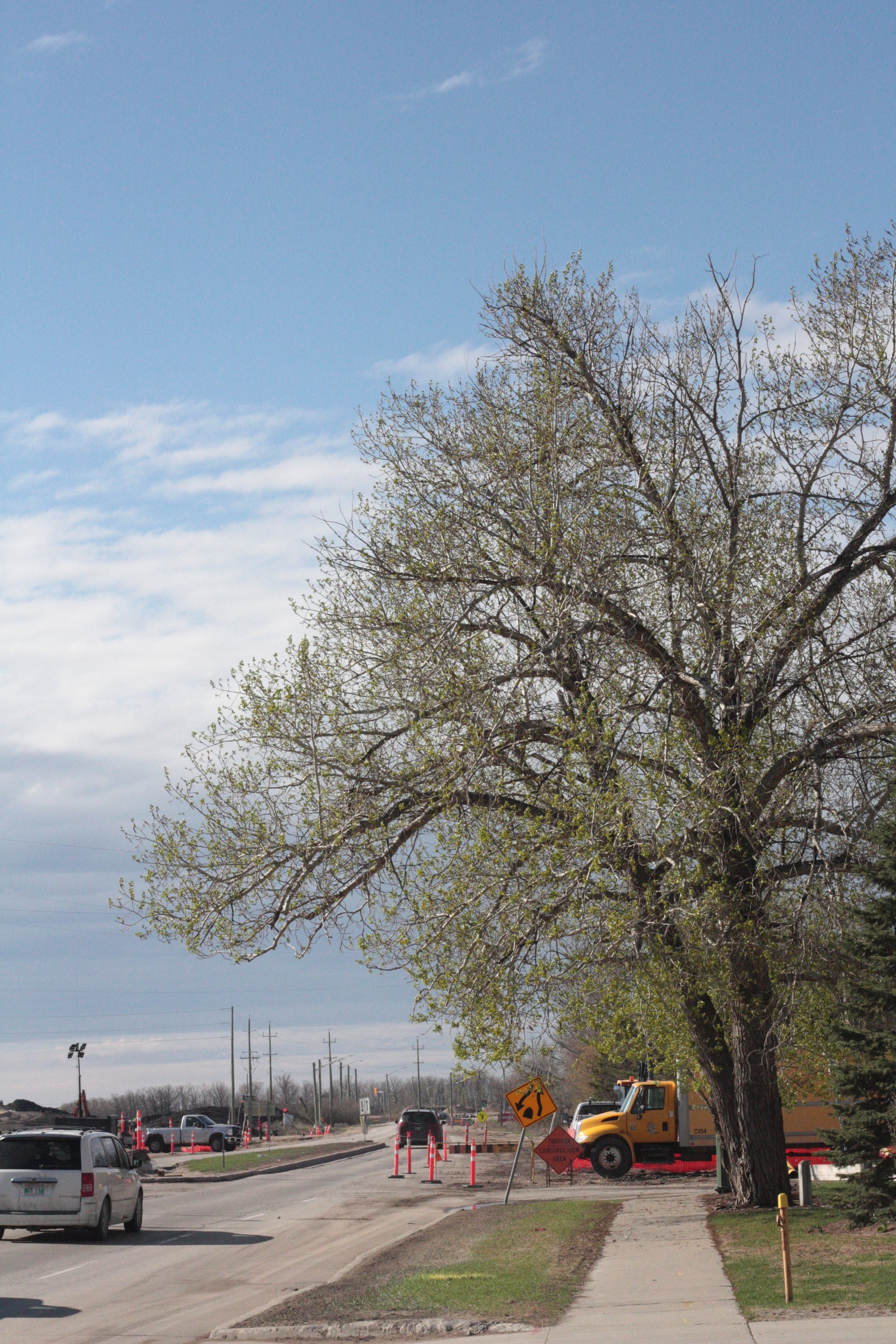
Around me, the city changes. I walk, year after year, this loop with its particular segments. The St. Mary’s interchange came up to one of those segments, and from May to November I had to modify the loop while constructions workers changed the road. What used to look like this:

now looks like this:

The row of giant poplar trees have been cut down.

It was months of work…

The road was torn up, drainage infrastructure was buried, new roads were made.

It’s all modern and sophisticated now…

It’s dark now as I type. Still, happy Friday!