A week on Sunday (no. 35)

What does summer look like here? It looks like a new coat of paint on our house, and a coat of stain on the fence…


It’s the dog sitting in regal elegance on one of the folding chairs left strewn about between family gatherings…

It’s a round of go-karts and bumper boats on a bright sunny day.


Fun signs…

Leisurely cart returns and noticing the sparrows that have elected to preen their feathers there…

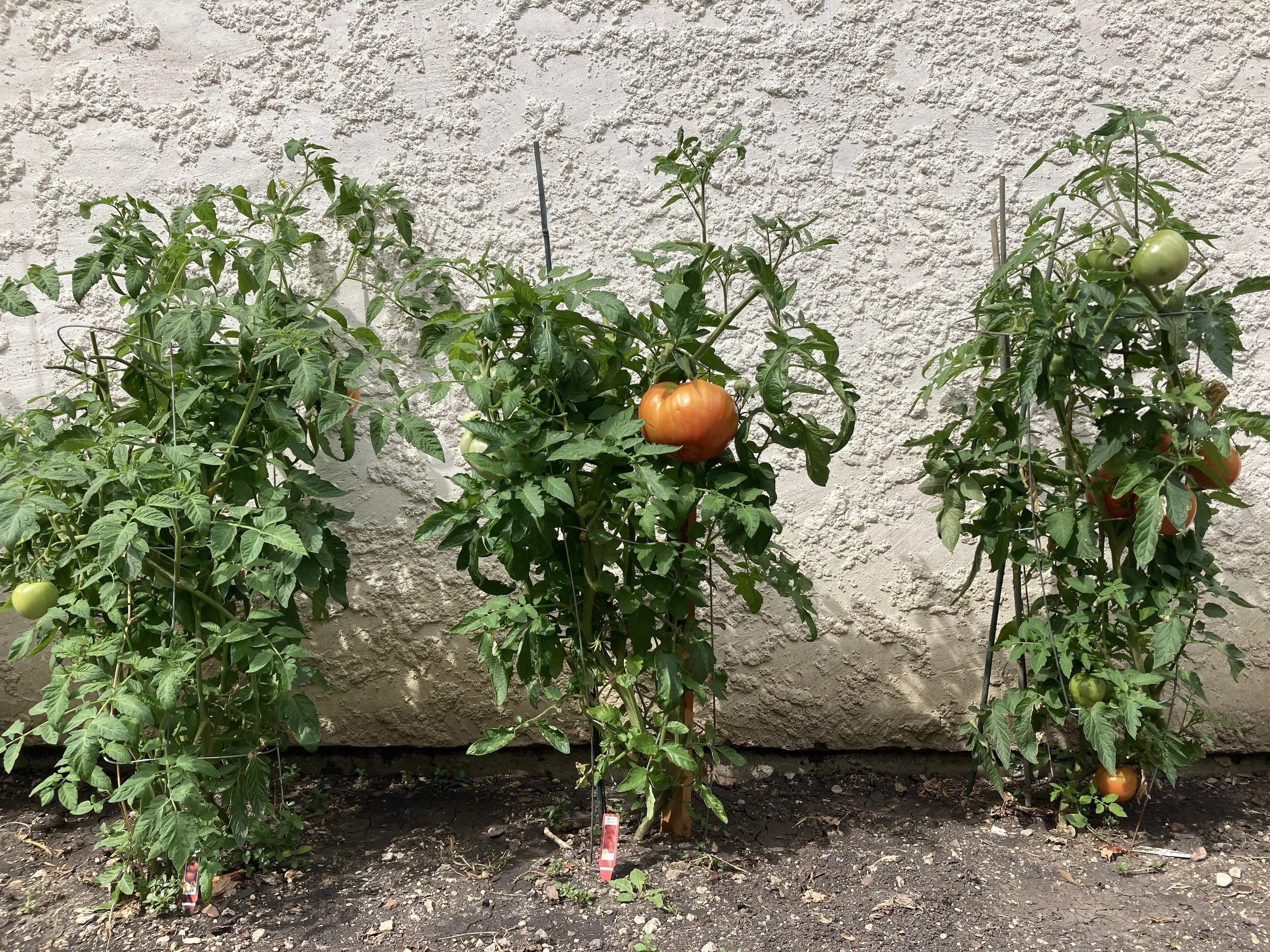
It’s tomatoes ripening on thick green stems.
A day at the beach…

Reading List: Searches and Seizures by Stanley Elkin

Elkin’s writing is described, on the wikipedia page (here) dedicated to his biography, this way:

Characters and especially prose style take full precedence over plot. His language is extravagant and exuberant, baroque and flowery, taking fantastic flight from his characters' endless patter.

And indeed, it seems fitting that the son of a costume-jewelry salesman should bedeck his stories in lavish frivolity. I would have the impression, at the end of a story, of having spent time not getting anywhere. So why does Francine Prose like this author? For good sentences. She writes: 

It’s a good idea to have a designated section of your bookshelf (perhaps the one nearest your desk) for books by writers who have obviously worked on their sentences, revising and polishing them into gems that continue to dazzle us. These are works you can turn to whenever you feel that your own style is getting a little slack or lazy or vague. (Reading Like a Writer, p 47.)

It’s appropriate that a passage I liked captures the end-of summer feeling creeping up on us right now…

[The pool was] thick with people who had not been in it all summer and who now, in the last week it would be open, found themselves rummaging its waters and equipment, the Styrofoam kickboards, striped polo balls and outlandish toys. Last-flingers - some of them actually on vacation - who out of some deep sentimental instinct, like people who crowd aboard a train they have never ridden but which is about to be taken out of service, they squeezed their feet into rubber flippers, scurried to do one last memorable milestone lap, one final dive, kissed the snorkel, cruised on ribbed, rubber air mattresses. Yet despite this element of the frantic, their overall mood was mellow with reconciliation and detail.

Beside them at poolside, his distinguishing characteristics as their lifeguard worn thin (as on ocean voyages the initial mysteries of ship and crew diminish with custom and ultimately accommodate themselves to that democracy of voyagers, passenger and sailor both drawing near land, and it suddenly occurs to you that the deck steward also has an address and the captain hand luggage), easy now because here it is autumn and no one has drowned or been seriously in trouble (so he’d saved them after all, standing by like a peacetime army), his pith helmet and whistle nothing more now than bits of eccentric jewelry, Preminger melded into their midst, listening, hearing them, never so comfortable (unless it was driving in that limousine to his father’s funeral), nothing on his mind save their voices, monitoring their babble like a ham of the domestic, listening so hard that he was able to pick out individual conversations. (“The Condominium,” p 282.)

By contrast…

I read this book in less than a week.

Luke Burgis (here) on Conversations with Tyler said “we might be entering an age where we can actually learn more about what it means to be human than less, and that might lead to a renaissance in the humanities, for instance. I think AI is performing a kind of via negativa on the human person, maybe even the human soul, and helping us discover who we are. And to me, that’s very exciting.” I also think it’s exciting! And in that vein is Alexandre Dianine-Havard, reaffirming the existence of the soul, the values and virtues that make life fulfilling.

Cooking

I gathered all our favourite recipes celebrating corn (here) and then tried a new recipe by Pierce Abernathy (Instagram) called “Corn Compound Butter”. It’s very popular right now. It’s been mentioned on three different Substack newsletters (one, two, three)! 
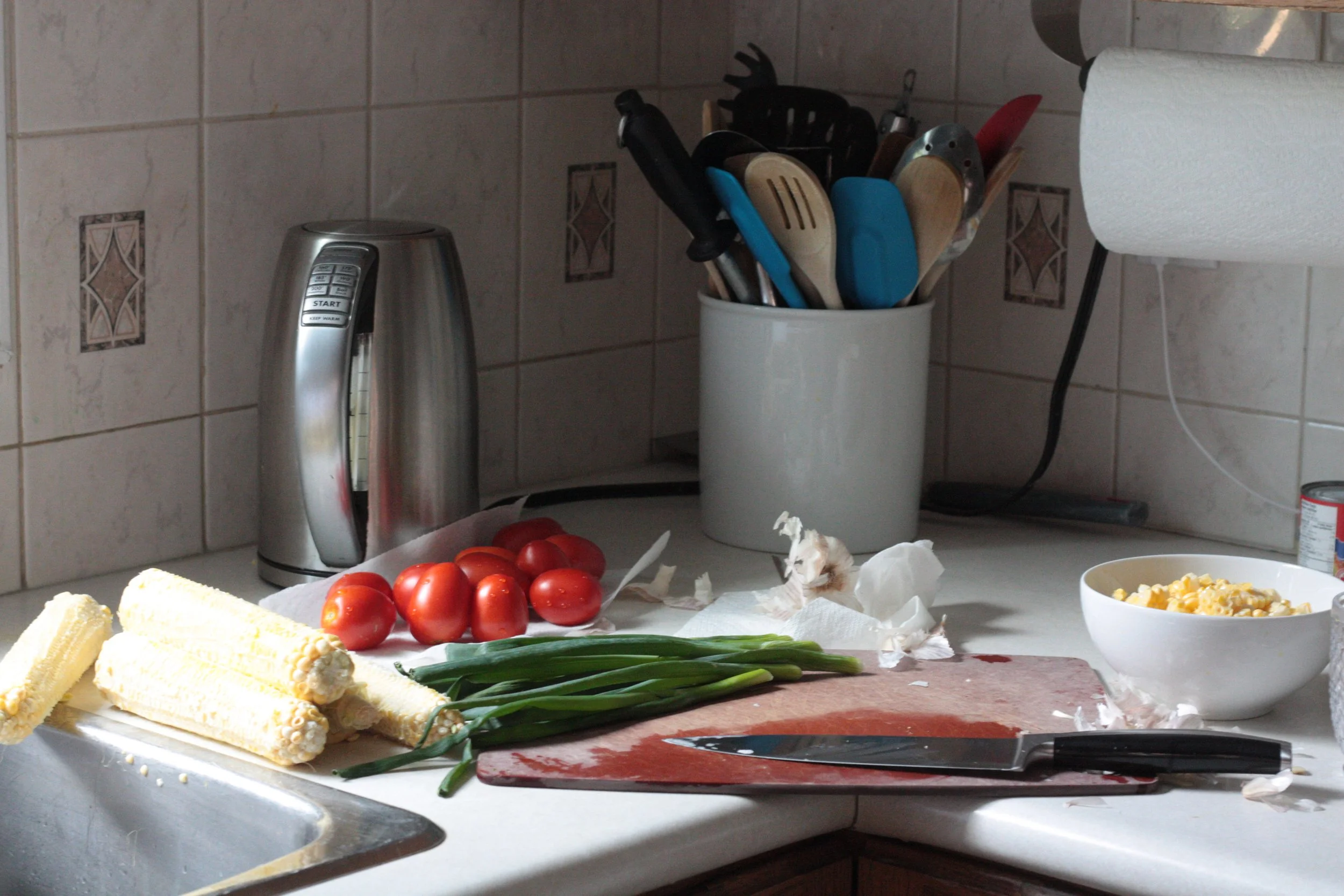
A still life… the counter as I was preparing Corn Chowder this week.

Enjoying

This sentence by Elle Kamihira (here): “And mostly my mother stepped in to close the gap between his imagination and the inevitable work it took to achieve anything.” Via Curious About Everything

I like thoughtful tributes made to Dolly Parton, subsequent her death. This I relate to: “…if I write about things that bother me then they don’t bother me anymore.” Via Hanif Abdurraqib (on Instagram).

And how about this encouragement to write by hand? (here)

And to conclude…

A view of the Red River at golden hour…

Happy Sunday!

What to cook - the corn edition

I really look forward to fresh corn every year. Boiled, slathered in butter and salt, it is perfect as-is; but when you’ve reached your fill of being a human corn-eating-typewriter (a tv trope explained here) or don’t want to present yourself as such in front of company, there are recipes that make the most of this seasonal treat.

  1. Corn Chowder from Food Network Kitchens Cookbook (published in 2003). I’ve mentioned this recipe before (here), writing: “The recipe feels like an indulgence, for by its simplicity (corn, garlic, scallion whites, salt, a bit of sugar and water) it elevates the taste of corn and magically intensifies it.” It is the most “uncluttered” of corn recipes. It could also be argued that “chowder” is a misnomer, since this soup uses no milk or cream nor require a roux. The thickness comes entirely from the corn itself of which two-thirds is blended. The recipe on page 51 features an herb salad as topping, but we don’t bother.

    8 ears fresh corn, preferably white, shucked
    6 tablespoons unsalted butter
    8 scallions, white parts chopped
    6 cloves garlic
    1 tablespoon kosher salt
    2 teaspoons sugar
    freshly ground black pepper
    3 sprigs fresh parsley
    3 sprigs fresh thyme
    1 bay leaf
    6 cups water

    Shear the corn kernels from the cobs with a knife. Put about 2/3 of the kernels in a large bowl. Set aside the remaining kernels for adding to the soup before serving. Working over the large bowl, run a knife along the cobs to press out the milky liquid. Snap or cut 3 of the cobs in half; discard the remaining cobs.

    Melt the butter in a soup pot over medium-low heat. Add the scallion whites, garlic, salt, sugar, and pepper to taste. Cook, covered, stirring occasionally, until the vegetables are soft and fragrant, about 12 minutes. Add the larger amount of corn kernels, with their milk, and cook, covered, stirring occasionally, until the corn is tender, about 10 minutes. Tie the parsley, thyme, and bay leaf together with kitchen twine and add to the soup along with the reserved cobs and water. Bring mixture to a boil, reduce the heat, and simmer, uncovered, until slightly thickened, about 30 minutes. Remove the herb bundle and cobs and discard.

    Puree the soup in batches in a blender (or in the pot with an immersion blender) until creamy. Return the puree to the pot, add the reserved corn kernels, and simmer over medium heat, uncovered, until the whole corn kernels are just tender, about 5 minutes. Taste and adjust the salt and pepper. Divide the chowder among soup bowls.

    In our house, we typically serve the soup with grilled cheese sandwiches.

  2. Bacon Corn Hash from Deb Perelman’s website Smitten Kitchen (published in 2012 - link here). This is simple and delicious and a complete meal in itself, egg optional. 

  3. Tomato and Corn Pie from Deb Perelman’s website Smitten Kitchen (published in 2009 - link here). This recipe isn’t simple because it involves peeling and seeding tomatoes and making a pie crust. However, in its defence, the pie crust is forgiving and peeling and seeding tomatoes can be done according to taste (I don’t mind the extra step in favour of a less ‘wet’ pie, and no skins, but Deb’s 2026 update dispenses with this step). In her cookbook Smitten Kitchen Keepers, published in 2022, Deb created a recipe based off of this, writing “a few years ago, I ditched [Tomato and Corn Pie] and turned it into a biscuit-topped cobbler” (page 149). Although the cobbler is easier, I still prefer the pie and find that its assembly, as a project, yields a worthwhile result.
    In our household, it’s the adults that like this meal and its one of the few I make year-over-year where my husband and I shrug our shoulders and say “too bad” to our non-participant kids. (It can be a bummer to make a meal that requires extra effort, only to have “meh” as a unanimous kid vote. This is one recipe for which I’m undeterred.) To make this more substantial when serving it to visitors, I’ve paired the pie with a tomato-less Cobb Salad, using Deb Perelman’s recipe here.  

  4. Corn and Lentil Salad from Jane Rodmell’s cookbook Best Summer Weekends (published in 2004). This is a fairly easy salad to make, requiring only for lentils to be cooked. Depending on how you think of it, the one hour rest in the fridge is an annoyance that requires a bit of forethought, or a bonus for advance meal-prep. (More than a few hours in advance? “Add the fresh herbs right before serving” writes Rodmell.) Grilling the corn adds “a light, smoky taste” but I’ve enjoyed the salad just as much without grilling the corn. Most often I’ve used brown lentils for the salad, but French lentils are good too!

    1 cup green or brown lentils
    leaves from 1 celery stalk
    1 bay leaf
    3-4 ears corn, grilled and kernels removed (approx. 2 cups)
    ½ medium red onion, finely chopped
    ½ red pepper, seeded and finely diced
    ½ green pepper, seeded and finely diced
    ¼ cup fresh flat-leaf parsley, finely chopped
    ¼ cup fresh coriander, finely chopped
    ½ cup Lemon Cumin Vinaigrette

    Toss lentils into a large quantity of salted water with celery leaves and bay leaf. Bring to a boil, lower heat to moderate, and cook, uncovered, until just tender. Cooking time varies depending on the variety and quality of the lentils; start testing after 15 minutes. Drain lentils; discard celery leaves and bay leaf.

    Combine warm lentils with remaining ingredients. Cover and refrigerate for an hour or so for flavours to blend. Allow the salad to return to cool room temperature before serving.

    Lemon Cumin Vinaigrette 

    1 clove garlic, minced
    1 teaspoon ground cumin
    2 tablespoons fresh lemon juice
    2 tablespoons balsamic or red wine vinegar
    6 tablespoons extra-virgin olive oil
    ¼ teaspoon salt
    ground black pepper 

    Mash garlic with salt. Combine with cumin, lemon juice, and vinegar. 

    Whisk in oil. Taste and adjust seasoning. Makes ½ cup.

    In our household, we’ve most often served this salad as a side for grilled chicken. Jane Rodmell recommends mixing “chunks of spicy grilled sausage into the salad to make a one-dish meal” accompanied with fresh country bread, but we have yet to try that!

  5. Corn and Spicy Sausage Orecchiette from Ali Slagle’s cookbook I Dream of Dinner (published in 2022). Unlike the Tomato and Corn Pie, this recipe is unanimously loved in our household. We use mild instead of spicy sausage, and the orecchiette pasta shape has become increasingly available in regular supermarkets in Winnipeg over the years. Recently when we served this meal to visiting family members, they thought Slagel’s use of spent cobs to flavour the pasta water was ingenious. It’s an example for why Slagel’s cookbook is well worth leafing-through.

  6. Sautéed Corn Four Ways from Joshua McFadden’s cookbook Six Seasons (published in 2017). This is corn as a side. Made in its most basic way, corn kernels and green onions are sautéed in butter with salt and pepper for 3 or 4 minutes and served right away. This is the way to most elegantly feed corn to guests where you, as host, do all the work, and no one discusses typewriter eating. McFadden offers spicy and cheesy variations too. 

Other ideas

The above six recipes are our favourite. They are the ones I’ve copied and printed into a binder of reliable meals. But here’s a list of other notable recipes worth mentioning…

  1. Savory Corn Pancakes with Pickled Chiles an adaptation of Joshua McFadden’s Corn Fritters with Pickled Chiles by Catherine Newman on her blog Ben and Birdy (here). I tried McFadden’s corn fritters in 2023 and never remade the recipe, unlike Catherine Newman who liked the recipe and found a way of avoiding deep-frying. I prefer making pancakes with zucchini instead of corn and haven’t adopted fritters of any kind because of the deep frying. Although I’ve made an exception for Sohla El-Wayllly’s doughnuts from Start Here (tried for the first time and mentioned here).  

  2. Corn Stew with Chicken and Sausage by Jenny Rosentrach. This recipe is featured on her blog, Dinner A Love Story (link here) and is also in her cookbook Dinner: the Playbook (the recipe is also on Food52 website here). I’ve made this a few times and it’s a good recipe, if a little meat-heavy. Sometimes it comes down to preference.

  3. Corn and sausage are a pairing that recurs in recipes, as is corn and scallops (see Molly Baz’s Cook This Book - here - which features a recipe titled “Seared Scallops with Curry Butter, Sweet Corn and Sungolds”) Scallops aren’t easily available here and since they’re an unfamiliar ingredient, I’m hesitant to try - but that doesn’t mean you need to be!

I hope these lists might be useful in inspiring some meals, if, like me, you too like corn and want to take advantage of its summer abundance. Happy cooking!