A week on Sunday 4/52

Intro

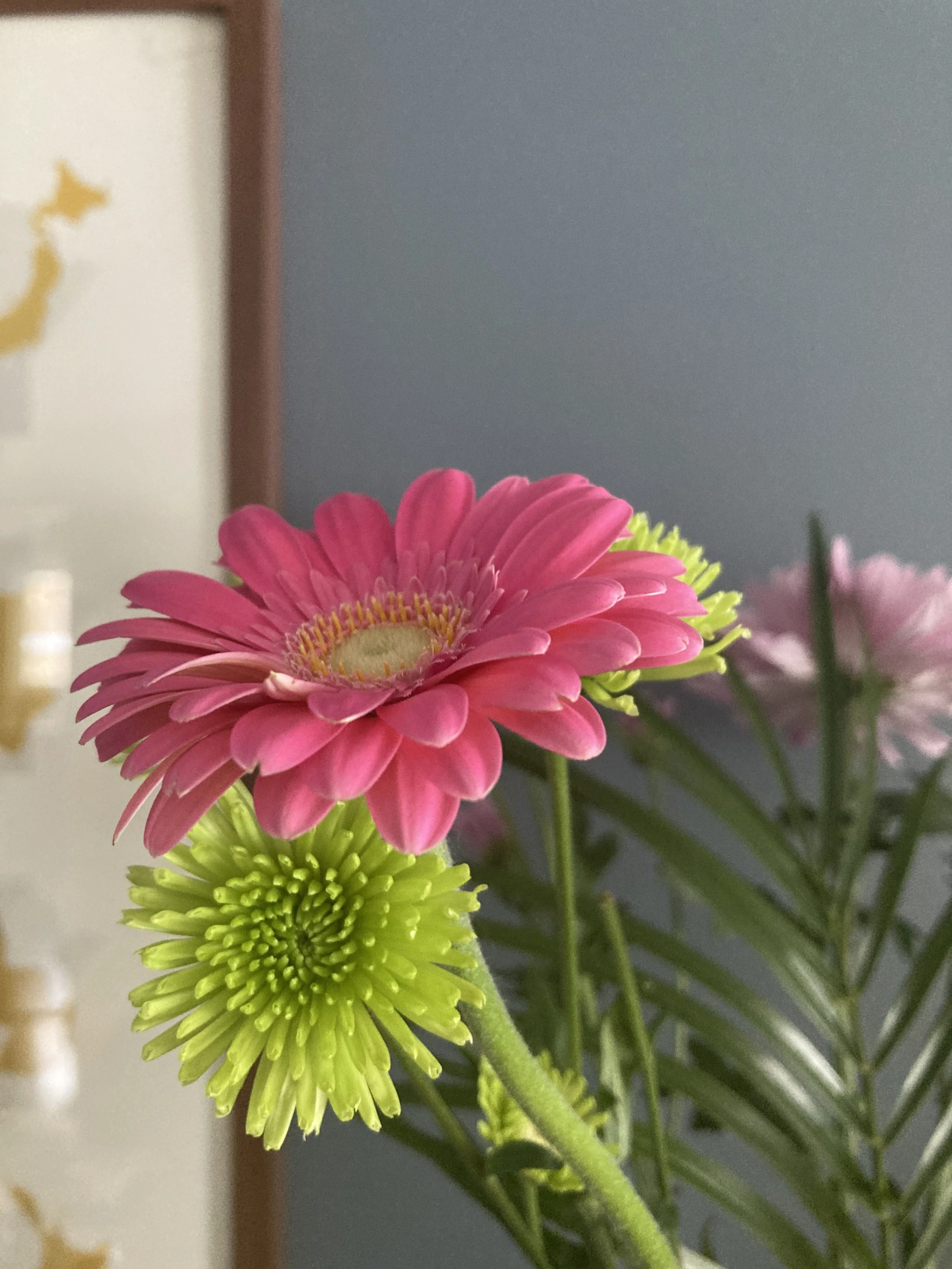
It’s cold here right now… colour is found in gifted bouquets…
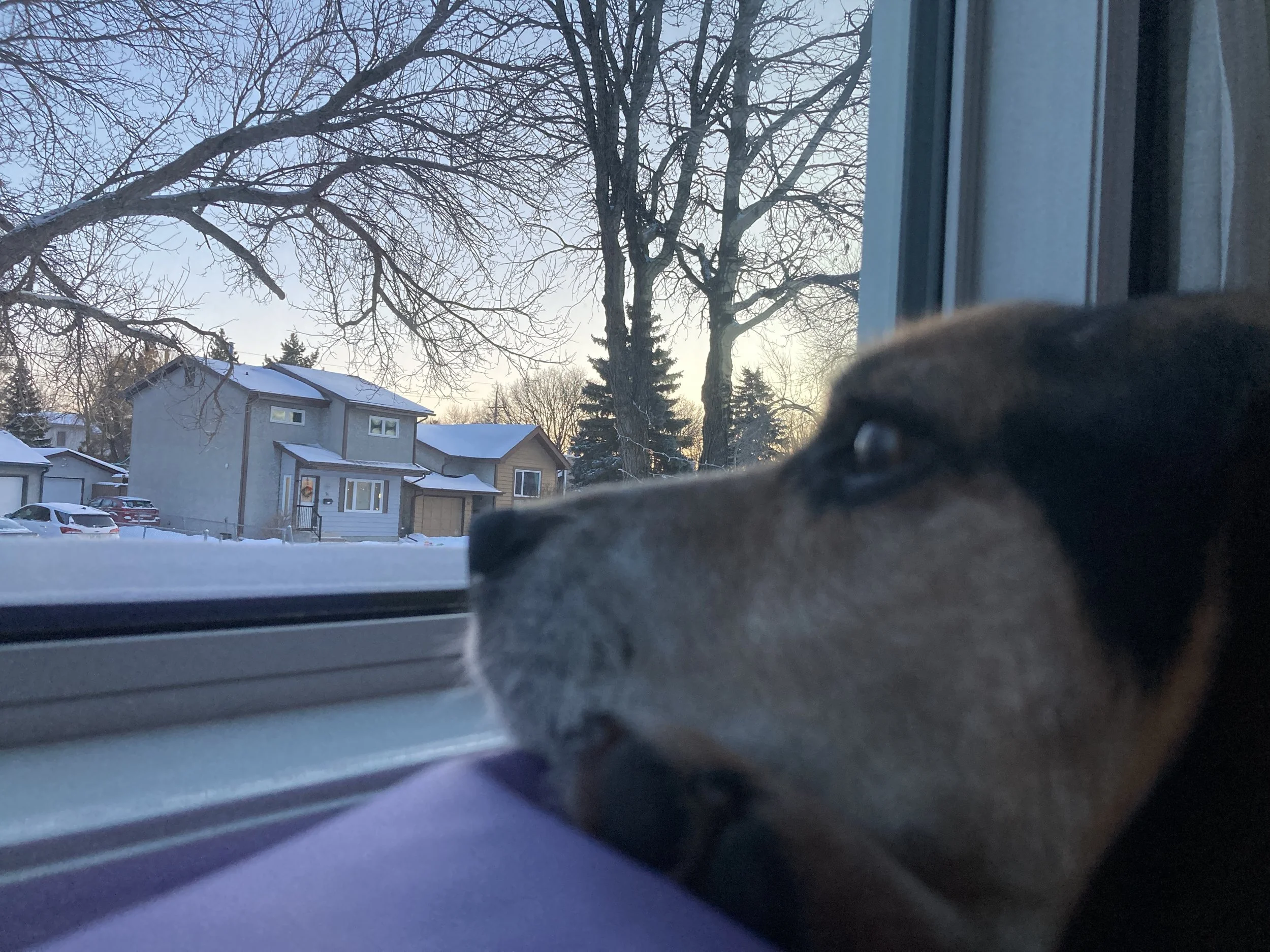
and sunsets observed from indoors…
This week, an overview of a hobby-project, quotes I liked from podcasts I heard lately, and what I’ve baked and cooked in the kitchen.

Genealogy as a puzzle

I’m not that interested in my own genealogy, so much as I am in other peoples. Delving into ancestry reveals first, that it exists… that a person is descended from a long line of individuals within families; and second, little else. The satisfaction comes from filling in a table, which, in the scientific language of academic research, is called “family reconstitution”. It’s a method of filling-in information about a family in an organized way. It has at the top the couple’s name, their parents’ names, their marriage date, and births and deaths; and then it lists their children with all the dates of their birth and death and marriage and who they married.

This past little while, I’ve been gathering information from registries online, to fill in a table for my mother-in-law’s great-grandparents. It is possible to do so because her great-grandparents lived in Quebec, where Catholic parishes kept excellent records. It is also possible because the “Bibliothèque et Archives nationales du Québec” has made these registries available online. (See St. Zéphirin-de-Courval, for example. A map of parishes in the province of Quebec can be found here.)  

Filling in the table for her great-grandfather’s family looks like this:
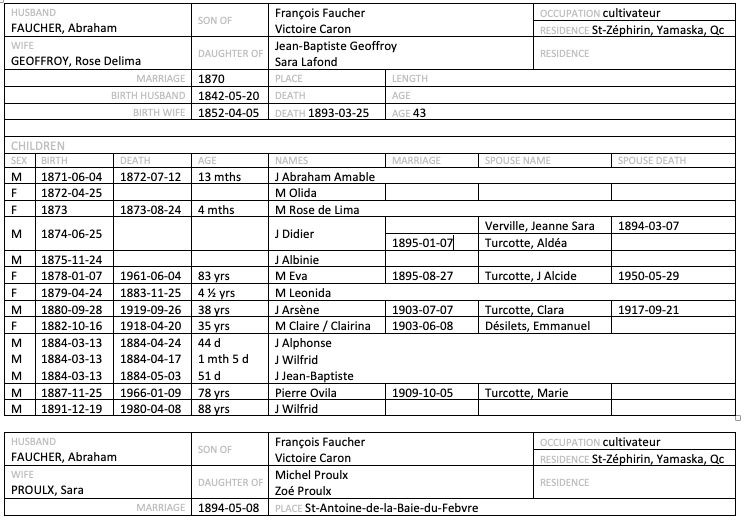
A table allows me to summarize facts like this: Abraham Faucher and Rose Delima Geoffroy married in 1870 and in their 23 years of marriage, they had 14 children, among whom were a set of short-lived triplet boys. Three of their four surviving sons came to Manitoba: Didier, Arsène and Wilfrid. Didier brought his family. Arsène, recently-widowed, brought his children. Wilfrid was a bachelor. The recently-widowed Arsène met with ill-fate. His arrival in St. Boniface coincided with the outbreak of the Spanish Flu, and he, along with 60,000 other Canadians, became one of its victims. His son, Arthur - Rose-Marie’s father - was 4 years old when his mother (Arthur’s wife) died. He was 6 when, two years later, almost to the day, he lost his dad. 

Listening

I find narcissism interesting and appreciated this observation in passing by Diarmaid Macculloch on Conversations with Tyler:

[Thomas] Cranmer survived, remember. He survived by loyalty to King Henry VIII, and I think he genuinely loved Henry VIII, and so served him with a good conscience.

Trouble about that is that a man like Henry VIII is a narcissist. […] The thing about narcissists is that they make good people do bad things. Henry VIII was talented at making good people, such as Cranmer and, I would say, Thomas Cromwell, do bad things. 

I have a theory that persons with a narcissistic disorder build up an image of themselves that they constantly maintain and demand to be maintained. So, indirectly, I feel like Kevin Townley’s comment (here) on the subject of personal brand is indirectly related to narcissism. He says “[…] the attempt to codify and maintain a branded identity is an act of violence. It requires a kind of aggressiveness that is detrimental to you, and I would venture to say others as well.” 

But I also liked his descriptions of art and creativity: “Art is a liberation from being a self. You can do anything.” And:

The writer Robert Olin Butler talks about how creativity is hard. It’s really hard to do. And quite often, we avoid doing it because to delve down into the unconscious realm where the creative impulse seems to simmer is literally hell for a lot of people. For most people, it’s hellish. Even if you’re trying to write a joke, it’s torture.

So the idea is like, if you’re looking at a masterpiece, then you are engaging with a work made by somebody who is doing this all the time. […] you are looking at something that went through this kind of rigorous practice, it’s a practice of not knowing, of transforming negativity into something colourful, something with shape, something with tone, somebody who is able to handle the heat, the white hot heat of the creative process, and bend it […] into some other medium.

Approving

Any new article that makes the case for blogging is one I’ll read! This one from Joan Westenberg.  

Eating

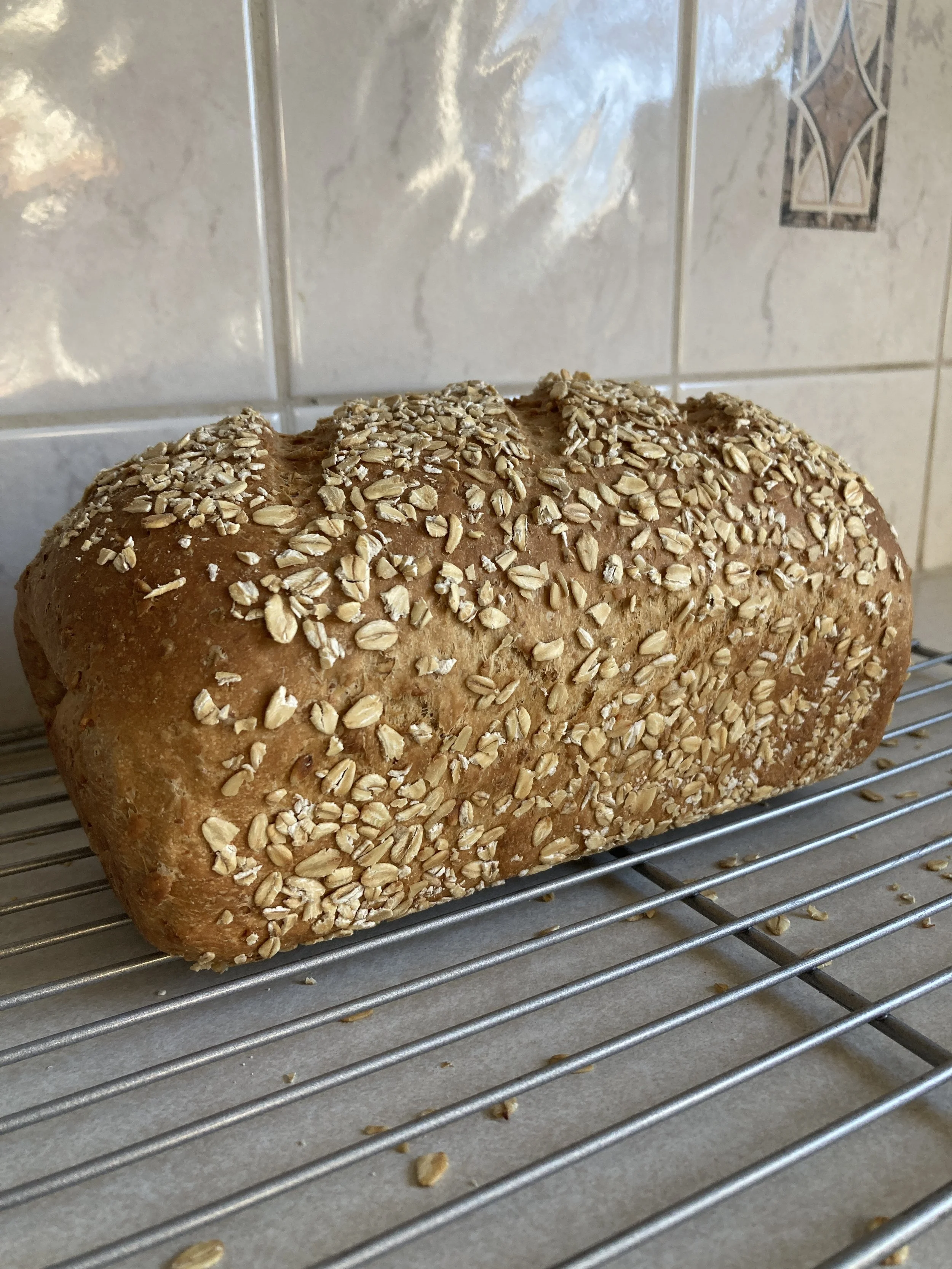
The foray into bread-making continues! This week, a lovely brown “Oat and Molasses” loaf.
Winter is a wonderful time for ragu-type recipes… A slow-simmering meat sauce served over pasta felt like the perfect way to welcome Christian home after his class’s 3-day camping trip. Molly Baz’s recipe in Cook This Book, titled “Paccheri with Pork and Lentil Ragù” (see an iteration on Instagram) uses anchovies for depth of flavour and red lentils for creaminess.  I think I preferred it over other group-pork-based ragù recipes that simmer with milk and vegetables. It’s proof, I would argue, that recipe collecting is a good thing, because you get to discover variations on a theme!

Postcard

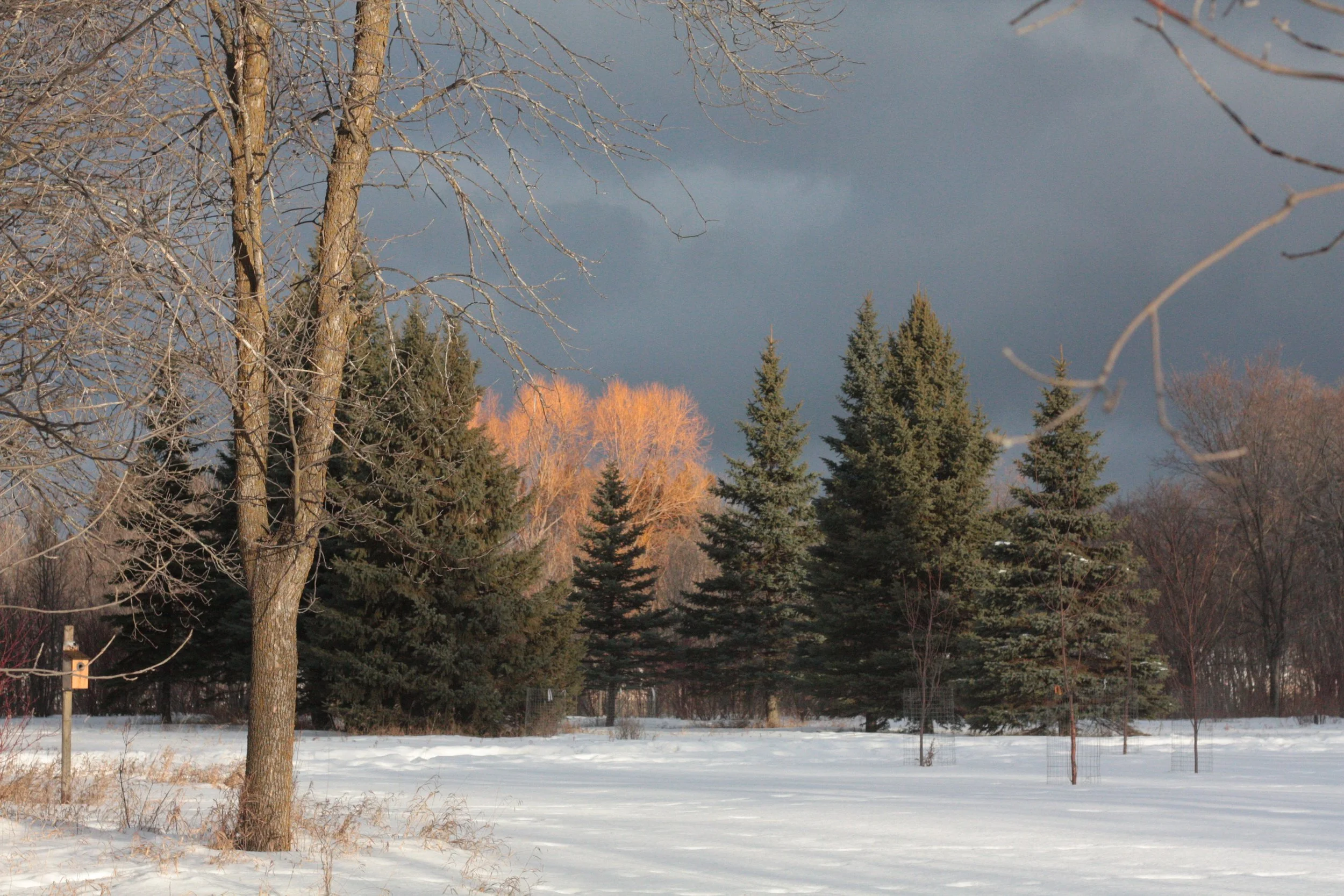
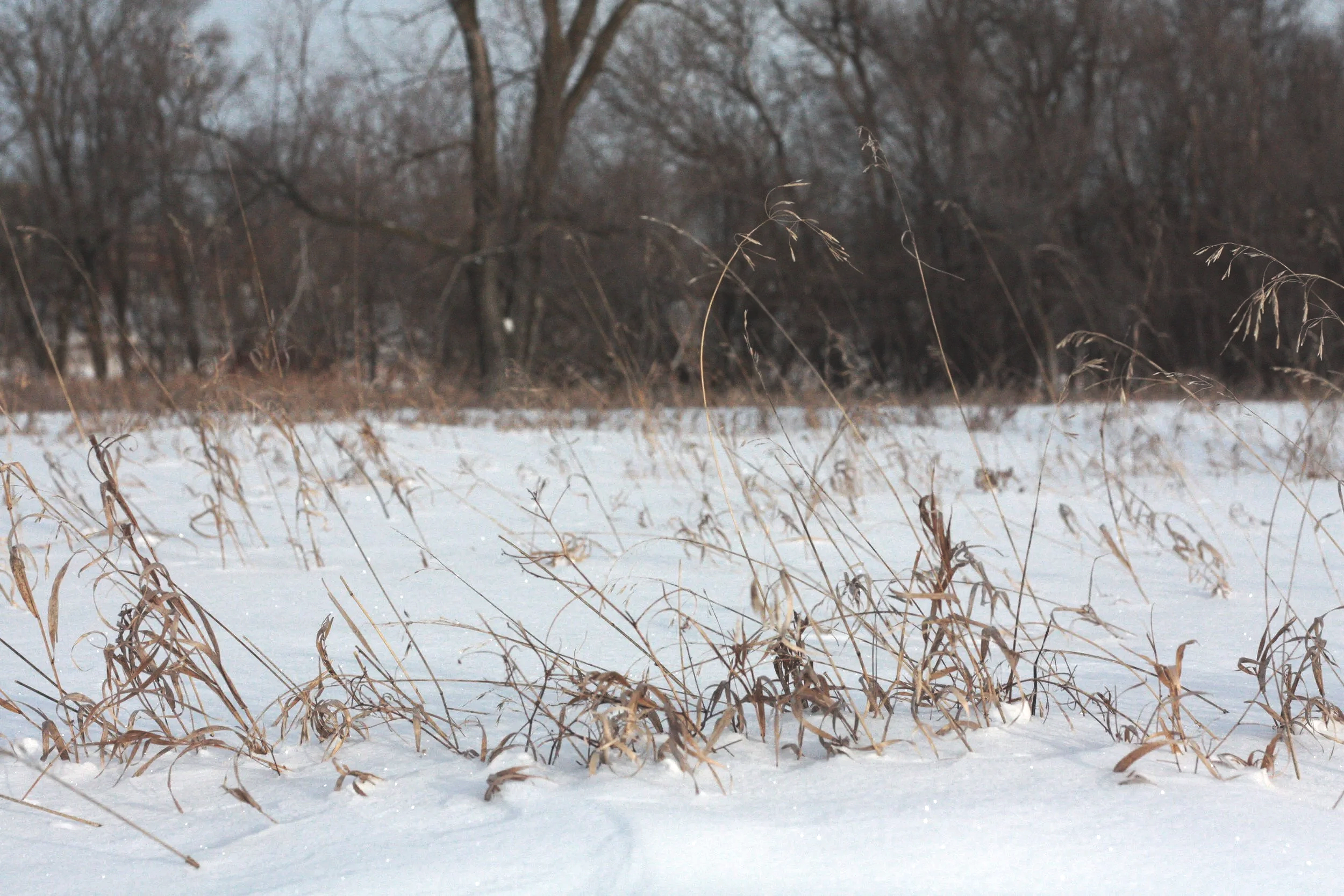
On cold days, when temperatures don’t invite much more than a glance at the landscape as you trudge through the snow, it’s the golden colour of the grass that draws my eye.
Happy Sunday!
A week on Sundy 3/52

Intro

This week, quotes and links related to creativity… It’s where my mind is leaning at present, and I’ll tell you why in a minute. But first, a documentary.

David Hockney: A Bigger Picture

About 12 minutes in to the above titled film available on Kanopy, Hockney says this:

I got a little sketchbook, a Japanese one, like a concertina and I would draw a certain kind of grass. I filled the book in about two hours with all these different kinds of grass. To most people, it looks like a jumble - because it is - but because you’ve done that, looked into the hedgerows, seen all the variety, then you draw it. When you’ve drawn it, when you then look again at the hedgerow, your seeing becomes clearer and you know you understand what’s going on more. And you realize there’s a fabulous lot to look at. If you want to replenish a visual thing, you’re gonna have to go back to nature, ‘cause there’s the infinite there, meaning you can’t think it up, I don’t think. 

I like how he shares a tip, a little practice he’s used himself that I can use too, and the subsequent appreciation for nature that comes from it. It makes me feel like drawing should have a place in education. Not a prescriptive kind of place, but a “freedom of exploration” kind of place. (I found this documentary from a book Sandi Hester recommended on her Youtube channel here. The library here doesn’t carry the book, but does have the documentary and I enjoyed it.)

A few more quotes on the subject

I like how Kristen Vardanega begins her first video of the year with a phrase to contradict the other well-known one… She says “I would like to ‘move slow and make things’.” Me too! In that vein, I appreciate the encouragement such as Orla Stevens offers it: 

You don’t need to know why you’re doing something. You don’t need to know where it’s going to take you. You just need to listen to your curiosity and let it take you where you’re meant to be going.

And her reflection that comes from pursuing that curiosity:

One of the main life lessons I think have been as a kind of byproduct of making and working in sketchbooks it’s not even really the art that’s the most important bit. It’s like the way that it lets you see the world more creatively and lets you appreciate the little things.

House upgrades and Mr. Enzo (the dog)

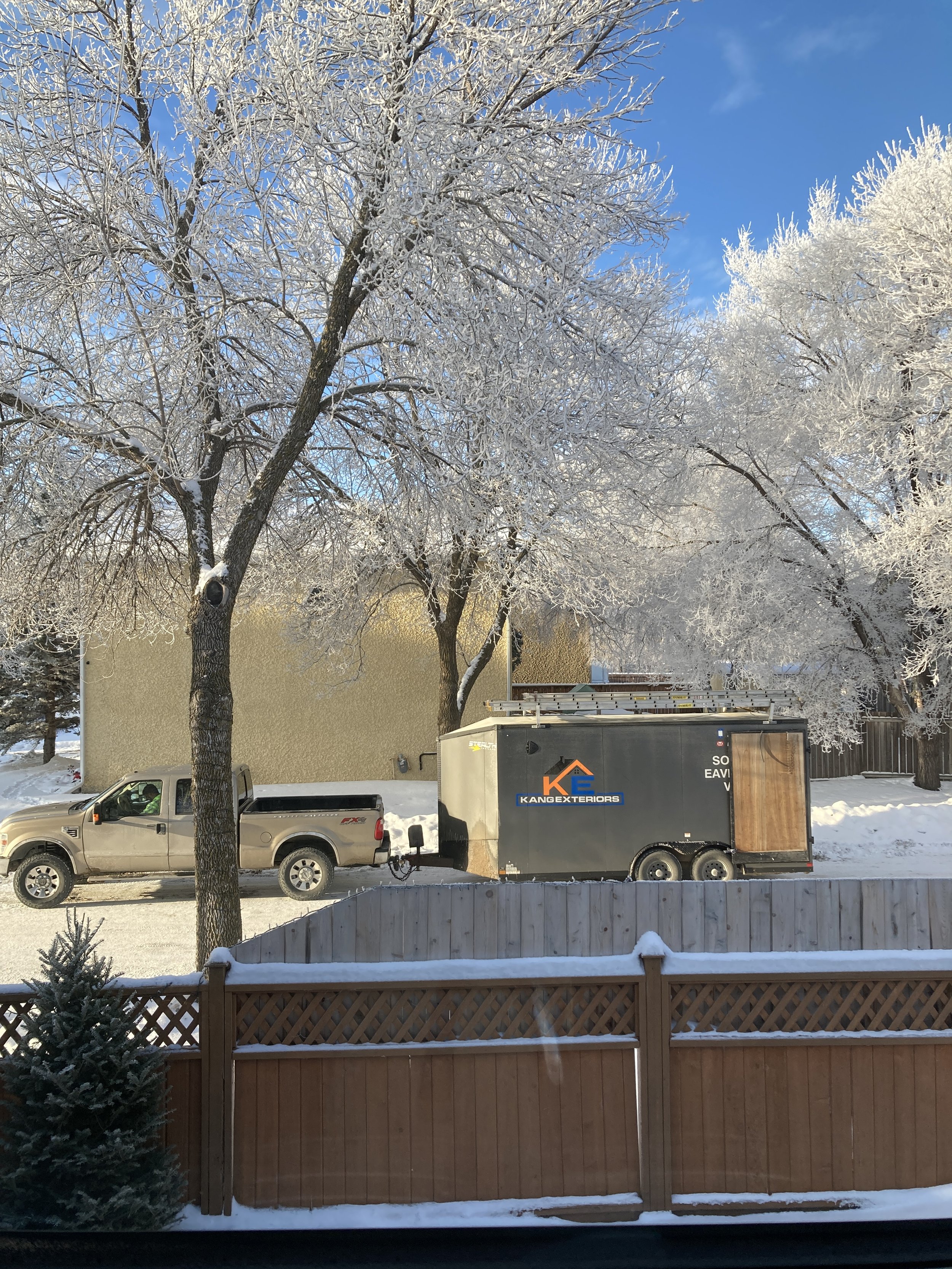
One day last week and two days this week, a little team of workers ascended ladders to replace the original eaves troughs on our house. Until then, we didn’t know it could be a winter project. It seems especially productive to transform a bit of our house when the yard is in hibernation, so that spring runoff will have a brand new highway.

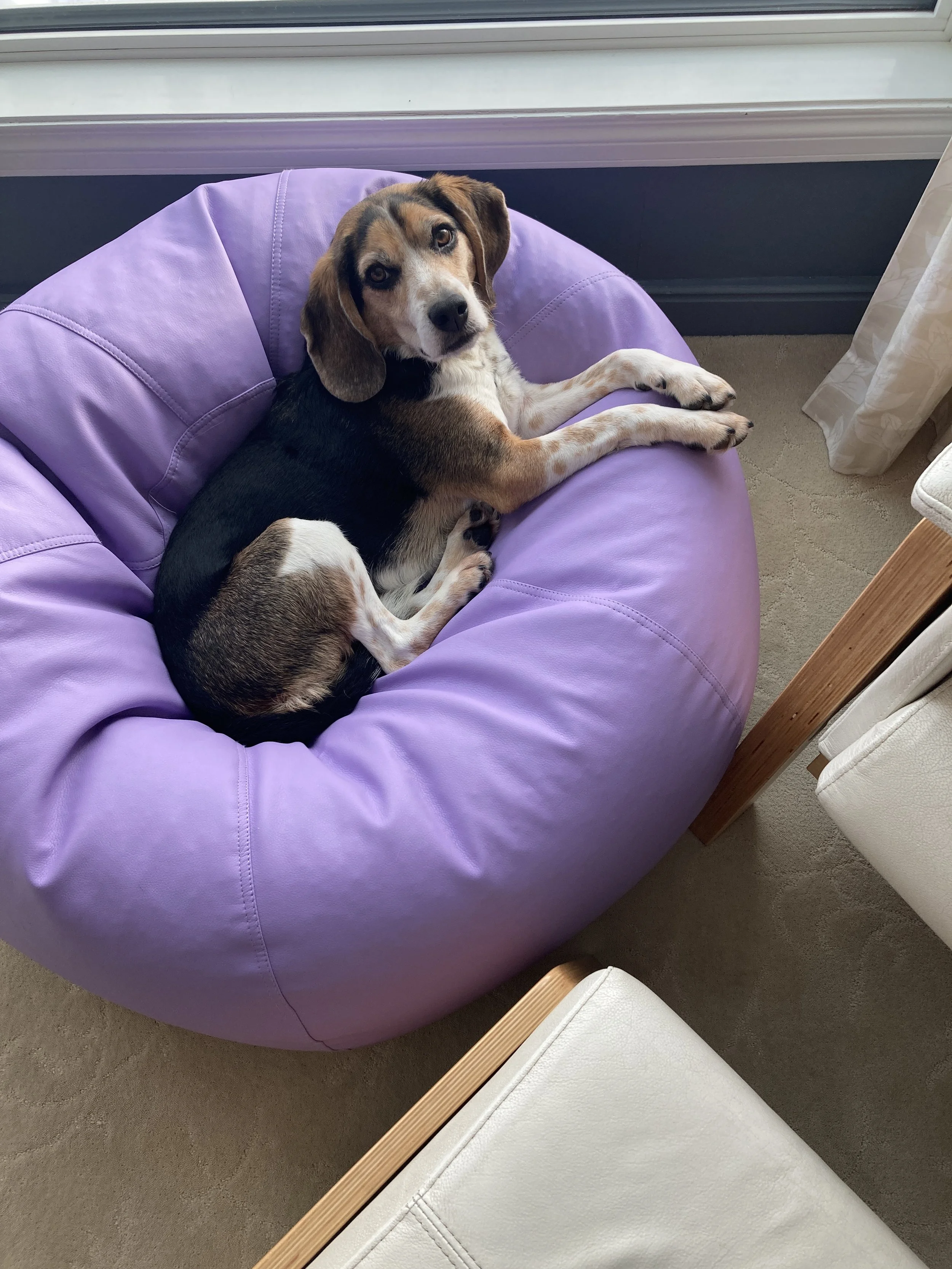
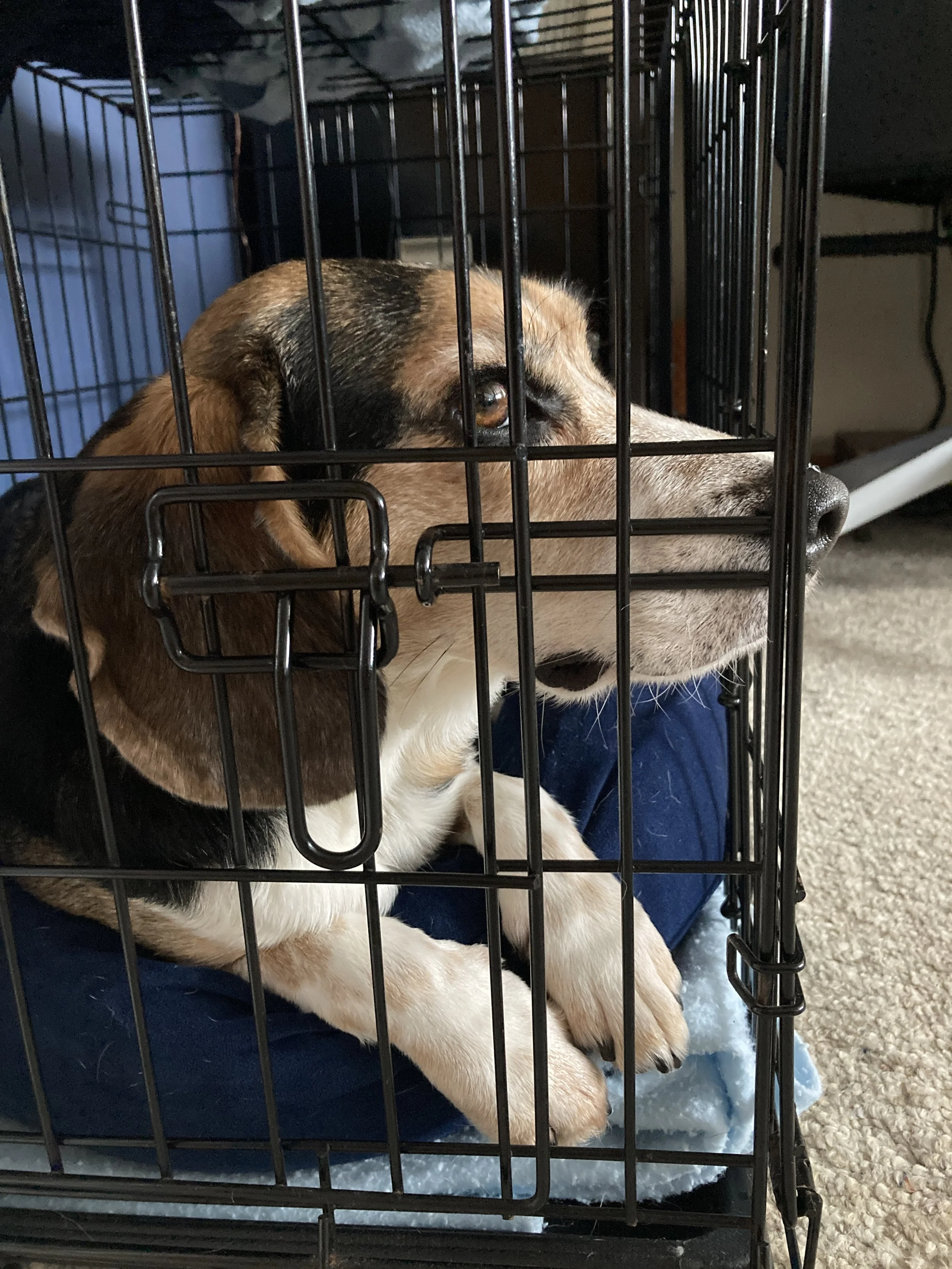
As nice as that is, our dog was acting as if the fortress was under siege and I would have reached the end of our Tupperware of treats before he would agree to settle. Eventually, he seemed most comfortable in his cage, but at risk of teasing the poor boy, let’s just say his anxiety was still manifest:

As soon as the workers left and order was restored to his little universe, all he wanted was a peaceful stay in his new bean bag.

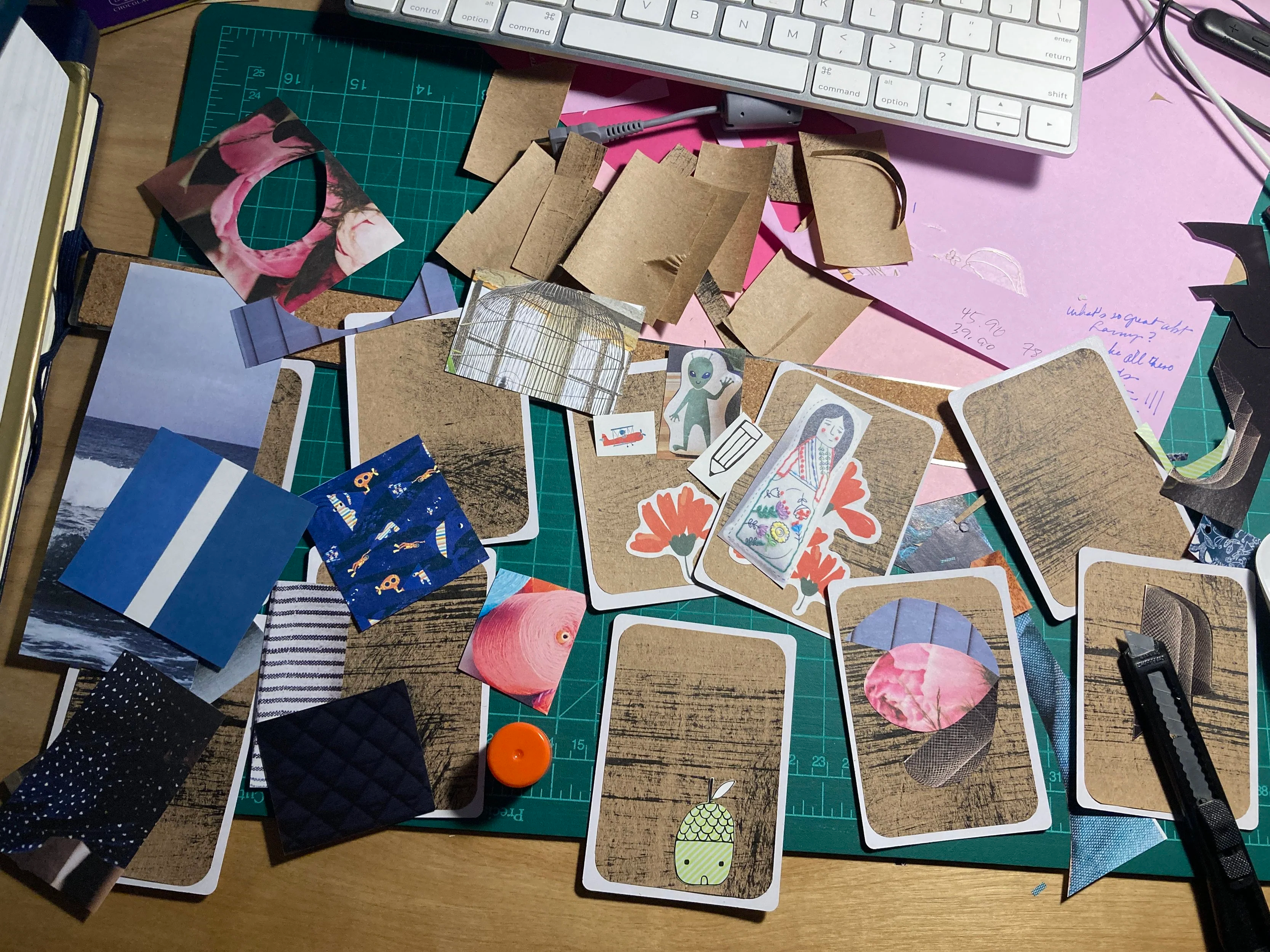
Hardly less rattled than our poor dog, I eventually dedicated a few hours to playing around with collage. Collage feels like almost childish fun to me, and in my imagination it has even fewer rules than drawing does… collage, in the end, doesn’t need to look like anything. You stop when you feel like it. You arrange at will. 

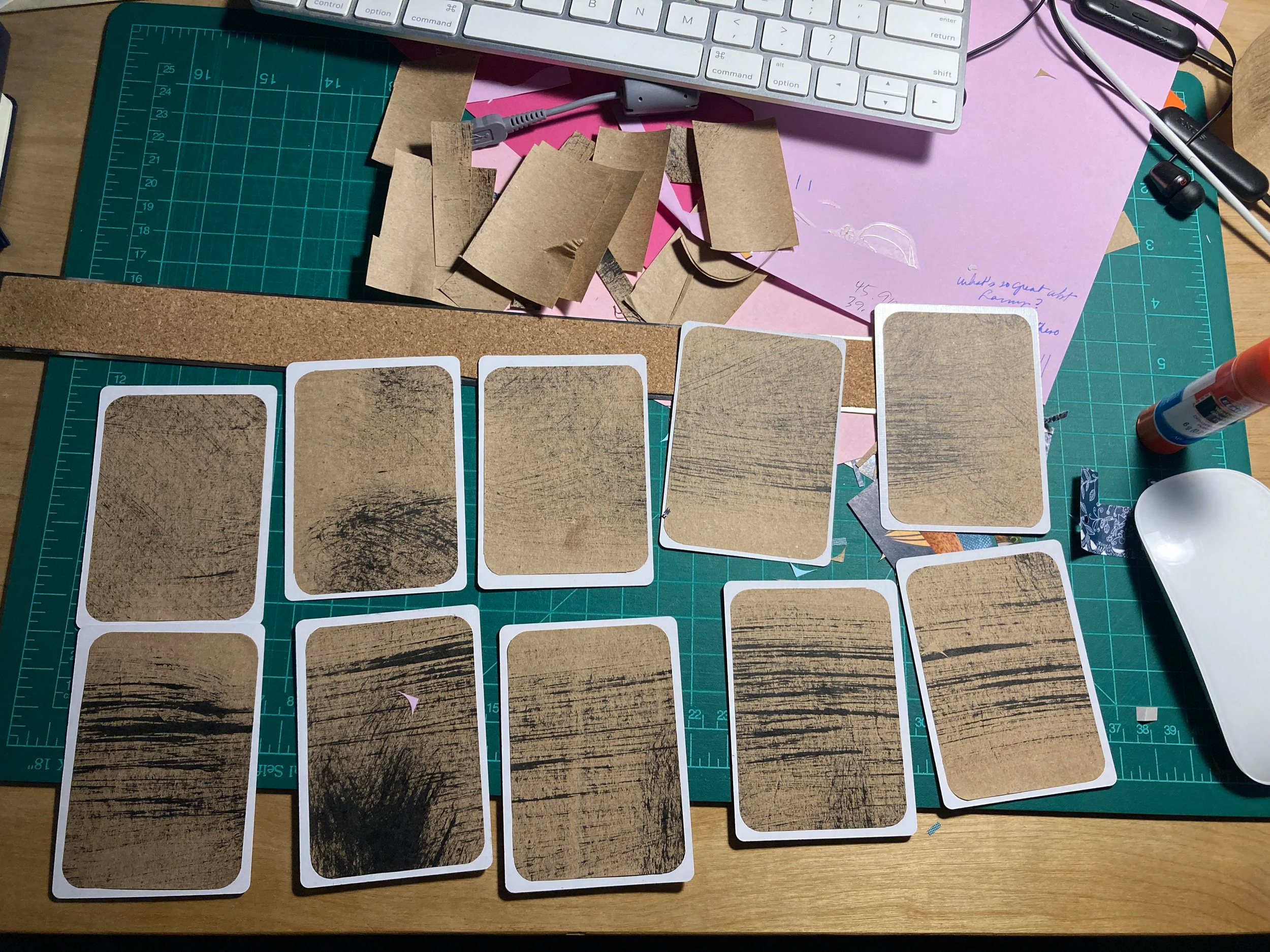
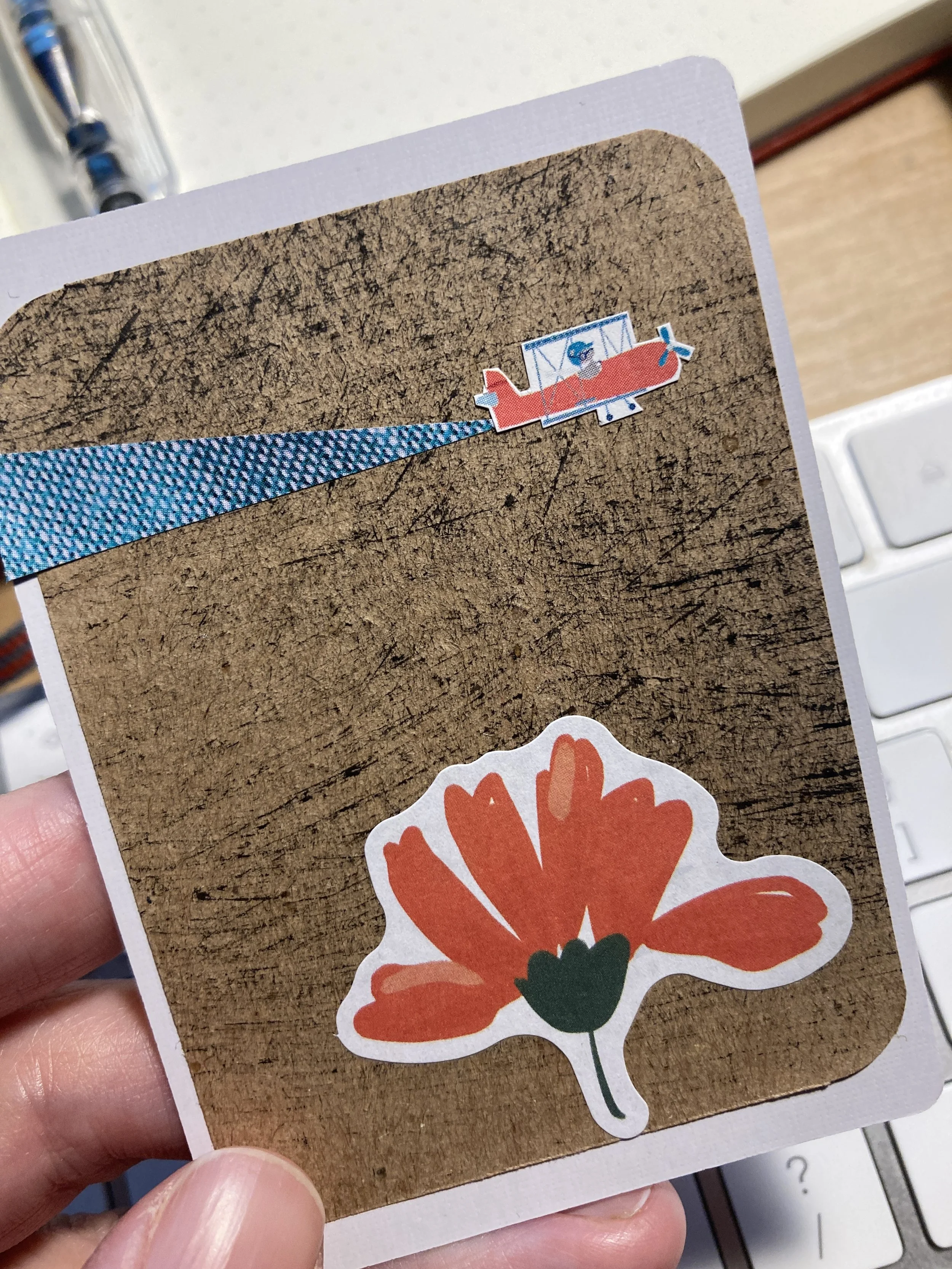
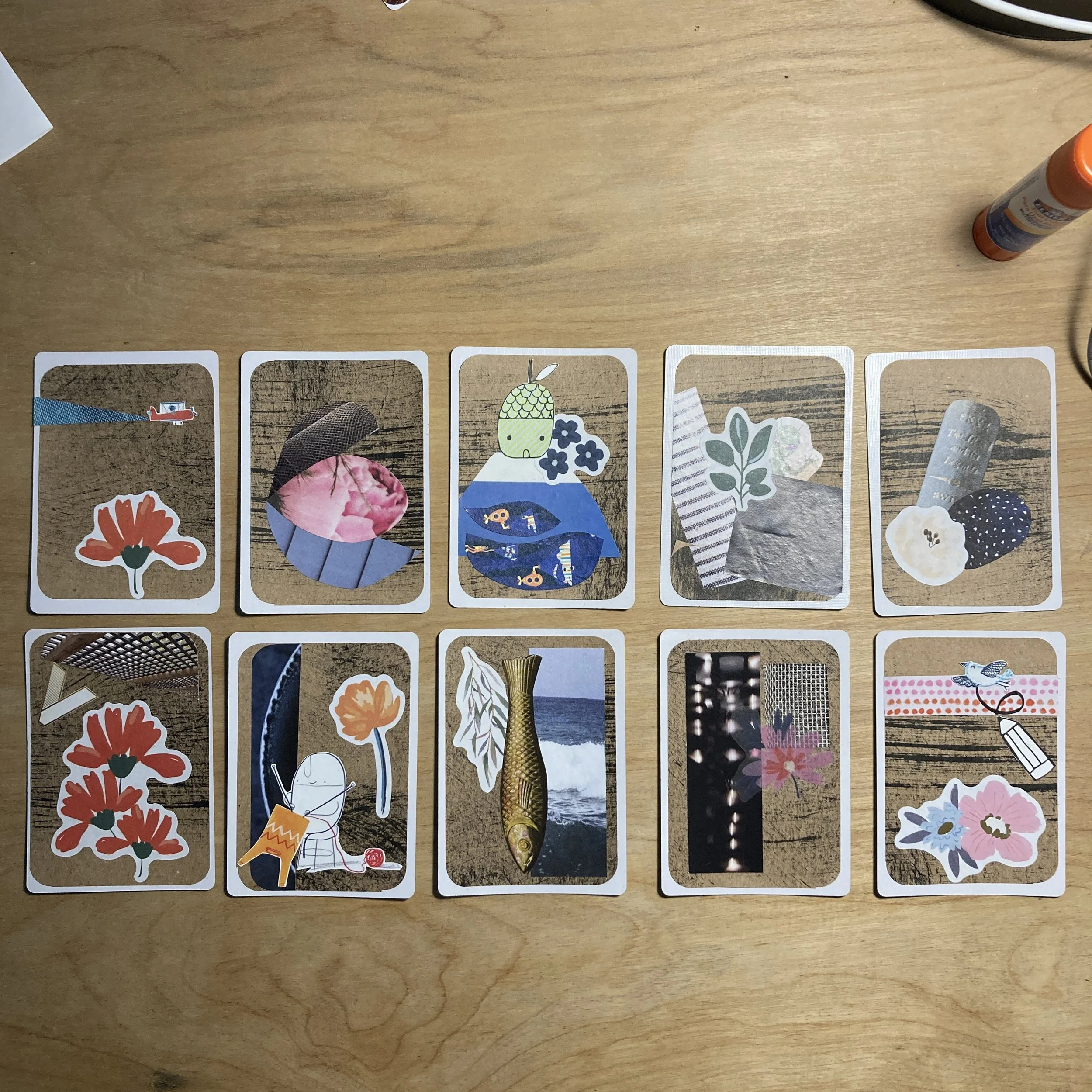
To trick myself into doing collage, I’ve given myself an appropriately small mission… Having been accidentally gifted the game “Cards Against Humanity”, I’ve been covering the inappropriate phrases with visuals I like better. “Cat pee in a water gun”? How about a floral sticker with a tiny animal-piloted plane flying overhead?

And who knew that India ink roughly brushed onto Kraft paper could make for such interesting textures! I call this series of tiny collages, my “cards for humanity”. 

After making ten, cortisol levels were indeed lowered just like Amie McNee says here.  

Reading online

I really liked the point made in this essay by Owen Kellogg who opens with the following

Phones do matter, but their role is often misunderstood. Instead of operating as a primary source of distress, heavy phone use appears to function as a compensatory behavior. When young people lack reliable sources of support or connection, they turn to tools that provide stimulation or regulation. Heavy screen use fills gaps left by unmet material and psychological needs.

This came via The Marginal Revolution who quoted a line from the conclusion: “The most reliable way to improve youth well-being is to meet individual needs through connection instead of control.” 

One of the things about December is that it’s a busy month, always and forever will be, meaning that I didn’t have the chance to sit down and peruse all the great year-end type posts that are so fun to read. It’s mid January, and I’m only now delving in… Thus did I come across… (thus did I? Alas, I am reading Smollett’s translation of Don Quixote and it is full of fancy language, so now I write in fancy language too… I’m about 170 pages in, since January 6th, and, yes, had to remind myself why I should be patient with all Quixote’s useless scrapes, and so read the first link served up to me… this by a Mr. Nick Senger back in 2018. Fine. Back to where I was going…) 

As I was saying… Kottke linked to this list of Best Video Essays, and I enjoyed listening through Josh’s “You are a better writer than AI. (Yes, you.)”. Anything about writing and A.I. is like catnip to me, and Josh’s comments about “beauty in recombinance” (at the 7:38 mark) makes me think of collage. His class syllabus has me nod with recognition, because yes, I find myself ”writing because you feel like you need to” (at 28:12). Literature that feels impenetrable? Another bit reminding me of the purpose of the self-imposed reading list!

Postcard

This week the temperature has fluctuated dramatically in Winnipeg, from melt to freeze, and one morning, the changing conditions during my walk lead to capturing some dramatic lighting. This dark slate sky and orange willow branches reminds me of summer evenings after a storm, when the sky is dark blue and the foreground is gold.

Happy Sunday!

Three little encouragements

Sometimes, just by chance, you are listening to something, like a routine podcast on your podcast feed, and something is explained in a meaningful way. Recently, for me, it happened when Chani Nichols was describing to Debbie Millman the paradox she felt of needing to write and the intense self-doubt it unleashed. (See here). About 37 minutes into the podcast, Debbie Millman had asked: “I understand that when you first started writing you would literally be doubled over in shame and pain and self-doubt, but it also felt like something you had to do. Where did that pain come from?” Nichols answers the following:

I think that (…) when there’s a lot of neglect or you feel invisibilized by family or culture that when you bring yourself into form by writing something or acting something or building something or making something that other people can see and that you’re giving it out to them, there’s a way all of a sudden for me, I become more real. I’m defining myself by writing these things and putting them out. For me being somebody that was so low on the priority list of the adults in my life, it just brings up the feeling of having been left and denied and betrayed and abandoned. And so it’s this weird thing, it’s like I’m actively trying to heal this and bring myself into form and bring myself into the world and yet my experience of being forgotten and invisibilized becomes more pronounced as I do that. So it is [an] experience that comes in tandem; there’s like this “yay, I put something out” and a feeling of releasing of creative spirit from myself or creative energy into the world and yet all of my survival mechanisms, “stay small, stay quiet, stay invisible so that you don’t get harassed or something bad doesn’t happen,” like there’s so much chaos in the world and my life that I just had to keep everything as small and still as possible. So it’s just all that – and trauma response I think of being more present in the world.

I’m also fascinated by the story of Robert Walser on This American Life. He was content with this simple motto: “to be small and to stay small.” (See here).

Indirectly, it relates to this little scene that Emily Carr relates in her autobiography Growing Pains. She writes:

We discussed Georgia O’Keefe’s work. I told of how I had met her in the gallery of Mr. Steiglitz.

I said, “Some of the things I think beautiful, but she herself does not seem happy when she speaks of her week.”

Miss Dreier made an impatient gesture.
“Georgia O’Keefe wants to be the greatest painter. Everyone can’t be that, but all can contribute. Does the bird in the woods care if he is the best singer? He sings because he is happy. It is the altogether-happiness which makes one grand, great chorus.”