A week on Sunday 28/52

Welcome to this week’s blog post edition, in which is featured a little road trip to Lockport, a few quotes and some scenery.

Local tourism

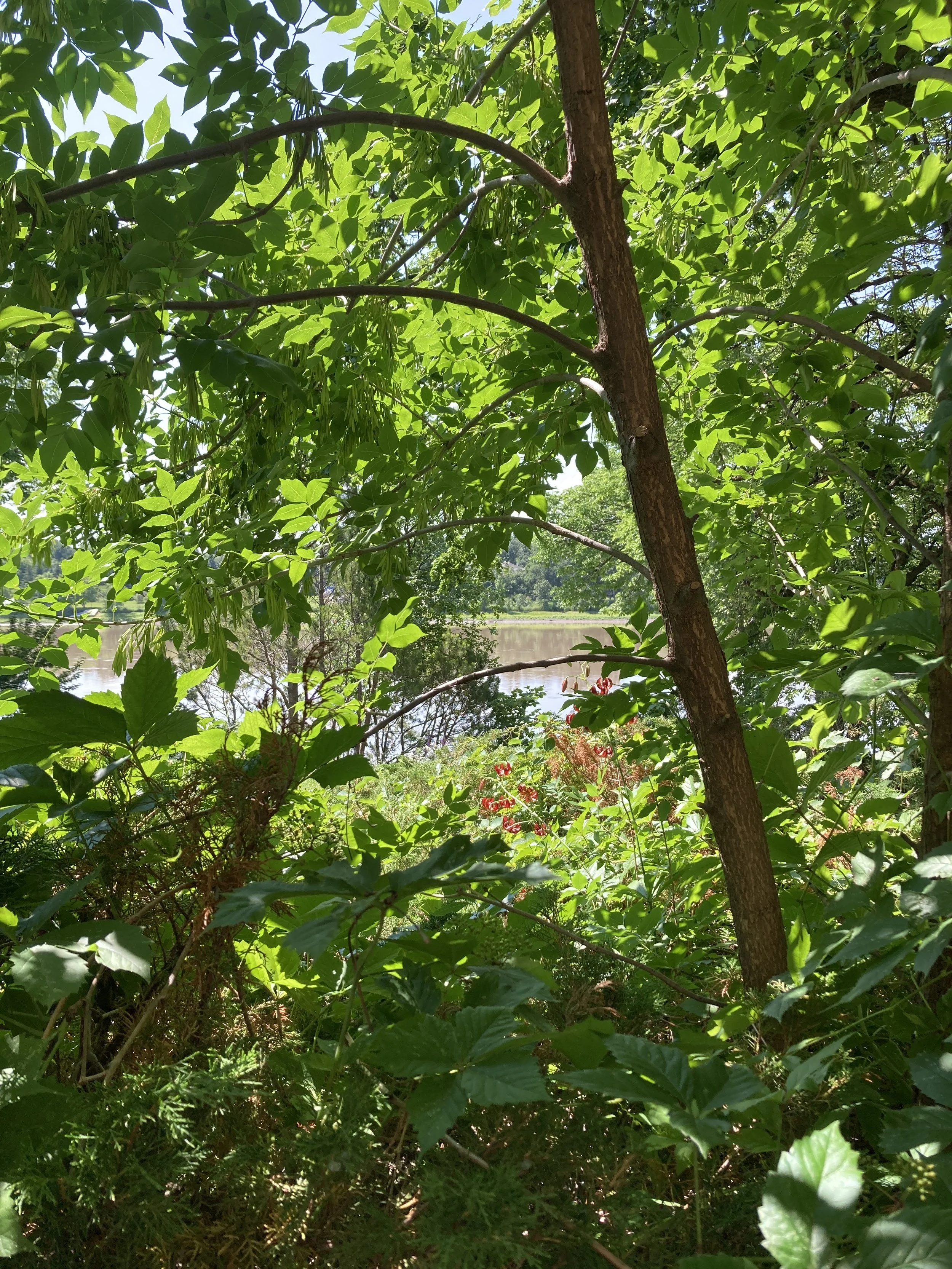
This week we were a group of three friends that took to the road for a late breakfast, early lunch, at The Heritage Tea Room. Newly renovated, its wood interior shines, the paint is a fresh deep green, and the wallpaper a cheerful blue and white floral that contrasts with the paintings that hang from a railing. It’s a charming place to go if you like that “stepping back in time” feeling, plus modern amenities. We ate lunch on the patio, shaded from the sun, with a view of the river just beyond.
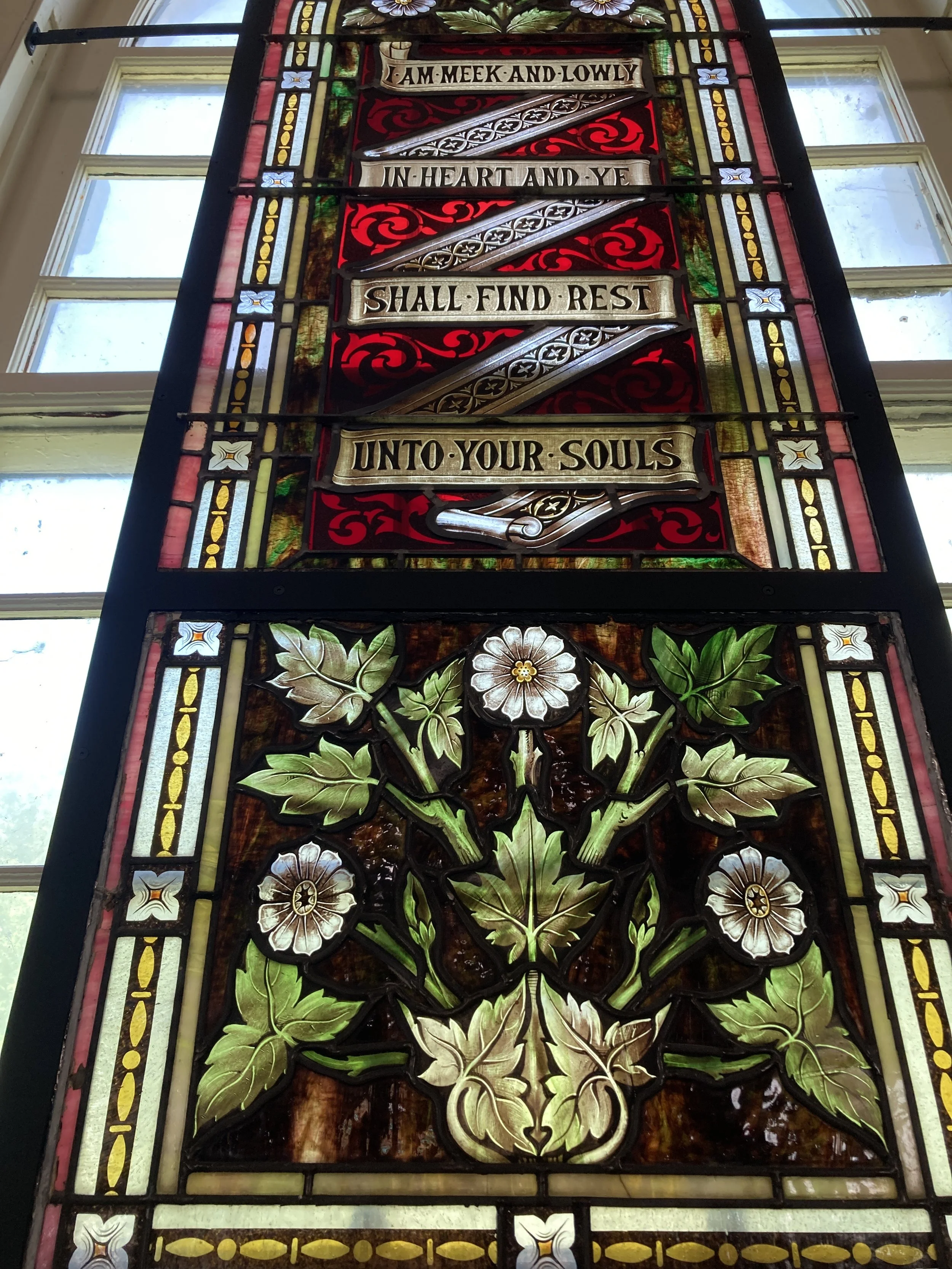
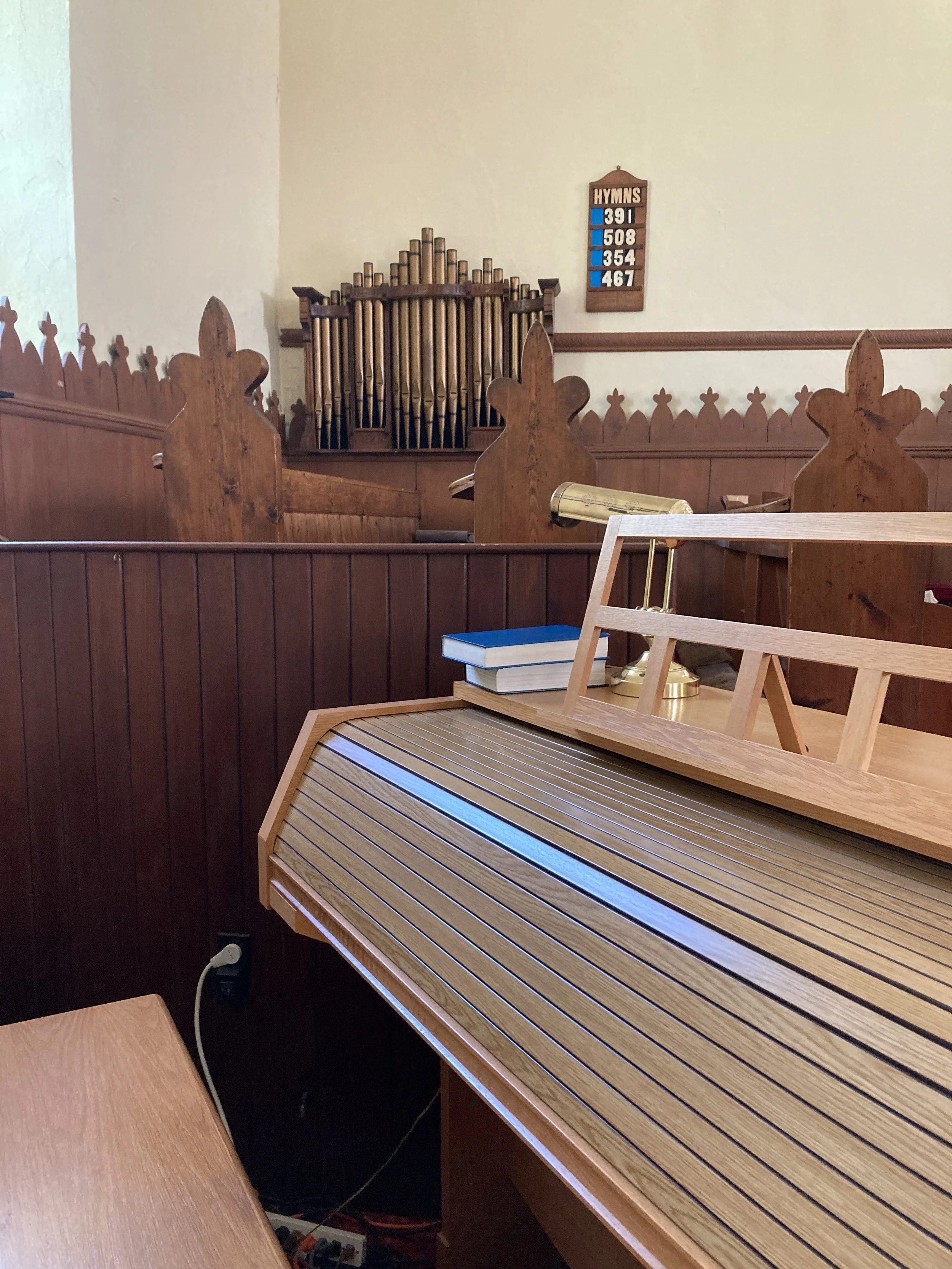
River Road is one of the most scenic of scenic routes and while travelling it is a treat in itself, we also stopped at St. Andrew’s Anglican Church where we slipped in as final funeral attendees left, to admire the stained glass windows. I would have been curious to hear the sound that comes from these tiny set of pipes…
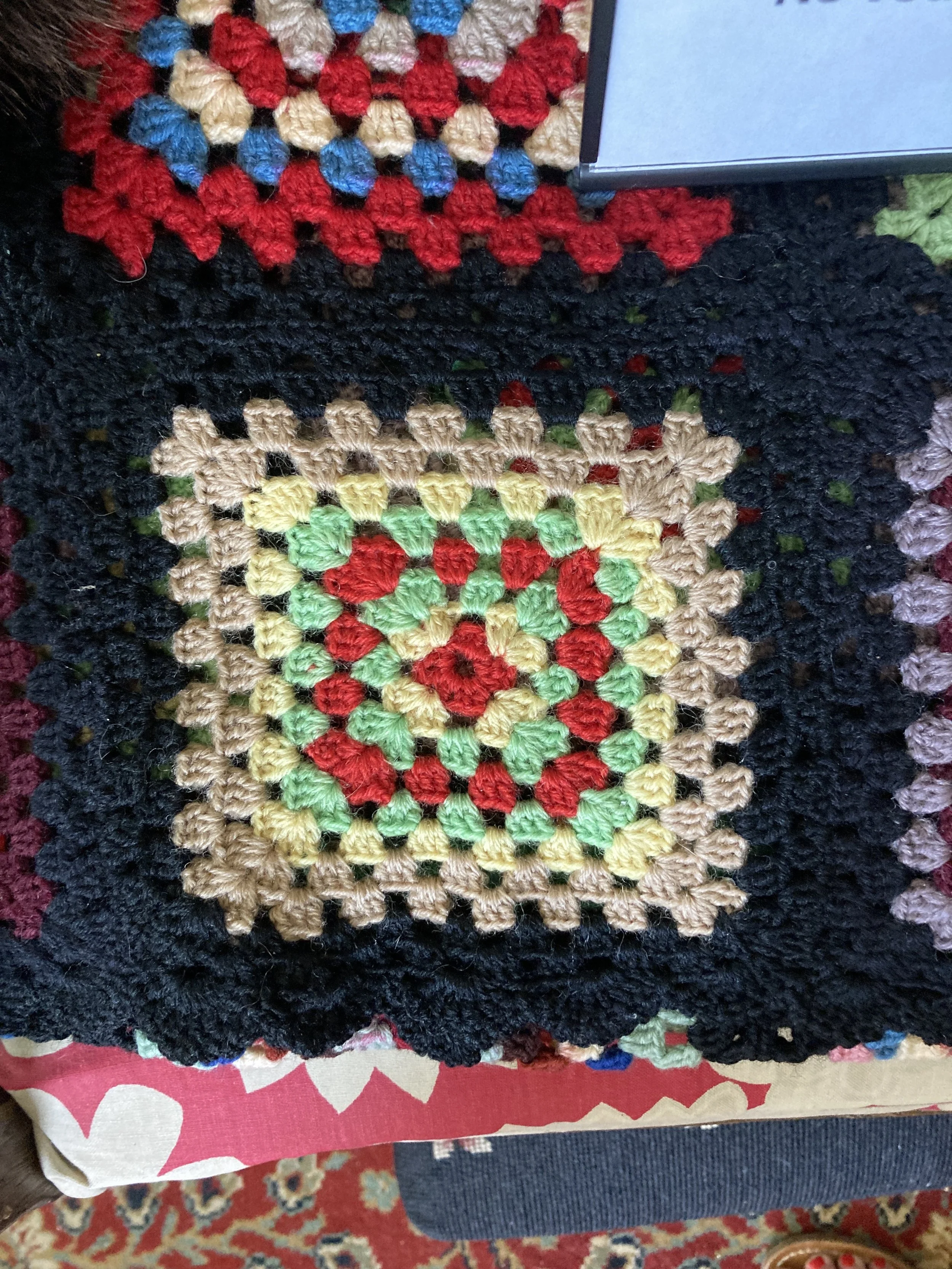
Across from the church is a cheerful rectory, with artefacts and interactive displays. Mostly I admired the dainty size of the stitches in these granny squares… I like how this shot captures four patterned materials too… the blanket, the chair upholstery, the stool underneath and the carpet. It feels instantly cozy.
Visiting small museums feels a bit like going to an all-you-can-eat buffet. At a buffet, you can sample so much and leave feeling so stuffed. At a museum, there can be so much reading, that the information gathering can leave you feeling oppressed. I would argue that unless you visit a museum by yourself, determined to feel immersed in its subject, going with family or friends exempts you of any reading duties. Flit about like a butterfly, see where your attention goes, read that little plaque if your curiosity invites you to, and move on to the next thing! From this visit, I couldn’t tell you anything about the historical figures profiled, but I learned about how broken dishes could be repaired with staples (See here for example.) and left feeling awed by the contrast it represented to today’s culture of dispose and replace.  

Making art and Making a living by Mason Currey

Again, I am mentioning this book, perhaps risking “gushing” doing so… but I finished it this week, almost reluctantly, since I so enjoyed the way it was written. Currey’s final chapter has a passage that crystallizes the impetus behind his book’s project; in opposition to “a kind of stingy, withholding, resentful energy that seems to be trending in society” he looks to the lives of artists.

[…] what I love about the artists in this book is their embrace of the opposite values: of possibility, of giving yourself permission, of staying true to your instincts and indulging them even when they lead someplace totally impractical - especially then - and asking necessity to wait while you figure things out, even if you never quite figure things out.

I am so grateful to him for making this book. 

Podcast quote

I liked listening to Bryan Stevenson as a guest on the Ezra Klein podcast. This reflection on linking the past with the present is touching:

What I realized is that there was power in the hopes of those who had come before me. I felt lifted up by generations of people who had struggled. And that’s what we’re trying to do with this history. We want to be very direct about the harms and the horrors of slavery. But we also want people to understand the resilience, the power, the strength, the courage, the character of people to love in the midst of agony. I then gives you something to celebrate in a new way.

The dog is well

The dog, on the children’s summer holiday, gets accessorized with apple-peel bandanas, which he can eat if he’s patient enough for a picture…

Evening walks

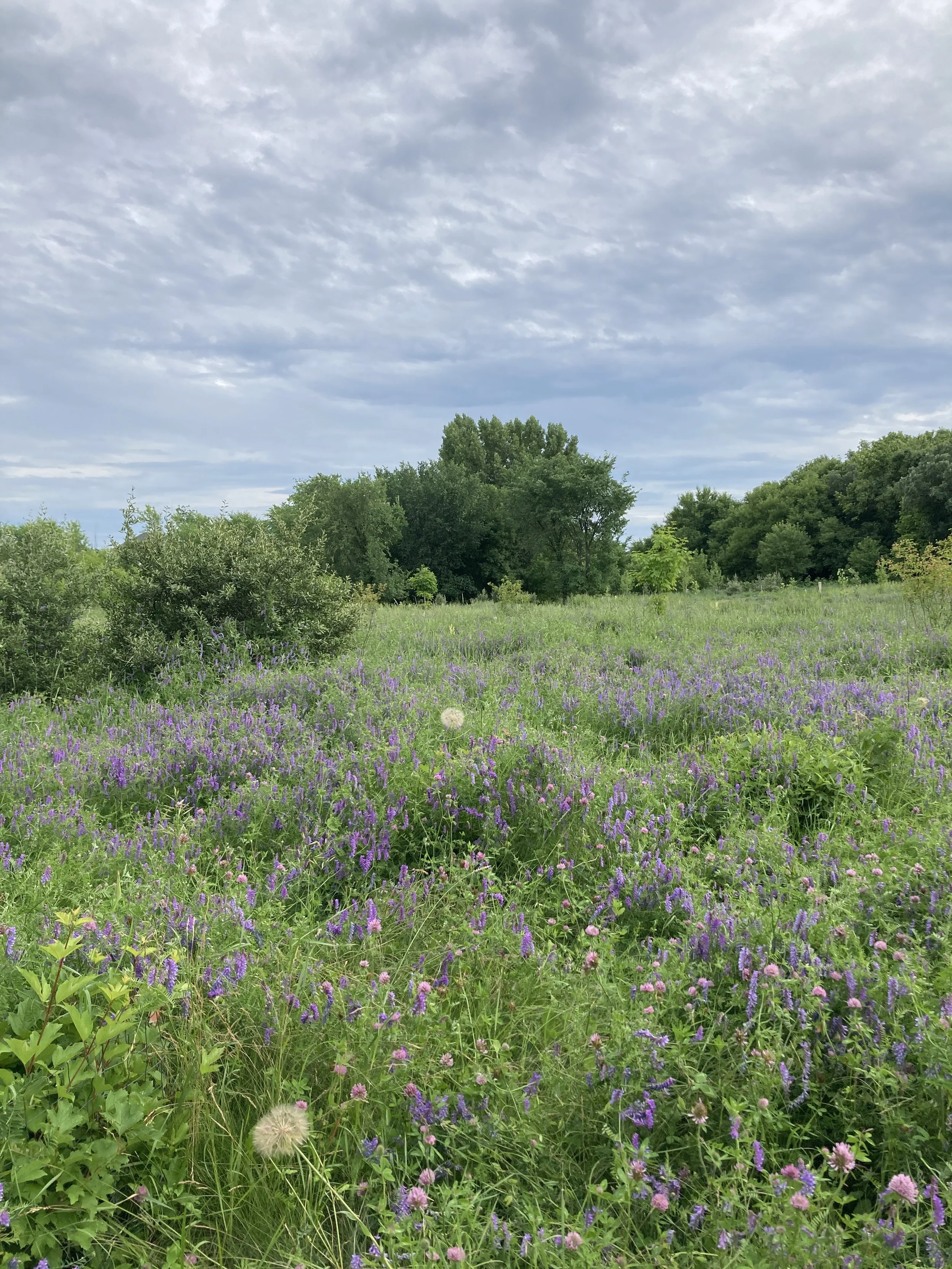
Although a weed, the Western Salsify becomes such a cute little puffball among all the Hairy Vetch…
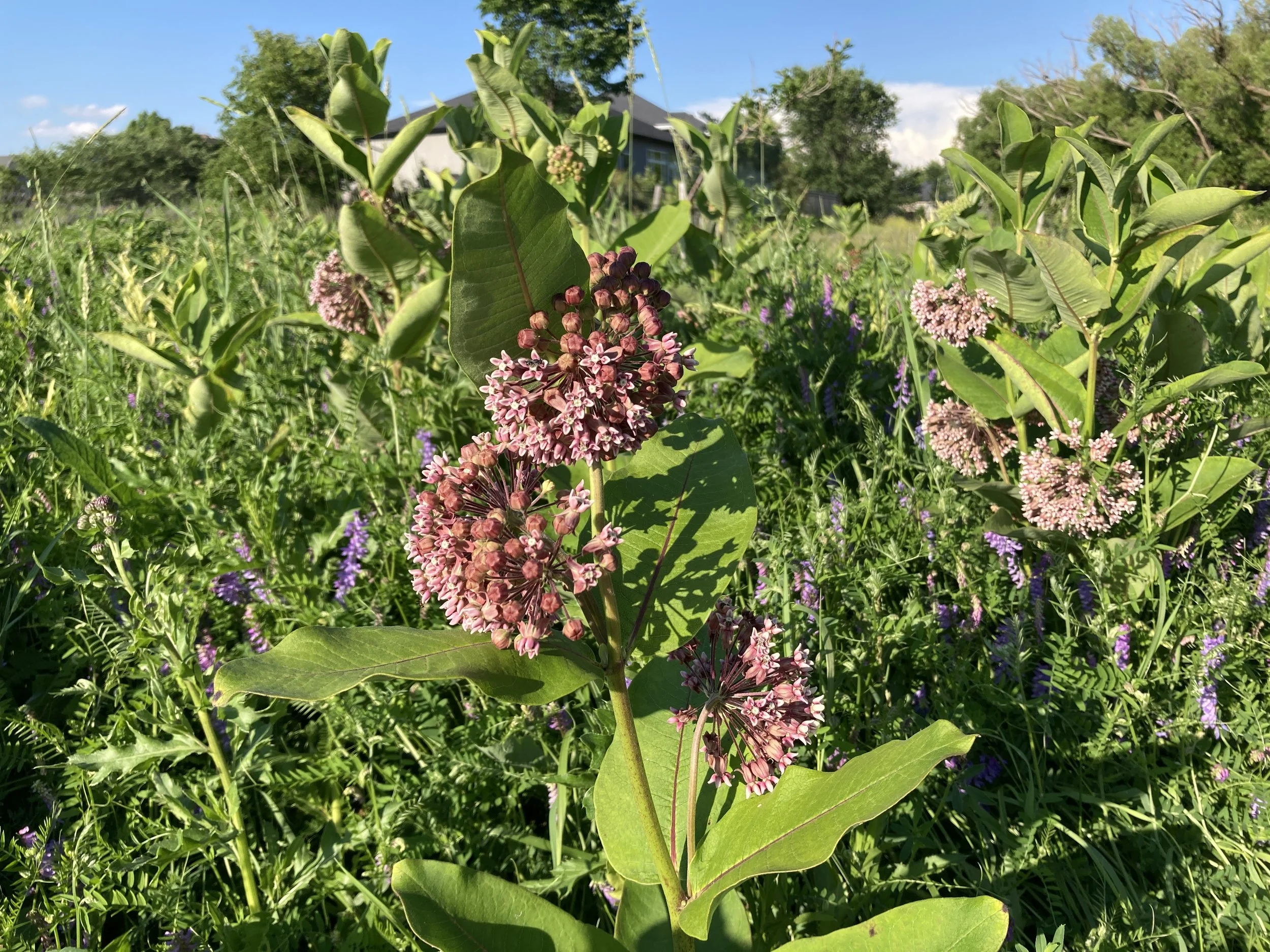
The milkweed is in full bloom right now.
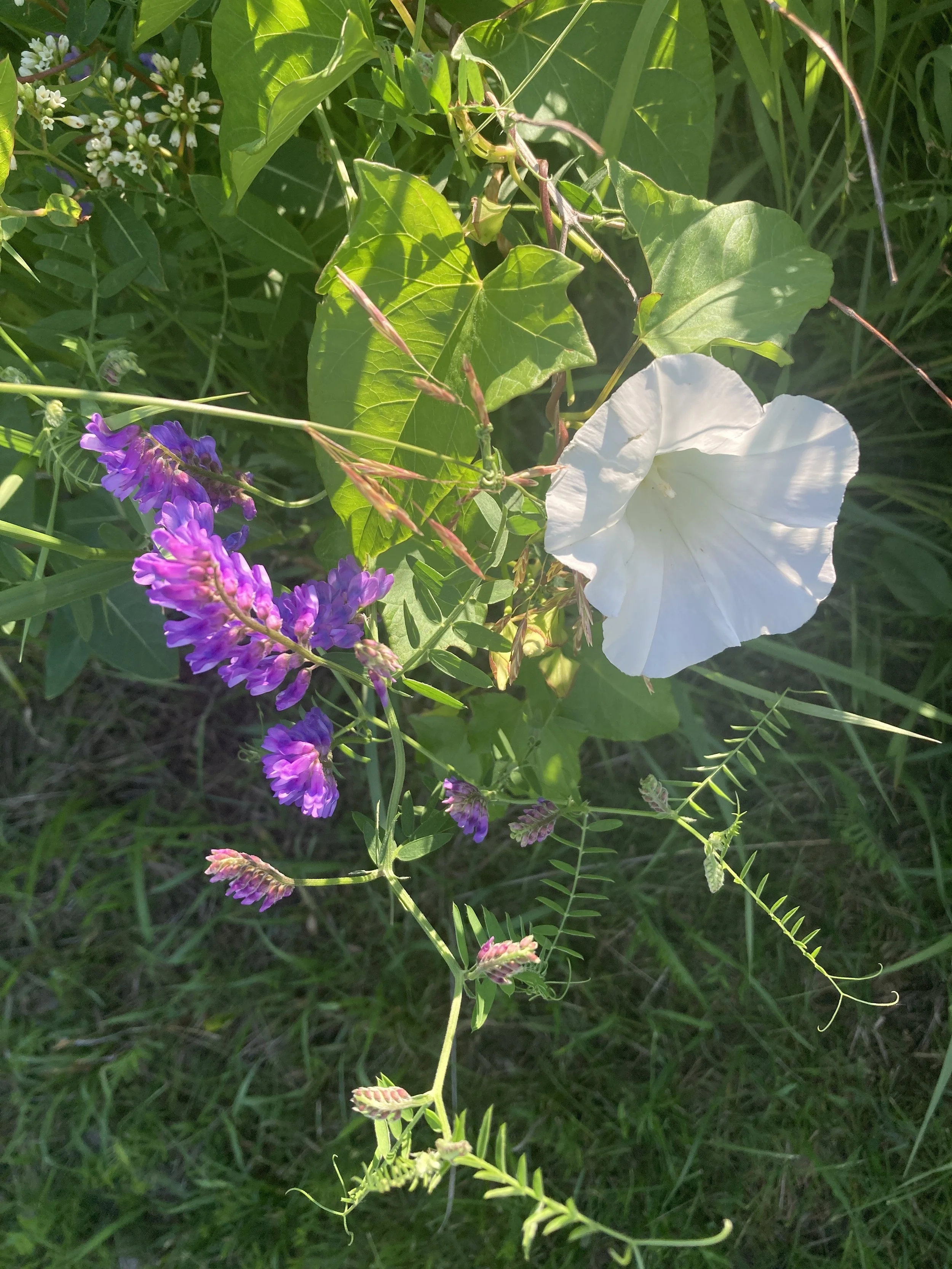
And this “Ipomoea” is called “pretty white trumpet flower” in my head.
Happy Sunday!
A visit to Ste Geneviève MB

When you go to Ste-Geneviève, you leave the wide grey highway that whizzes past the longitudinal centre of Canada, and take a side road called Rosewood. It’s a much narrower asphalt road poured in the sixties - an event the residents celebrated. The Ste Geneviève town is located on the top of the Canadian shield, and you notice this as you drive along Rosewood road. The fields on both sides grow wheat and corn, potatoes and barley, until you reach an elevation and the fields draw back, the pale soft wheat stems meet with low green foliage and rough oak. At the corner where the road meets 41E, there is a convenience store built at an angle with a gas station. Ste Geneviève is then just a little further on that right turn.

Lichen lined paths lead perpendicular, one to the Taché presbytery and the other to the church. The presbytery is crowded with old things. The entrance has a desk and chair and oil lamp and a picture of Ste Geneviève the patron of Paris. French Canadian towns were often named after the saint whose feast day it was when they were founded. Ste Genevieve seems like a gentle presence; a soft, young female one amid all the Taché relics. In a room beside the entrance are old vestments and dark crucifixes, and a curious elaborately fringed parasol once used during outdoor processions of the Blessed Sacrament. Pictures of Taché, his predecessor and successor are on the wall and a short computer-printed biography too. The hall leads to rooms across from each other and a present-day office at the end. One room is a kitchen painted mint-green full of old kitchen things. A dried bouquet of roses is plopped in a wide antique ceramic jar. The other room, painted yellow, has a collection of tools and a floor-to-ceiling bookshelf where the books on various aspects of French-Canadian history gather at either end of the long shelves. Ste Geneviève’s bound centenary book’s title is embossed in gold-leaf and its pages are still fresh and white. 

The upstairs has four small rooms, one of which is an off-limits storage space. The other three are meant to represent scenes from a nun’s life, since a congregation once assisted the town. In one room there are two single beds with patchwork bedspreads, topped with yellowed letter exchanges in plastic sheets and photocopies of photos of nuns who had taught in Ste Geneviève. The other room is a washing room with a large vanity and washbasin, metal curling pins, bobby pins and three flat cast irons for company. The other room is a miniature classroom with a few desks and one big costumed doll with his hand raised, enthusiastically waiting for the invisible teacher. Teaching implements are gathered there, books, a map and a chalkboard with flowery adolescent writing wishing the visitor a good day. 

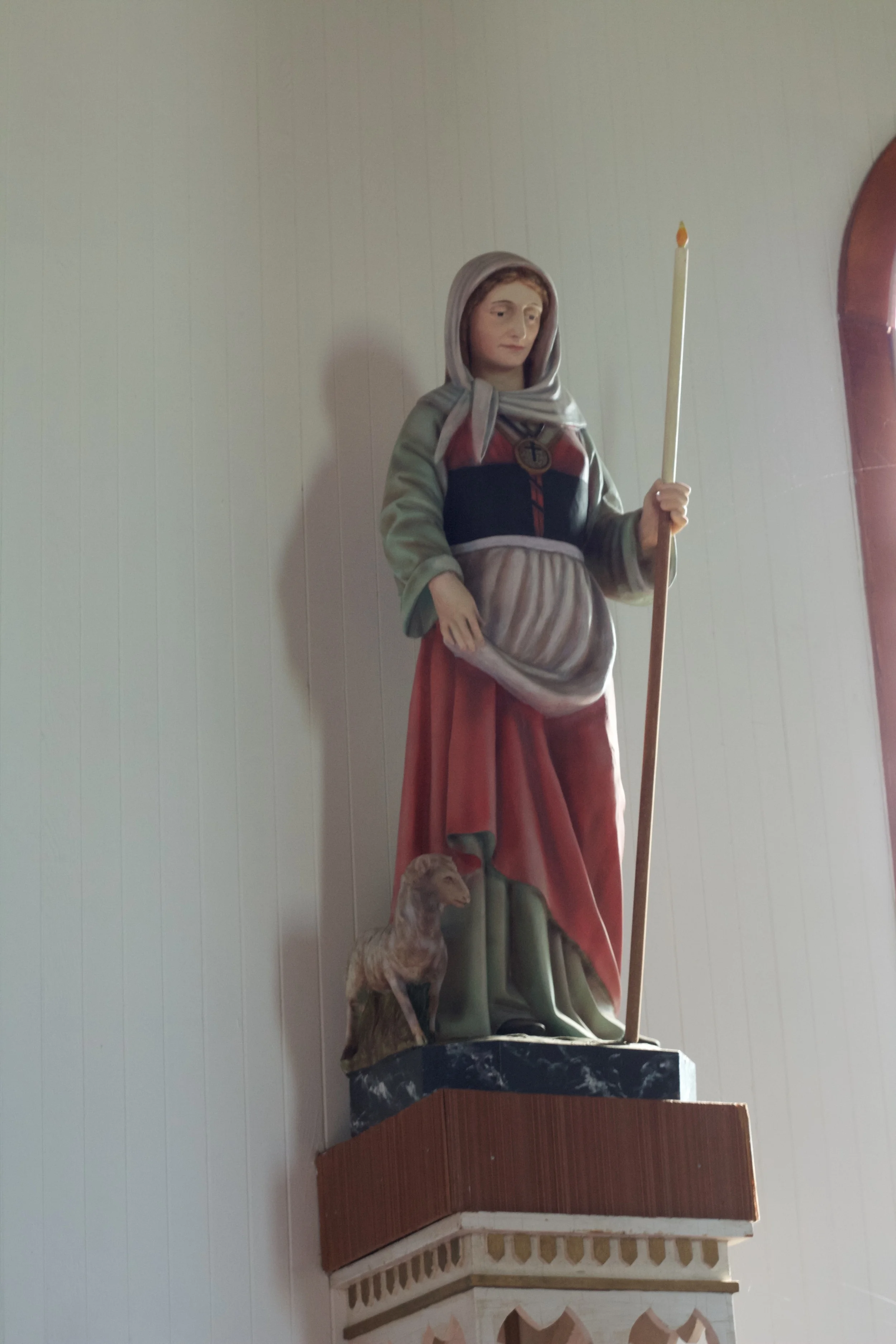
The church is kept locked, but a lady sitting in the presbytery back office is happy to open it for me. We go inside the plain exterior and the space is calm and quiet. Everything is made of wood. Square supporting beams beautifully encased in wood support a ceiling covered in wood, a stunning design of thin planks running one way, and then another, in big squares from the rear to the front. A white space between the dark wood wainscoting and the dark wood ceiling keeps the church from being dungeon-like and light streams in from the windows and falls on single-strand cobwebs. There are two rows of pews that lead to the altar that sits atop a navy blue carpet with a giant pink flower print. The church has a collection of well-preserved statues; some inherent to the place, others donated from elsewhere. Two wood crosses lay on their side near the front and I later learn that they were both used to top the steeple. One was taken down because it was old; the second was struck by lightning. 

A statue of Ste Geneviève inside the church.

A statue of Ste Geneviève inside the church.


This lightning strike was a big event. It was 1981 when the church had just been closed and its parishioners told to attend mass at neighbouring parishes. It was the first Sunday that mass wasn’t being celebrated in Ste Geneviève and a storm arose and a bolt of lightning struck the church. Someone heard it and rushed out to see that the church was on fire. The lady telling me this had seven children. One of her sons ran to get his camera and took pictures as the steeple burst into flame and fire-fighters were called. They came in time to save the structure, and only the steeple and part of the roof needed replacing. Thanks to her son’s moment to moment pictures, insurance covered the costs of repair. Today multiple prints of those pictures stay displayed in the church and in the rectory. 

The lightning bolt story gave me shivers. The parish is the hometown of an old, now deceased family friend and I had gone to find snippets of her family story. When I used to blog for Travel Manitoba I felt obliged to play up a place’s charm, even if I wasn’t sure I could convince someone to make the trip. But now I write for myself. I went; this is what I saw. I’m naturally curious and I’m energized by these quirky, quiet adventures. If you are too, then you should go.