A week on Sunday no. 45

Friction

I really liked this essay titled “Deskilling the Body” by Melanie Challenger and the quote:

I have come to believe that our bodily deskilling is, in many ways, a loss of faith in what it is to be alive. A life of physical effort and friction is not only unavoidable if we want to be as resilient and capable as possible, but it is, in a nontrivial sense, the source of our intelligence. (via) 

And to expand on the idea of friction, is this snippet from Dan Harris’ podcast interview with Neil deGrasse Tyson. First, deGrasse Tyson agrees with Harris that “the common critique of modern life, […] is that we’re lacking friction” and then he defines “friction” as “opposing forces that you must navigate, either through strength of will, physical strength, emotional strength, [or] intellectual strength.” And so, to sprinkle in a bit of ‘friction’ everyday, deGrasse Tyson says,

I try to make sure every day I’m alive, I learn something new. And learning something new - I forgot who said this brilliant quote [which is] - ‘there’s no greater pain of the human mind than the prospect of having to learn something new.’ We’re so comfortable in what we already know or at least what we already think is true that to take on a new idea can be challenging for some people because it brings a level of discomfort. And I happen to embrace discomfort because I come out a different person on the other side. (See here at around 7 minutes)

While these two quotes could be taken as arguments to get outside and read a book, I’m interested in the deeper implications, the events you don’t initiate, but choose to accept. Two examples have come across my TikTok feed: Grace Gaylord, a cookie decorator who posts inspiring designs, also shares how she is living with a father who is dying of Parkinson’s. In a recent video (here) she reflects: “Grief truly changes you on a molecular level, and if you let it, it will make you a better version of yourself, which is something that I did not really anticipate.” She explains:

Over his Parkinson’s diagnosis, over the last four and a half years or so, I chose to face the music. I chose to face my grief. I chose to face the loss of my dad. I chose to do the hard things. […] And I do not regret a second of it. […] I’m so grateful that I chose to let grief make me the person I am today, because the person I am today is stronger. She also has more compassion and empathy for other people, but more importantly for myself. […] 

The second example is Robbie Tseng who posts videos about renovating a lake house while also taking care of his mother. Although the theme of caregiving is common between the two examples, what I appreciate are the different facets in the attitude of uplift. A trip to a specialty supermarket in Ohio thrills Tseng for how it triggers his mother’s memory (here). But it’s not just about food, it’s also about projects to beautify the landscape, to make their living more practical, to help his mother get back to her hobby of sewing. He’s often reflecting on ways to return to his last living parent an experience of feeling cared for, the way he felt they had cared for him.  

To conclude, modern life affords us ease of travel and less physically arduous chores. But if we’re not careful about how we engage with the naturally occuring sources of friction that demand the exercise of will and intelligence and heart, we risk the atrophy of our humanity.

Cooking and baking

I’m always on the lookout for unanimously-pleasing vegetarian meals and Cup of Jo recently featured a recipe titled “Simple Vegan ‘Butter Chicken’” (here). This week we tried it, and it was, as promised, “a crowd-pleaser”. 

On Sunday, after a meal of pasta and salad, I served oatmeal-coconut cookies with tembleque (recipe here). Pairing a cookie with ice cream ups the dessert of course, but tembleque is lighter. Dusted with cinnamon, it’s fancier than jello. No one argued for a smaller portion as is often the case with cake.

I liked Claire Saffitz’s quick tutorial on sourdough for the New York Times (here on Youtube). Mostly, I like how she describes making sourdough in the beginning versus the experience she has at the time of the video. “I didn’t understand sourdough the way I understand it now, which is that it is a practice. […] you can’t go on autopilot when you’re trying to make it. […] I just didn’t know what I was doing and I didn’t know what I didn’t know.”  

Enjoying

Things that make me laugh: Losing my phone because I set it down in the stationary bike’s phone holder - a design feature I ignored until the moment I decided to use it - surprised my brain too dully for it to catalogue the spot. So as soon as I finished my workout, my phone was lost: black on black, silent mode, no tracking. I found it next morning, thanks to the morning alarm. For the 20 minutes three people spent looking for it, it sat in perfect camouflage; a kind of system failure that gets me in the funny bone. This other kind of “wiring” - a self-recognized need to look at and pick up rocks - made me laugh at this:
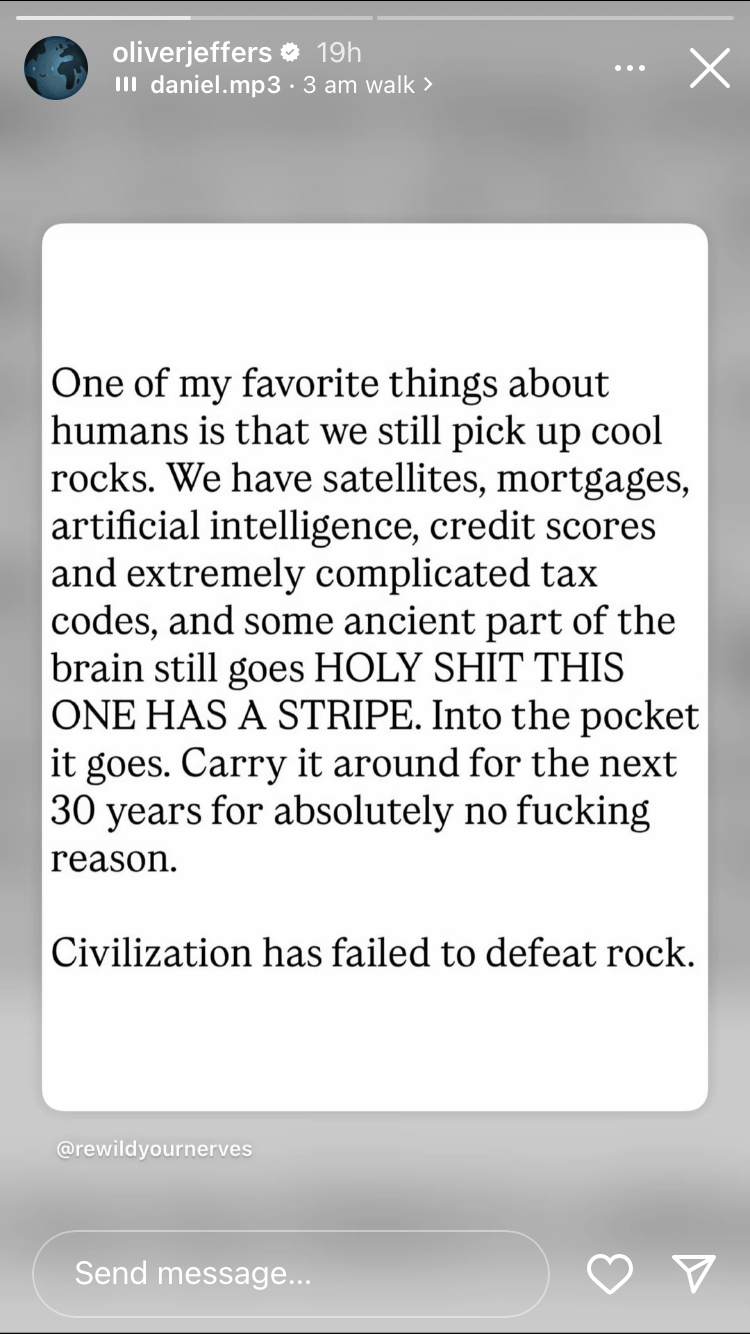
Even a designer like Caroline Irving has a collection of rocks on her fireplace mantel! (See here)

A new bread knife: Like anyone who makes an upgrade they didn’t know they needed to, ours, of late, has been in the acquisition of a proper bread knife. 

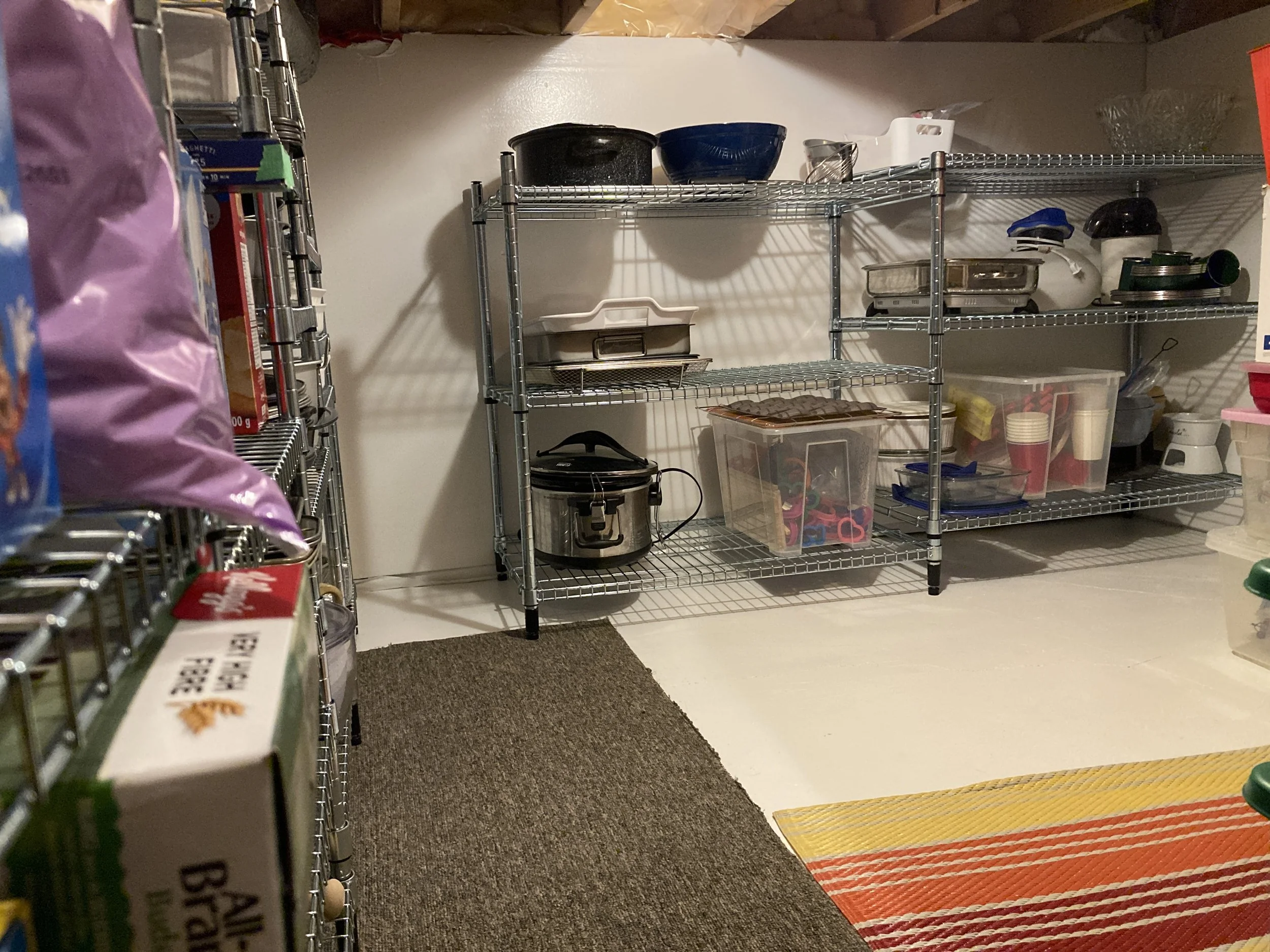
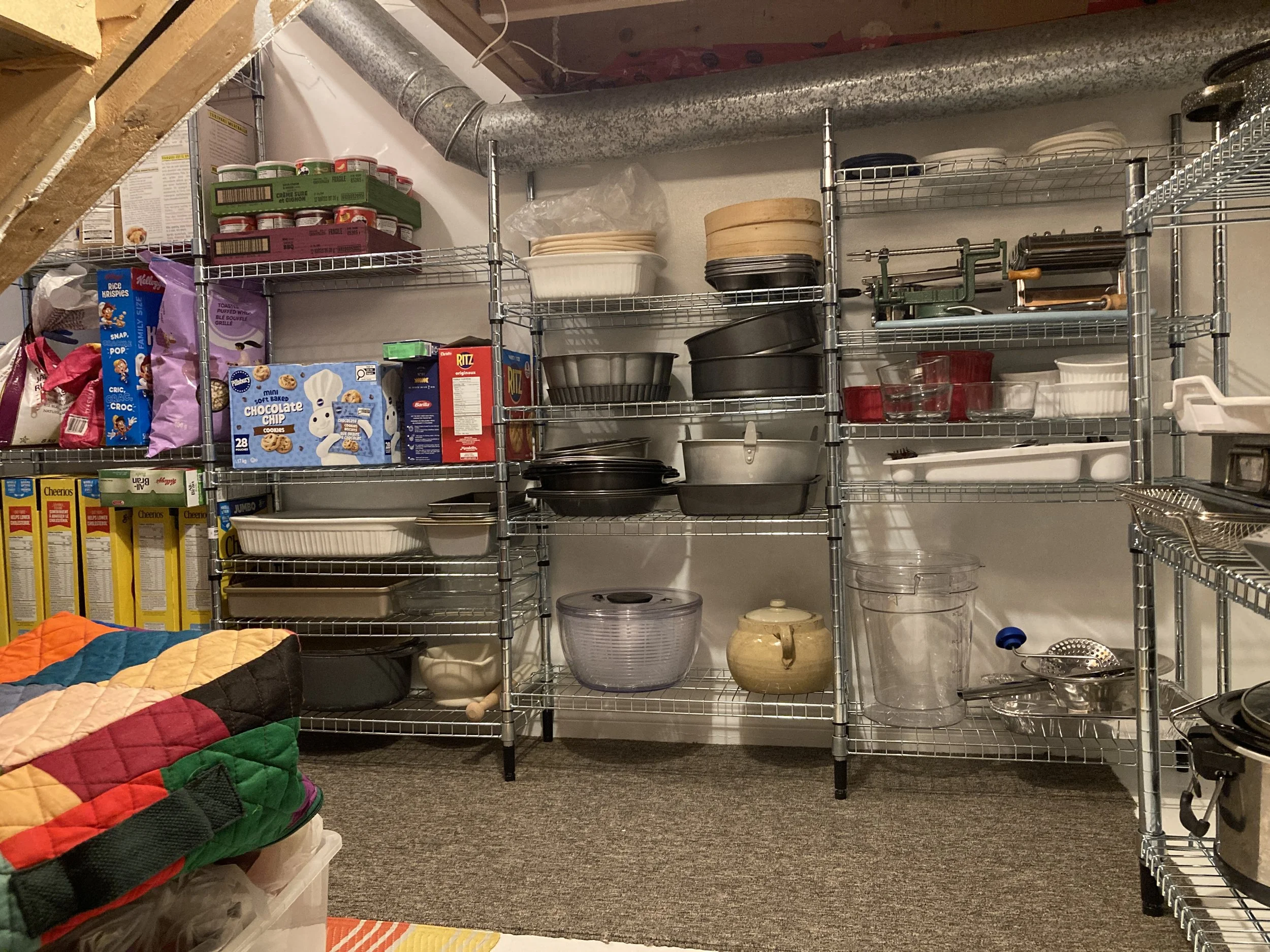
Under-stairs pantry: It is a fact that growing children and their expanding shower routines produce more humidity in a household. There was the purchase of a dehumidifier. More exciting however, was the re-organization of our under-stairs area for better airflow.
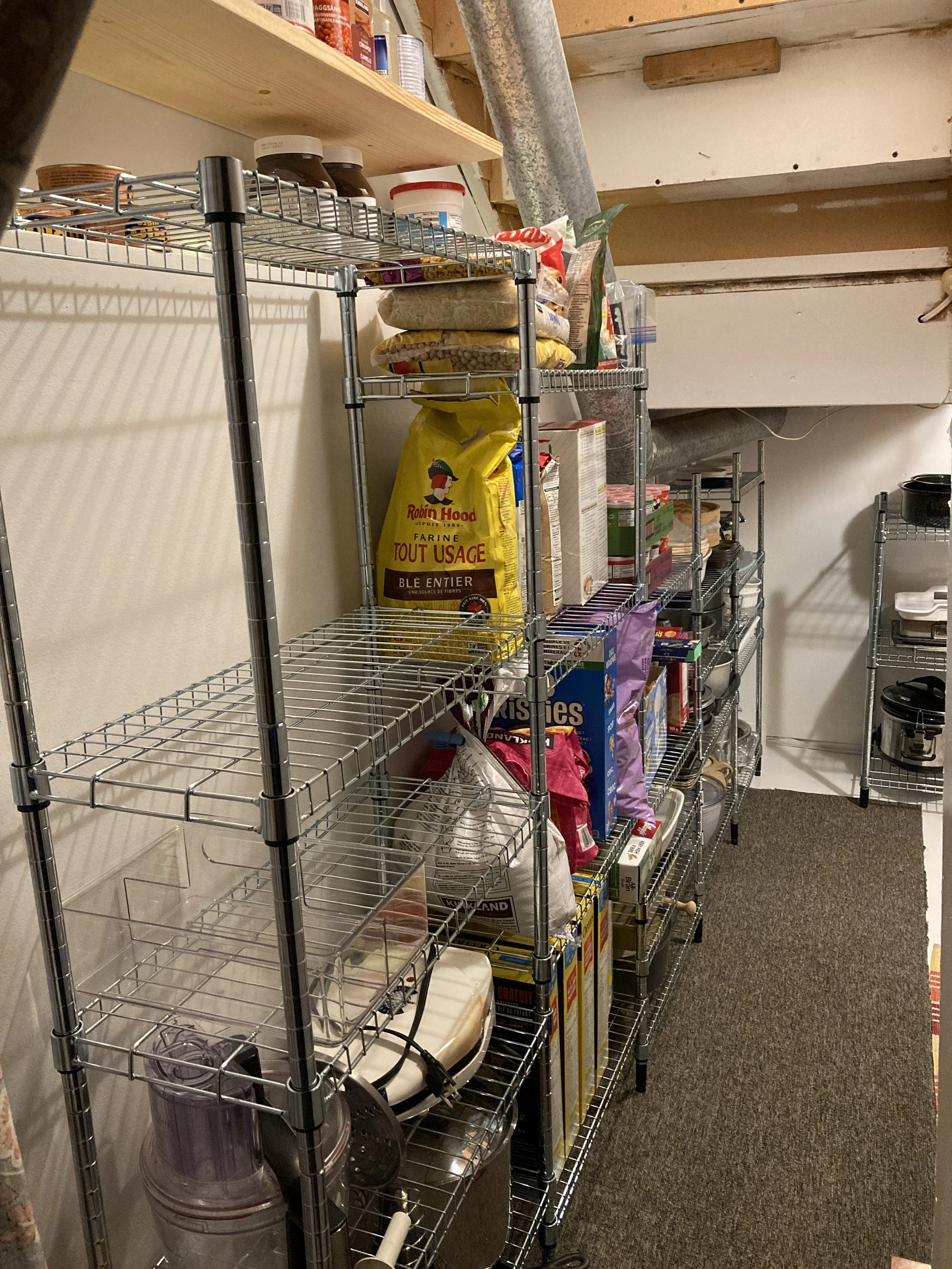
What had previously been our toddlers’ playroom was lingering in a limbo of haphazard storage and partial pantry that was becoming more and more hectic to venture into. IKEA’s Omar shelving served as a way to make this space so much more useful.
Walking the dog

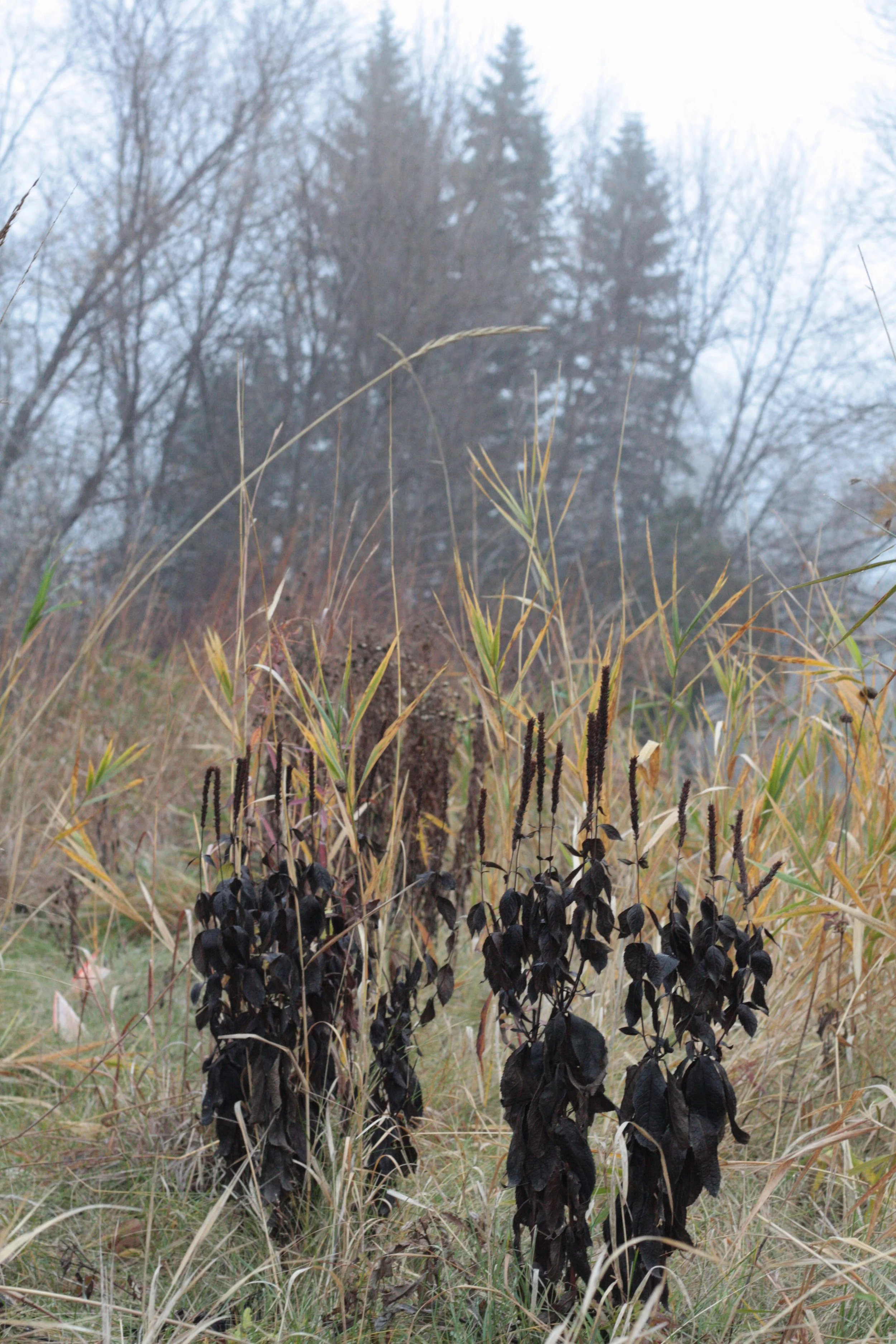
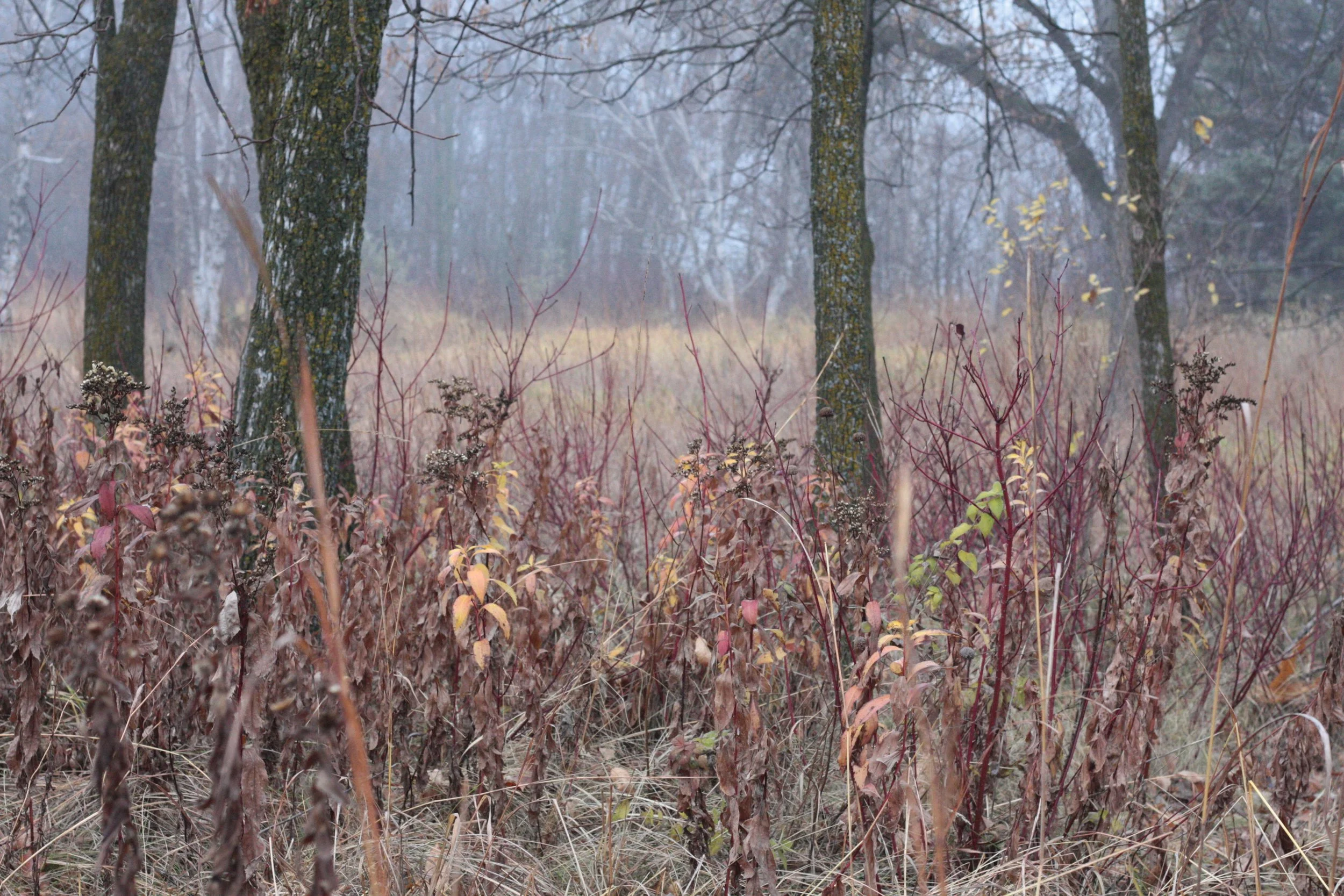
This week, some foggy, misty mornings…
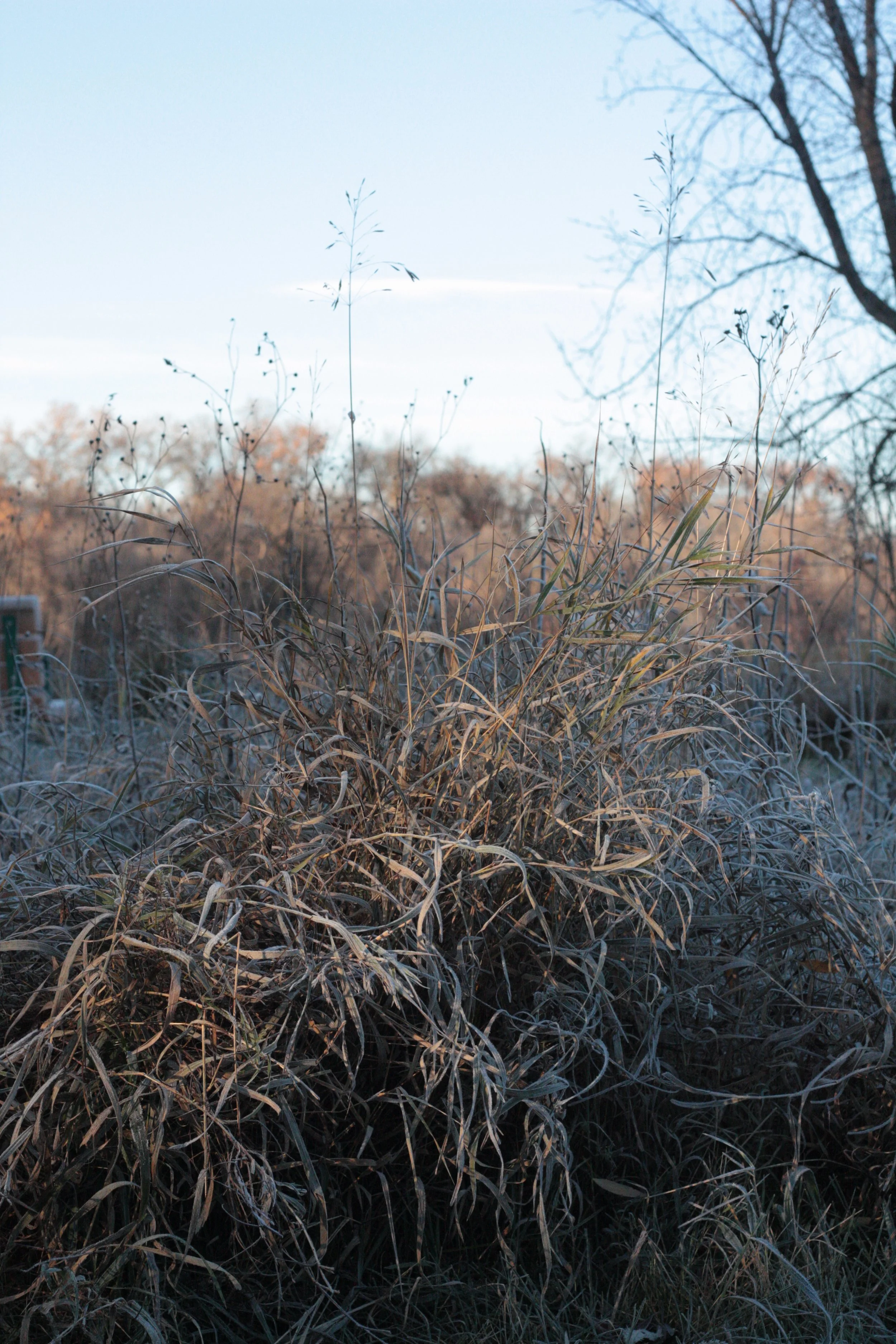
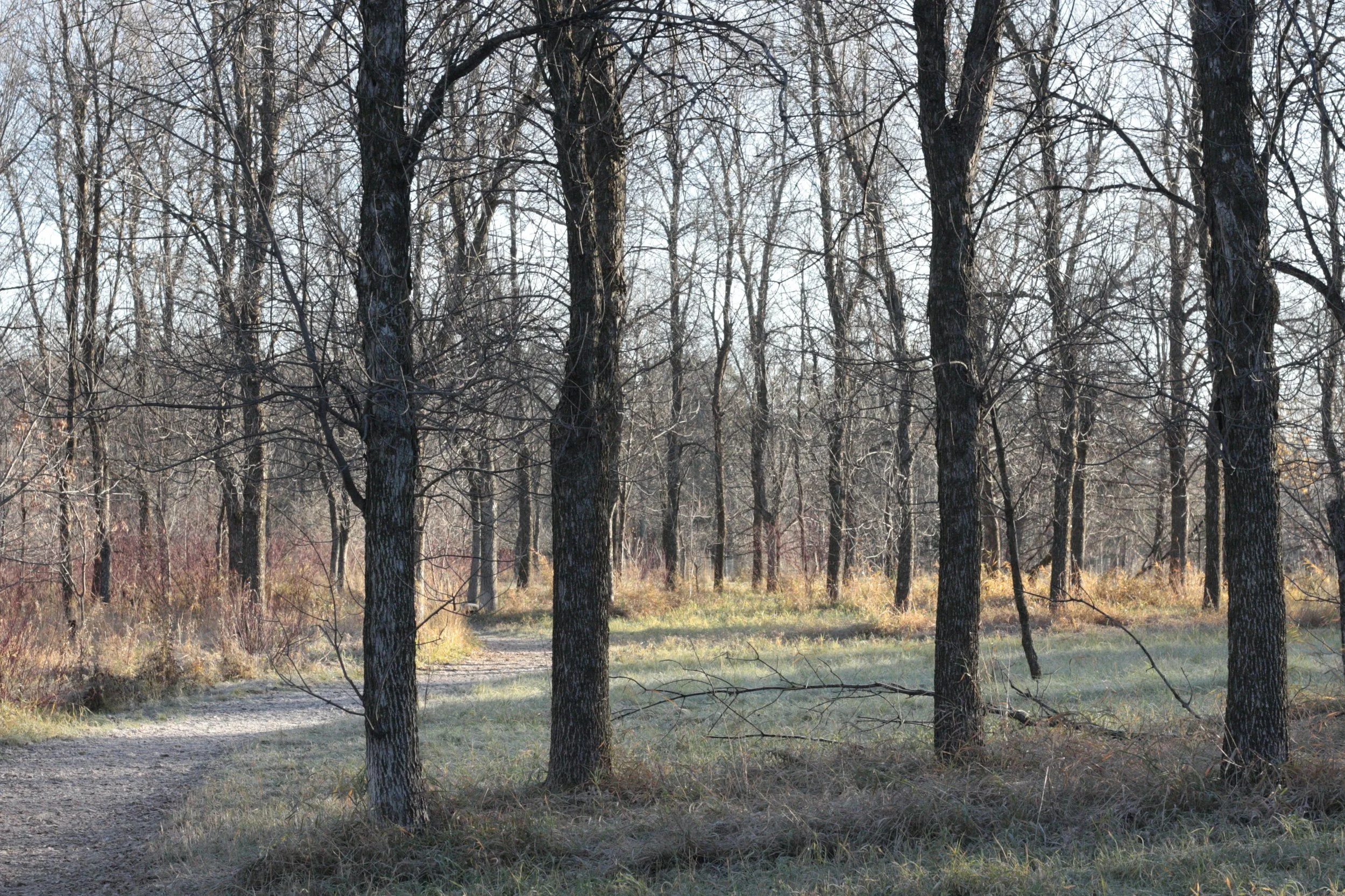
On Friday, a crystalline frost, accentuating individual blades of grass, and setting colour alight.
Happy Sunday!
A week on Sunday no. 43

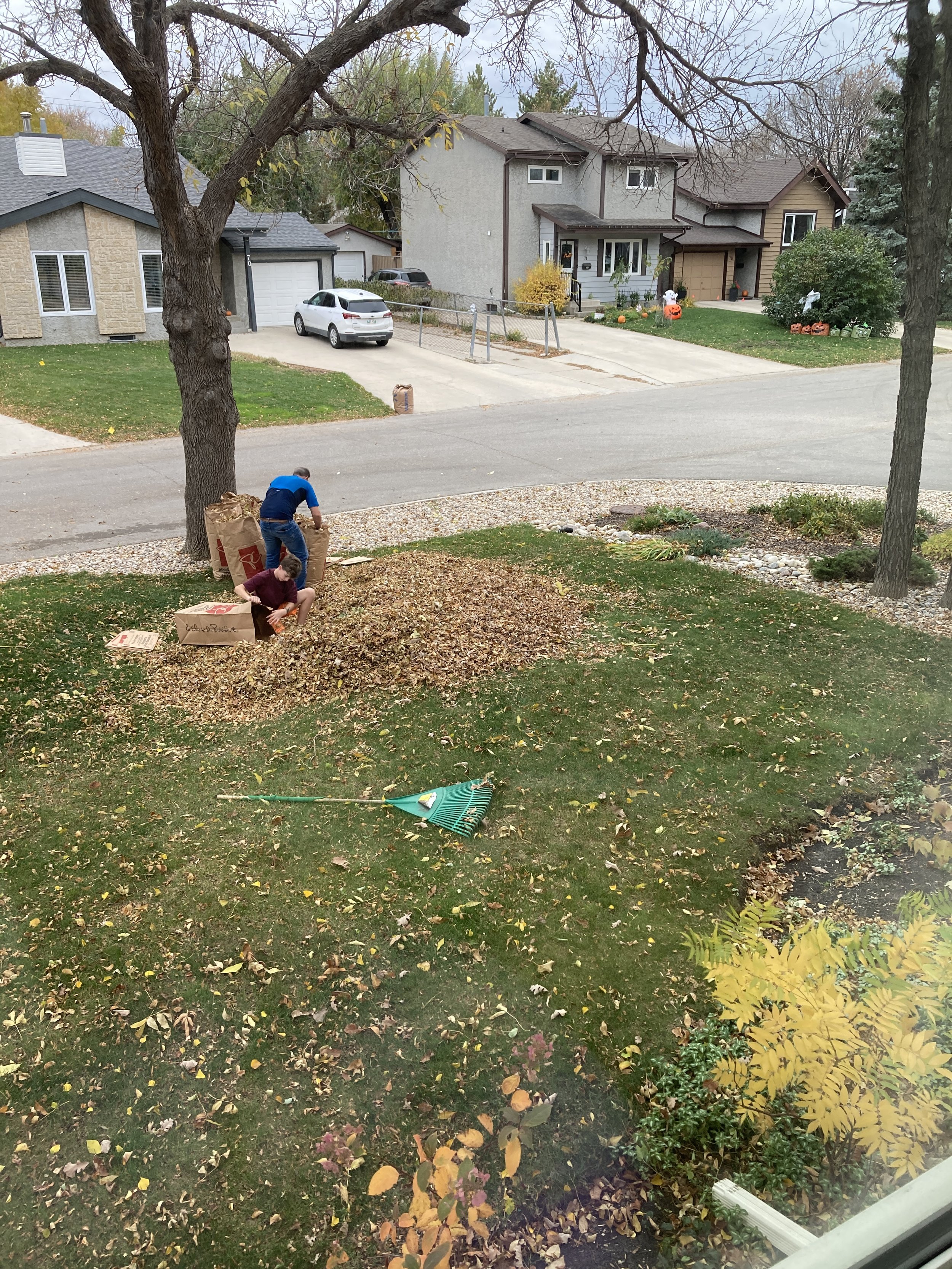
Welcome to a new edition of the various things I found interesting this week. To set the scene, a picture from Friday, when it was so warm, a giant pile of leaves could be bagged in shorts and t-shirts.

Research

To answer the question “who owned the house at 216 La Verandrye” I’ve been going through copies of the Henderson Directory on the Internet Archive. There’s a rumour that this house, which once belonged to my husband’s grandmother, was owned by a religious community, but I haven’t found evidence for this yet. As I’ve been tracking ownership backwards through time, I’ve come across a change in the way houses were numbered on that street, and a short-lived attempt by the city of Winnipeg to change street names between 1891 and 1893. (A 2002 Winnipeg Free Press article by Christian Cassidy contains this plaintive quote by James Gray: “If Winnipeg originally had been laid out by surveyors instead of meandering cows, and if the pioneer urge to erect buildings in the most outlandish places had been squelched, Winnipeg would have little cause to worry about town planning today.”)

I’m ashamed about how slowly I work, how my research seems to rely on laborious methods. At the same time, these tiny discoveries seem more palpable than if I had read Cassidy’s article alone (here). Not all aspects are slow, but this week has been a pleasant plunge back into this kind of data gathering.

World news of an unexpected death

A Catholic priest, Fr. Patricio Sanchez Molinari, died in Ecuador last week and news of his death was relayed everywhere, no doubt because of the apparent irony of its circumstance. (An obit here.) If I give myself permission to imagine this priest, I think of someone sincere, muddling through pastoral life, maybe having visited a sick parishioner, maybe concerned about the effects of social media; either way, having eaten, going to the church, smiling at the people, putting on his robes. He feels inspired to talk about death, and so he does. And what is an accident some minutes later happens to be recorded so that not only is it shocking, but also, the sermon he felt inspired to give doesn’t just leave his mouth for the benefit or the possible ennui of his parishioners. Instead, it takes a leap and becomes a ricochet. What was he talking about? “One day, all of us here will also die, and sometimes the time we have spent on certain things does not hold as much meaning as the time we have spent with God. The quality time we dedicate to God, to our brothers and sisters, to our spouse, to our children, and to our family, that is time spent in the best possible way.” (Source) 

The news was about the inauspiciousness. But how often is it that a priest dies and the whole world can hear his last sermon? And furthermore, that their regular sermon can be true to their values and also a fitting testimony? We, as a society, insist on the bad; but it can make us blind to the good.

Baking (sourdough)

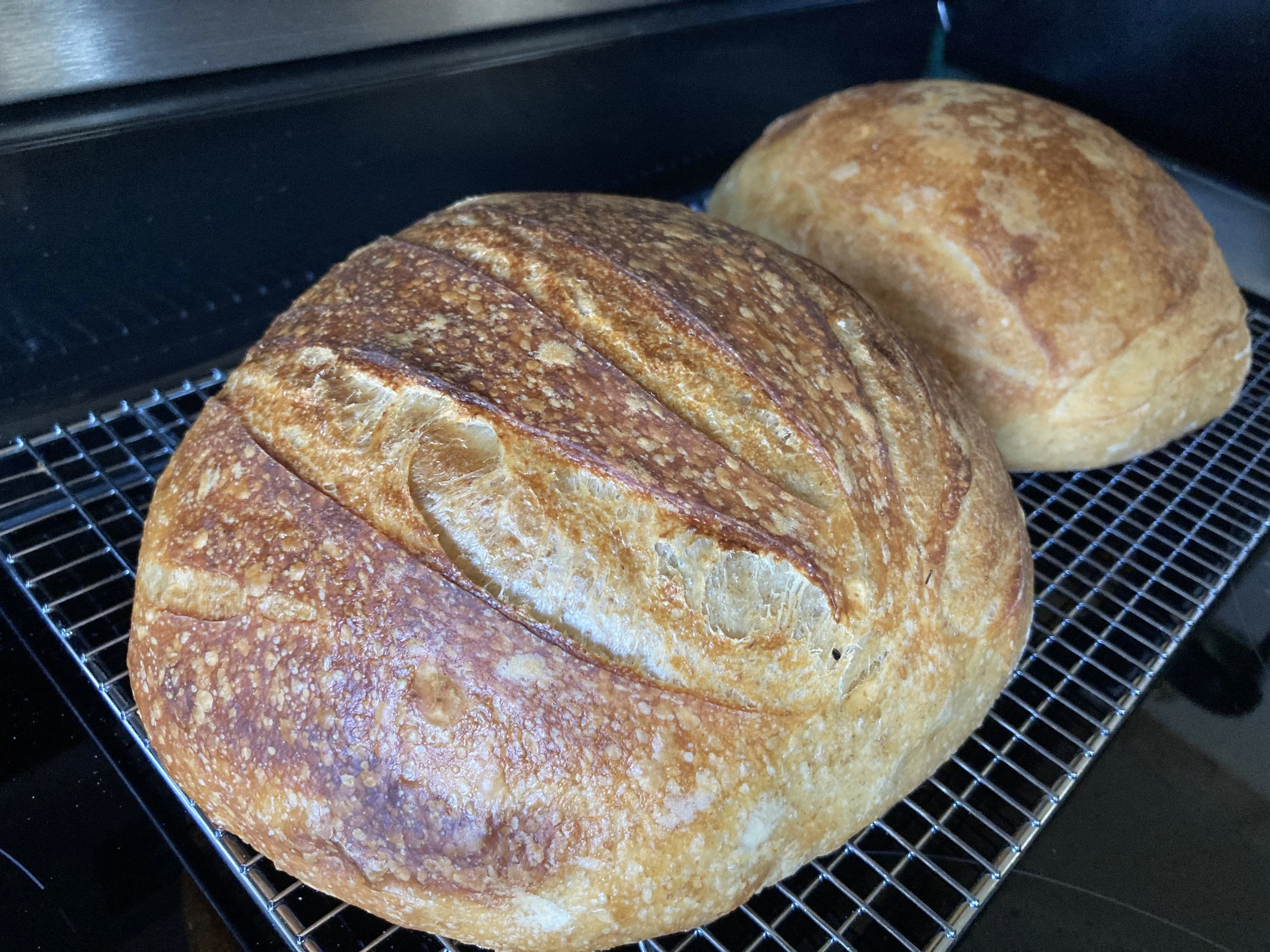
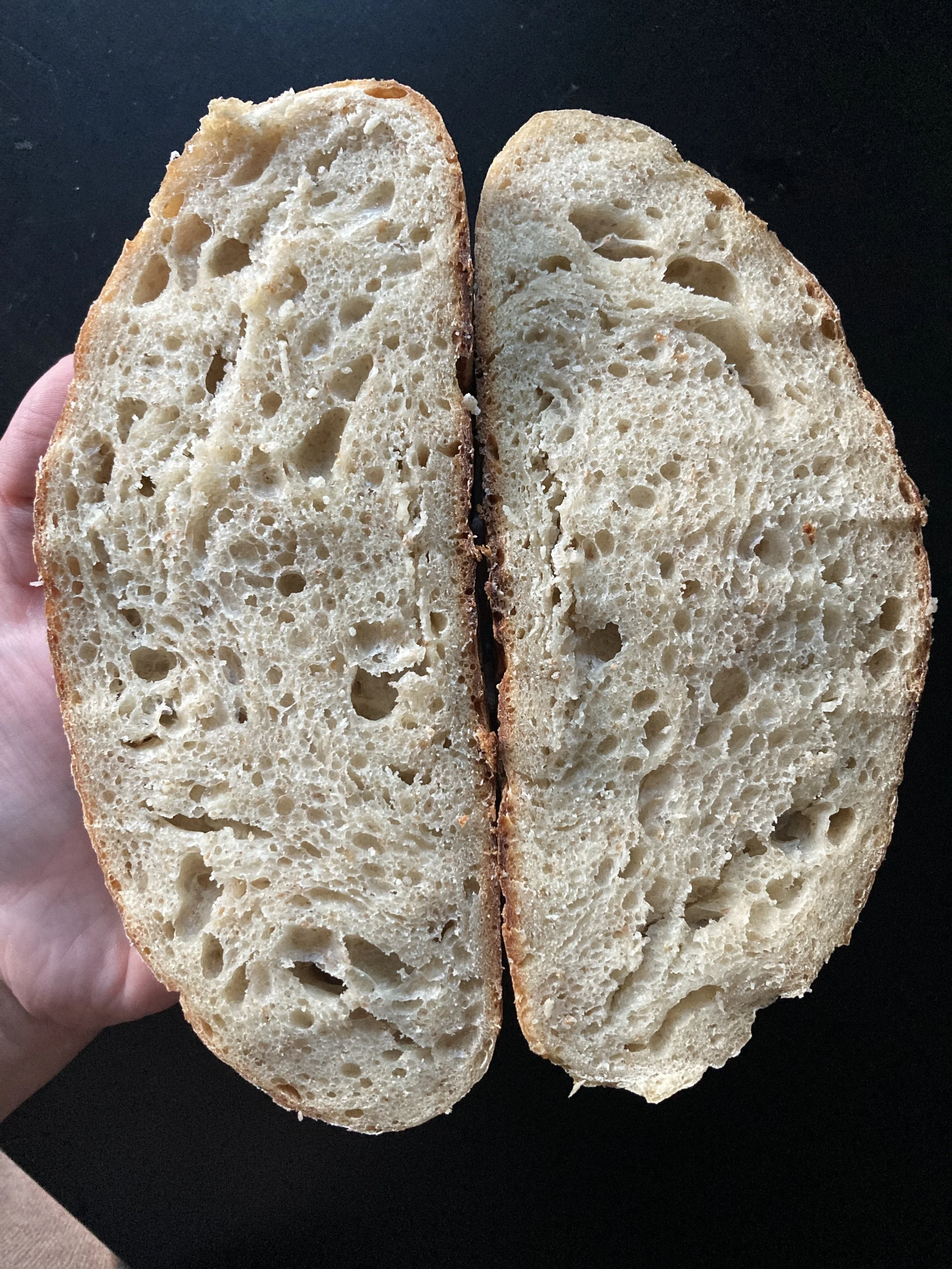
Perhaps this sourdough looks good, but learning to make this bread has been an initiation to a world of “crumb”.

Just as a stylist learns to judge an outfit, I am learning to judge bread texture and study flaws in surface appearance.

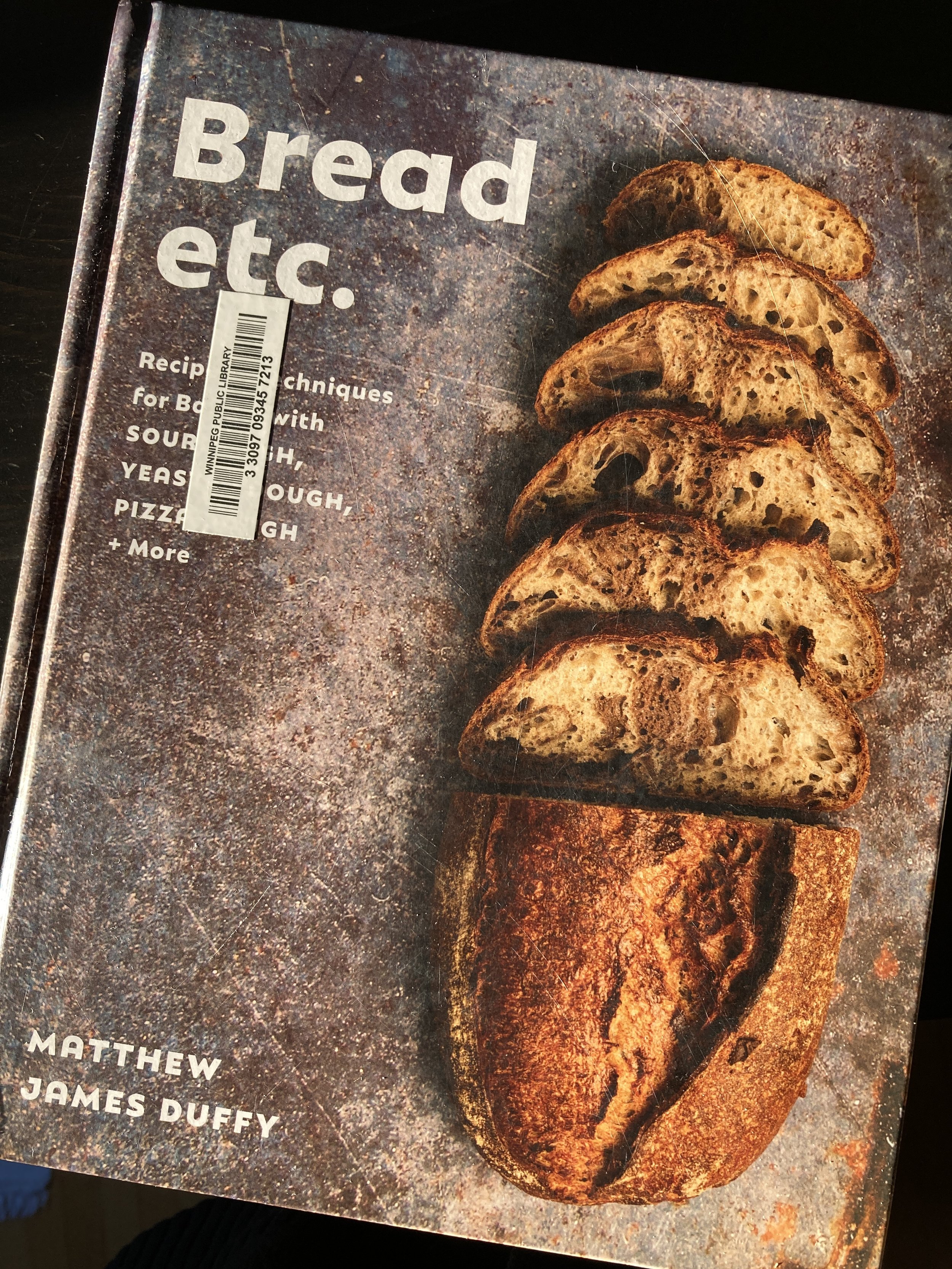
I’d rather get to the successful end of this process before posting the intermediate pictures, open as they could be to the gaze of more successful bakers than myself. Nonetheless… it shows the current preoccupation I have with sourdough. Nothing else I made this week has taken as much space in my head. For this I credit a book by Matthew James Duffy called Bread etc., published last year in Canada. 

When I mentioned adding this book to a Christmas wishlist, my daughter declared that I didn’t need another book about bread. But there’s a strong case to be made for this one… Duffy’s experience, which he unpretentiously details in the introduction, is wide and varied and his interest in bread has a charming nerdiness to it. Perhaps what is best about this book is its combination of excellent writing, Duffy’s teaching background, and the thoughtful organization. For every step of a basic recipe there is a minimum two-page explanation and accompanying pictures. Reading through the first chapters while my kids were at piano, I got excited about making sourdough. So while the beautiful Big Book of Bread launched this adventure, and Hailee Catalano’s sourdough starter recipe helped me overcome my fear of commitment, Matthew Duffy’s book is exactly the friendly teacher I need in order to learn how to improve. 

Enjoying

  • The “What It’s Like To Be…” podcast is back with a second season, debuting this week with a contortionist. I hadn’t expected to learn so much about contortion, nor have someone in their late twenties have such appreciative points of view. About her mother she says: “she did the best she possibly could to give me all the tools to succeed and […] the road after that was […] in my hands, and it was a lot of work for me. But at the same time, without those tools, you have nothing.” And about how her profession shaped her perspective on the world: “for every tiny niche thing out there, there’s someone with a full breadth of knowledge, top to bottom, and it’s their whole world. It’s really fascinating, and it’s awesome to love in a world where there can be so many diverse interests.” (Here) 

  • I’ve been finding motivation to get on the stationary bike for a bit of cardio if I can watch a few episodes of Design Notes on Netflix. In one episode, House and Garden featured shell artist Mel Campion’s house and studio. Her work is fun to look at (her website has a gallery here) and her house tour exhibited an ideal harmony between artist and environment.

A section on bugs…

  • My sister celebrated a birthday last week and in the Venn diagram of our interests, hers, in bugs, is one that doesn’t overlap. Nonetheless, her love of bugs has made me consider them with more respect than I would normally. Should I learn more about isopods? Sure! Why not! While not technically an insect (they are a crustacean!) they fall in the general category of “bug” (“any insect or other small anthropod”) and look how many there are! This picture of an isopod’s shed skin fascinated me (see here). (Via) 

  • In the same vein are amphipods, distinguishing themselves from isopods by the fact that they have two kinds of feet. And I only know about these things thanks to the wonderful Geo Rutherford, who every year in October does “spooky lake month” on TikTok (her webpage here). Lake Baikal makes repeat appearances and among its many peculiarities are the larger-than-normal amphipods. (An article from New Scientist here.)  

  • And this week, the Sidedoor podcast featured an episode on beetles (here)! I already knew that the world contains a lot of beetles (“a quarter of all known animal life on Earth”) having read Candace Savage’s book Prairie (mentioned here and here) which featured a memorable, beetle-related, anecdote. She writes: “Asked what he had learned about the Creator from a lifetime spent studying His works, the Scottish biologist J. B. S. Haldane is said to have quipped, ‘He seems to have an inordinate fondness for beetles.’” (p 231) (Wikipedia relays this quote as well, here.) The podcast was an interesting listen.

Walking the dog

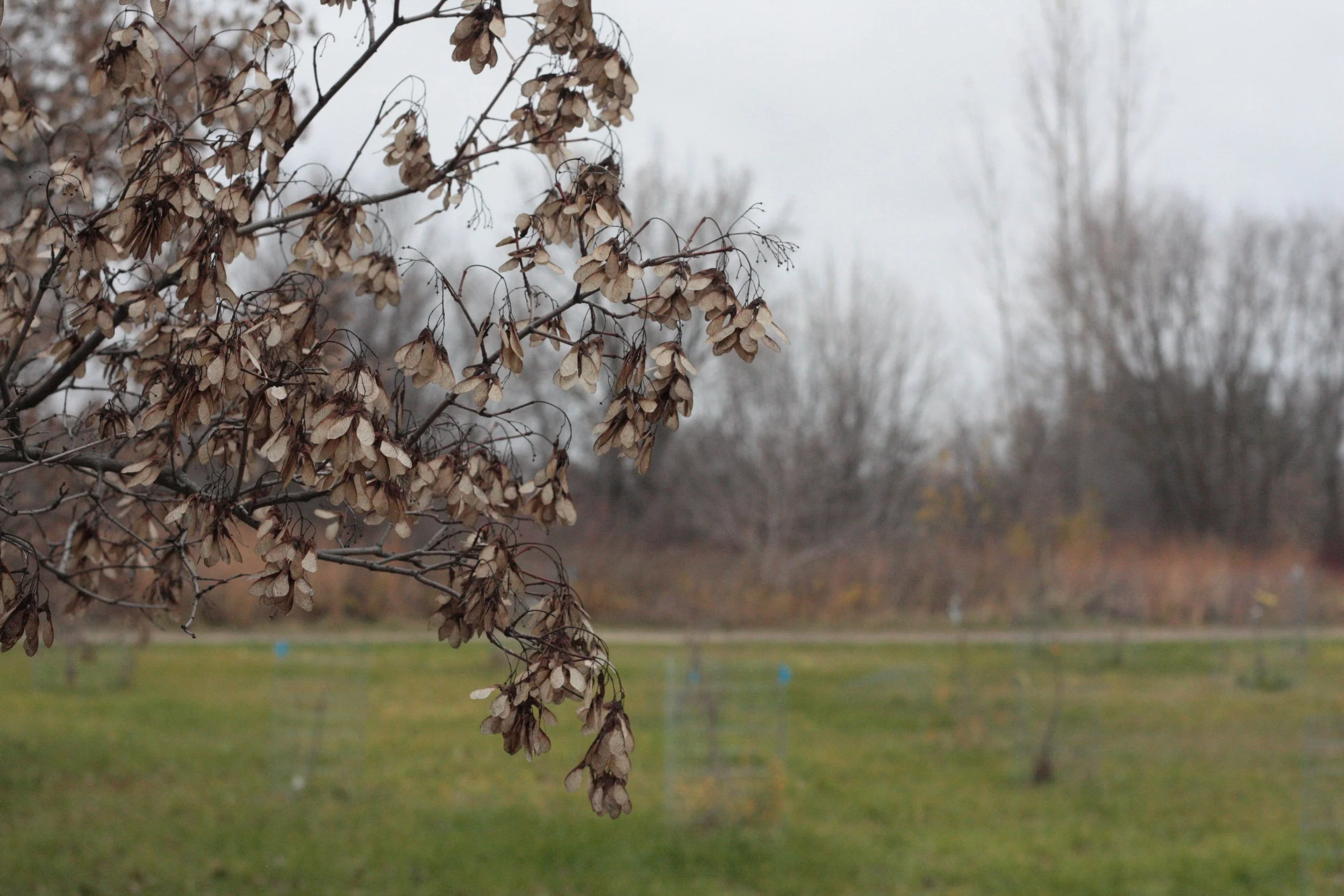
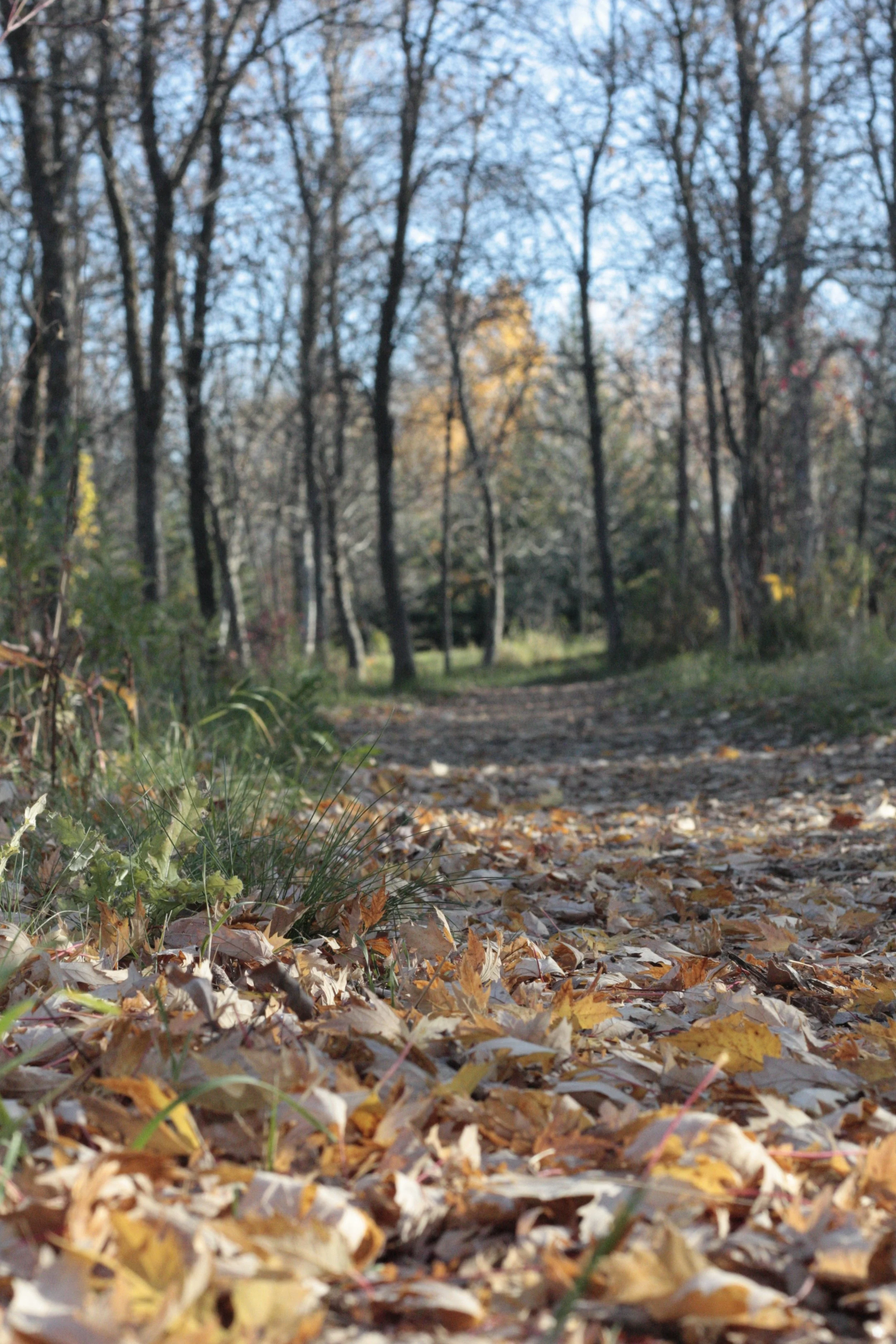
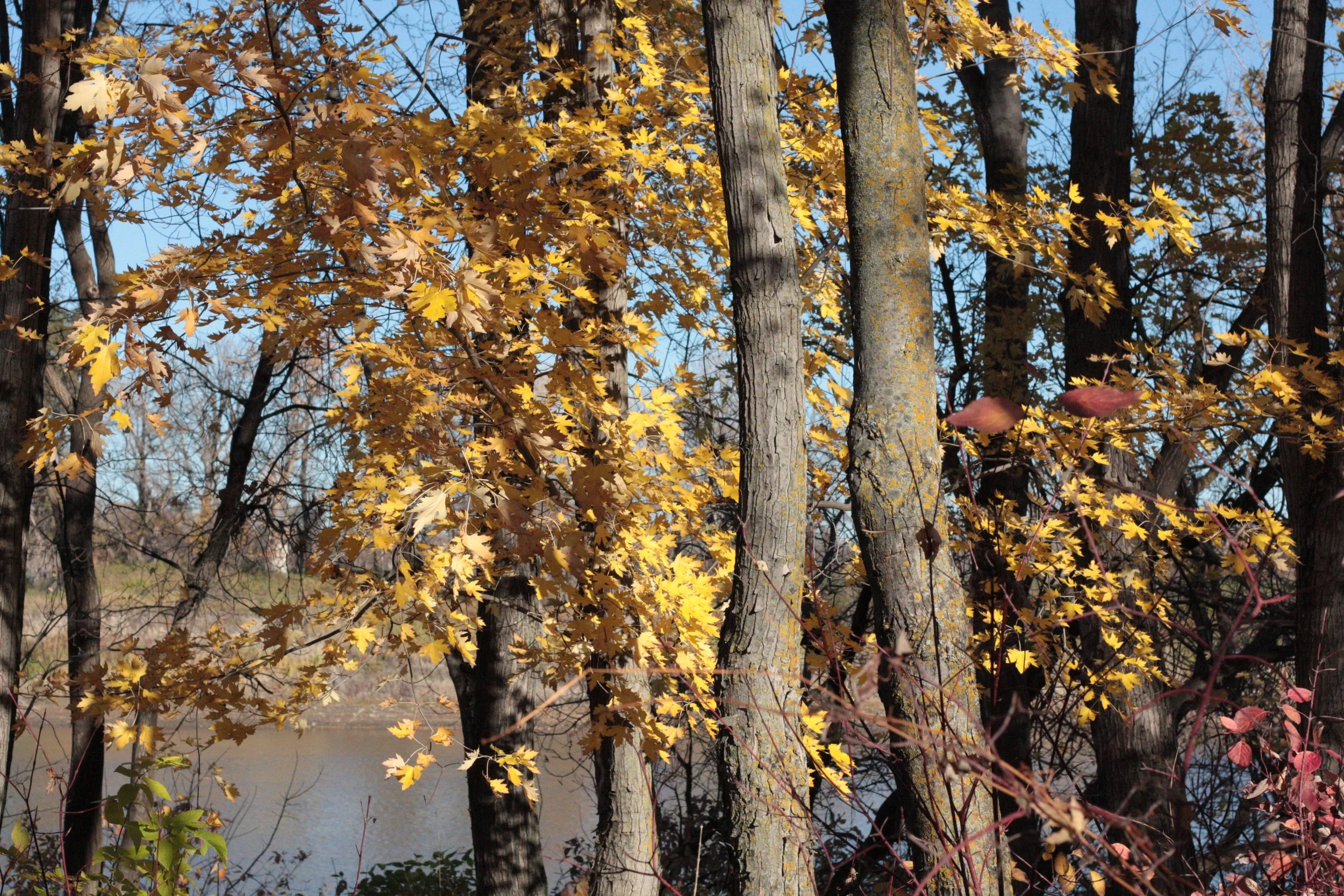
This week, the maple trees are laying a carpet at our feet. 

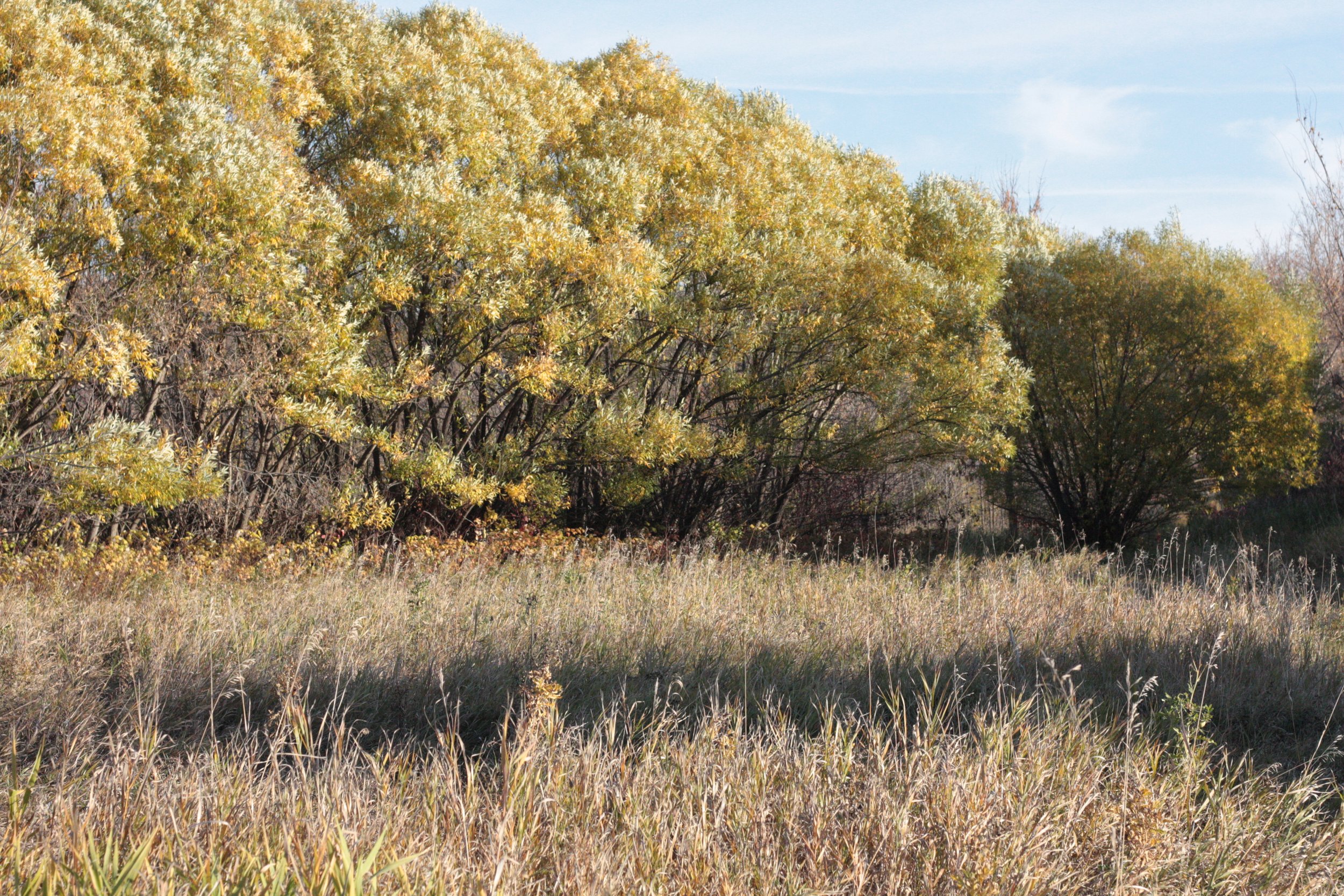
And the line of willow trees look soft from a distance.

Do you think Enzo would make for a good construction worker for Halloween? He’ll stay on the job only so long as the supply of treats doesn’t run out, or an animal make an appearance.

Happy Sunday!

A Week on Sunday 27/52

Welcome! This week, a little photo-essay of the things that keep us smiling and keep us busy as we transition into summer holidays, plus a few quotes from articles from around the web.

Winnipeg has been getting a lot of rain. The skies above it are often filled with painting-worthy clouds and dramatic light. On the way to the pool one evening, I just managed to catch a tiny rainbow.

My mother-in-law moved from a main-floor room with a basement window to a second-floor room with a regular window. I can now wave to her from the parking lot! At the MCC Thrift Store on Chalmers the other week, we found a comptometer like the one she used when she worked at Eaton’s in the 50’s. (Previous mention in 2023.) 

The peonies are blooming and I couldn’t resist taking a picture of a home-made bouquet of them on a desk at Artists Emporium.  

Long daylight hours mean that Christian and I can go on exploratory bike rides in the evening, getting a feel for neighbourhoods that is different from taking a car. When we last explored Warde Avenue’s funny breaks and continuation, the Bonavista neighbourhood was still being built. The difference in atmosphere from our comparatively middle-age neighbourhood is perhaps in part because Bonavista is a master-planned community. (And it feels similar to ones visited in Airdrie, AB!)

Here I present my second sourdough ever… It was better than the first and the family has been spoiling me with encouragement. Keeping natural leaven alive produces discard and I’m now on the third batch of Discard Crackers. Turmeric and black pepper happens to be a very healthy combo and a fairly addictive snack.

For our daughter’s birthday we went to Blufish downtown, where the soy sauce was served in such cute ceramic vases, we mistook the presentation for missing a flower rather than hiding a condiment. 

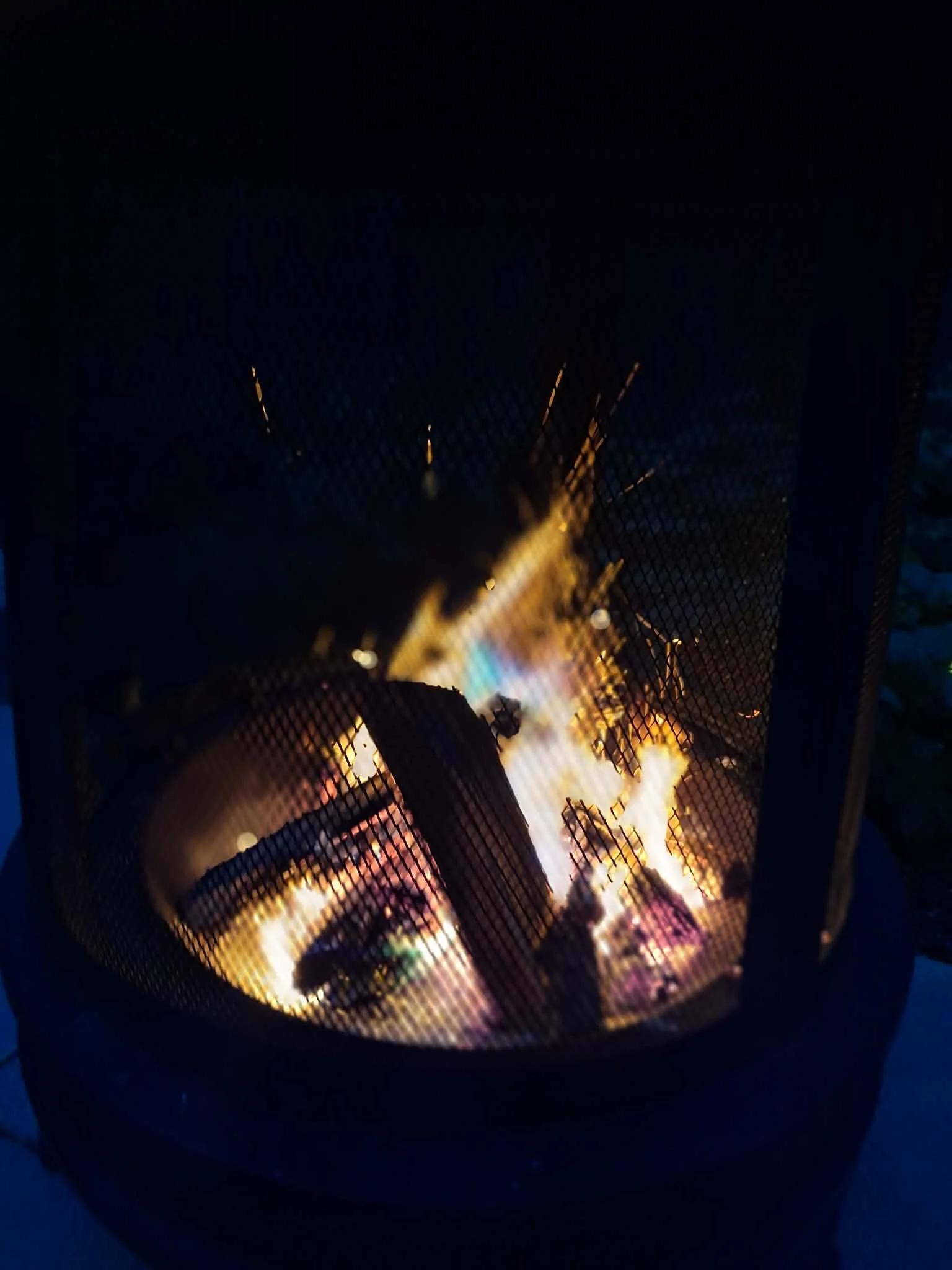
My Mom sent us a packet of Magic Fire and we experienced our first backyard campfire with colourful flames. One packet lasts a surprisingly long time.

Quotes

On the subject of beauty: In a Youtube video about typography and book design, designer Klaus Krogh says: “I think beauty and faith is interlocked. The beauty of the language for prayers, the beauty within, we’re trying to make it show on the outside, and that’s our deepest inspiration.” (Around the 5 minute mark.) 

On the subject of courage: “Courage is an ancient predisposition that has played a protective role on the stress.” Hearing about “the courage response” to stress on a podcast, I was immediately intrigued, and found a scientific paper on the subject. Incidentally, it is common in French to wish a person “bon courage”, whereas in English, we commonly wish people “good luck”. What’s nice about the French expression is that you are recognizing a behavioural approach that implies agency. 

On the subject of negativity: A study linked and excerpted on Marginal Revolution shows how negativity gradually increases over time because negative responses stand out, more than positive responses. “[…] analyses suggest that negativity rises over time because social media users seek to make unique comments on the same topic, and it is easier to differentiate oneself through negative comments than through positive comments. As threads and communities evolve, and it becomes more difficult to make unique observations, users turn to negativity.” This feels true in real life, where the greater effort must be devoted to focusing on what is constructively positive rather than destructively negative.

On the pitfalls of rationalization: In an article titled “You don’t have to swallow frogs” Andrea Pitzer writes, “But the truth for nearly everyone is simpler. You don’t have to turn your back on the big issues, but you also don’t have to import the entire national crisis into your personal one. You just have to think for yourself. Know what tradition you’re aligned with, whether it’s a philosophical one, a religious one, or one that rises out of a particular past oppression—or all of the above. There might even be a group or a school of thought you’re reacting against. If you haven’t thought about these things before, read less daily news and try to find an approach that reflects what matters to you. Having answers to that will do a lot to give you direction.” 

On the subject of human dignity in design: I really liked this article by Sara Hendren titled “Pattern Recognition”. She discusses dignity in relation to design (and includes this definition of what dignity is by Helmut Thielicke: “Dignity is not a possession to be more fairly meted out but a universally contingent relational force […]”) and includes examples of design that incorporates human dignity, from babies to the elderly. Sequestered dementia patients are a fact of the society I live in, but reading about places where that isn’t the case is heartening.

Eating

My friend invited me for an al-fresco lunch in her backyard and made the Jennifer Aniston Salad. It was delicious! 

For a snack table in our garage for our daughter’s outdoor birthday party, I had fun cutting “handles” for the watermelon, an idea I saw here!  

Walking the dog

Here’s a picture to bookend the spring season of walking the dog, now that summer holidays have begun and Christian has taken over the doggy duties!

Happy Sunday!