Quentin Blake - quotes
While visiting my sister, I read through Words and Pictures by Quentin Blake and enjoyed the reflections he made about his career as an illustrator.
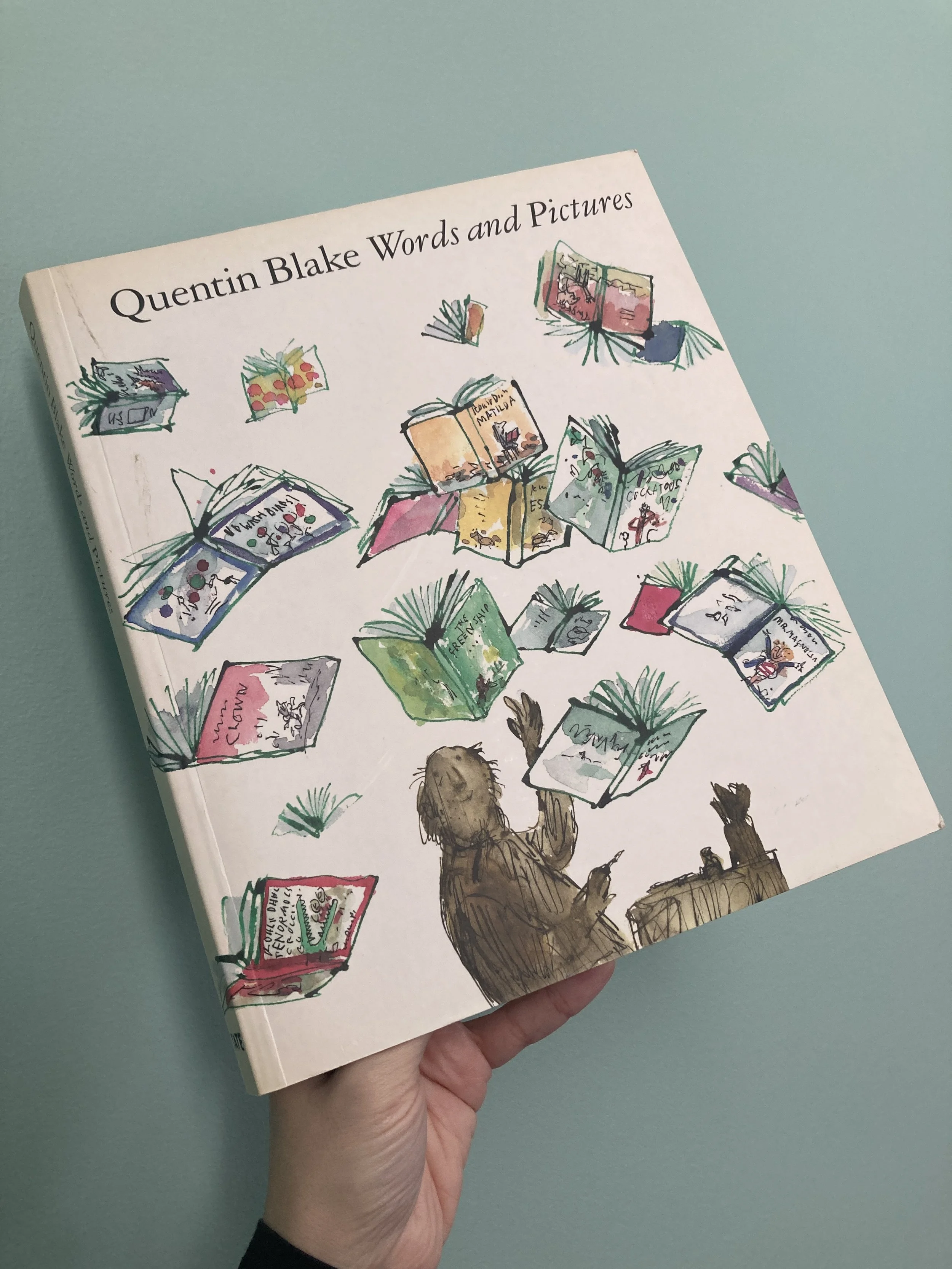
On the transition from being a student to being employed he writes:
Once I had stopped being a student I was no longer restricted to submitting cartoons to magazines; on the basis of my printed work I could go and look for other work which might extend my range and offer me new problems to think about. (Emphasis mine.)
What an open-minded way of thinking about work! He also writes about his quest to improve his life drawing skills:
Extending my range made me all the more conscious of my lack of experience of life drawing - I just didn’t have enough knowledge to draw the things I needed to draw. […] He [Brian Robb] sounded like the sort of person who could give me the advice I needed; and so he was. It’s strange how sometimes one has the instinct to do the right thing; something that will go on having an effect throughout your life.” … “He [Brian Robb] introduced me to one of the Chelsea life-classes. I attended one or two days a week for about eighteen months. […] Many students attended because it was a duty; by contrast I was there to get some useful element in my diet that had hitherto been lacking.
About the tension between seeing and imagining, he writes:
In front of the model and away from the model I was trying to establish some kind of balance between seeing and imagining; so much of the essence of drawing is in imagining what you are drawing, of trying to feel the balance, the gesture; of trying to become the subject.
His daily routine is simple. He goes to his studio and notes:
I’m not, in fact, quite sure what inspiration is, but I’m sure that if it is going to turn up, my having started work is the precondition of its arrival.
I really enjoyed his description of teaching himself to draw like a child for one of his illustration contracts…
My most extreme example of adaptation, and quite different, is Monsters by Russel Hoban, which deals with the drawing of a boy who likes drawing monsters. It seemed to me that it wasn’t enough simply to look over the shoulder of the boy to see him drawing. I thought I actually ought to do the drawings myself; and so I had to learn once again how to do children’s drawings. / I thought at first that I could do it by drawing with my left hand; but that gave me too little control. I had to practise having the desire to depict something, but at the same time to forego manipulative skill. I was also reminded that for children drawing a picture is an activity that exists in time - a happening - and as I tried for that I was soon close to making the noises that they make when they draw. […] it was fascinating to find my way back to the kind of drawing that you do when you are small. (p. 95)
He concludes the book with the same tone found throughout its pages… a gentle enjoyment and sincere appreciation for the craft to which he dedicated his life:
If I look back over the picture books of recent years - my own and the diversity of the works of others, both veterans and newcomers - I think I can see the prospects for the picture book open out and become more various; not merely in technique, but in the way that is has split open its nursery constraints and is now available for contemplation and discussion well beyond the nursery ages. […] What I hope it has is those pleasures of being and doing, which make up a lot of life and which adults and children can share, celebrated in drawing; which is one of the specialties of that ever-interesting activity. (p. 203)
On the subject of morality
The OED defines morality as “Conformity of an idea, practice, etc., to moral law; moral goodness or rightness.” And: “The quality or fact of being morally right or wrong; the goodness or badness of an action.” It’s the only word that comes to mind that embraces a variety of quotations I’ve noticed from different sources… (Emphasis mine in each example.) Take Craig Mod’s recent newsletter. He concludes:
I’m not actually a Doomer around AI — don’t worry, I think we’ll be working more than ever, sometimes more interestingly, but mostly, perhaps, more depressingly. What’s special about this moment is there is something existential in the air, and that makes us open to reflection and change. I really do believe the denuding of purpose and meaning is coming for many, many jobs (coding being the first). But I also think we’ve long ascribed meaning to the wrong activities. So it’s a good time to start meditating, to spend a few afternoons talking about what you’re doing, why you’re doing it, and maybe what you’d rather be doing.
On Debbie Millman’s podcast, Design Matters, Timothy Snyder is describing something he appreciated through reading the book A Wrinkle in Time:
And then in the instance you’re talking about, the only way to reach someone is by way of love. But it is so important because one way our kind of authoritarianism works is to laugh at things like empathy and to laugh at things like love and to try to bully us out of believing that anything is good. And that’s very dangerous because when you accept that you can’t love or you can’t feel empathetic, then you’re accepting that nothing is really good. And when you accept that nothing is really good, then you’re on the terrain of the nihilists and the nihilists have much more wealth and much more power than you do. It’s a little bit the same with knowledge, like factual knowledge.
One in a series of videos, “Last Ice Age” by Adam Often and Emmanuel Vaughan-Lee, features Andri Snær Magnason, who (approximately 13 minutes in) reflects:
So in Iceland, we had engineers, and they always claimed that a glacial river was running for nothing, because it was not going to a dam, it was not producing electricity. While more advanced modern biology was telling us that the river, the ocean and the glacier were connected, in a way that the glacier was actually feeding marine life with these muddy waters. We pretended that we understood. We pretended that we had everything under control. While maybe in the older traditions, they had to address things with humility, which we have not done.
Finally, in reaction to a recent article by Cal Newport titled “There’s a Good Reason You Can’t Concentrate” Alan Jacobs linked to a blog post he wrote two years ago, from which, the following quote:
Those of us who care about the future of our children, our neighbors, and ourselves don’t need to repeat what everyone already knows. We need to devote our full attention to one question and one question only: How do we love rightly and teach others to love rightly? If that’s not our constant meditation, we’re wasting our time. If we cannot redirect our desires towards better things than Silicon Valley, AKA Vanity Fair, sells, then nothing, literally nothing, will get better.
And so, while it feels like there’s a tearing apart of structures, or a crumbling-from-within of them, seeing evidence of an urge towards finding moral goodness is something I find uplifting.
While in Calgary
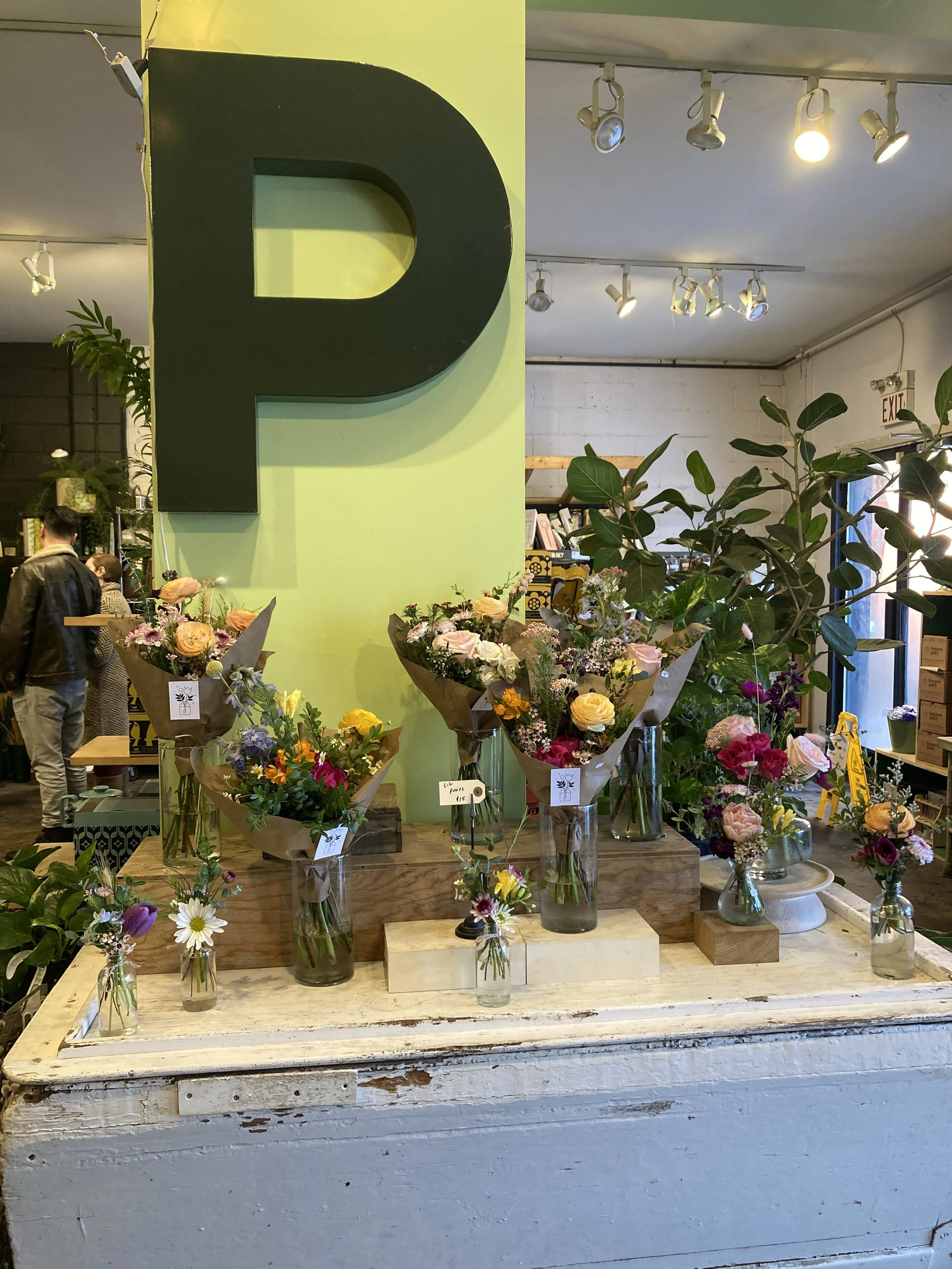
In lieu of postcards, I thought I’d share a few pictures of a walk down 9th Avenue SE in Calgary. First, there was the plant store, called Plant.
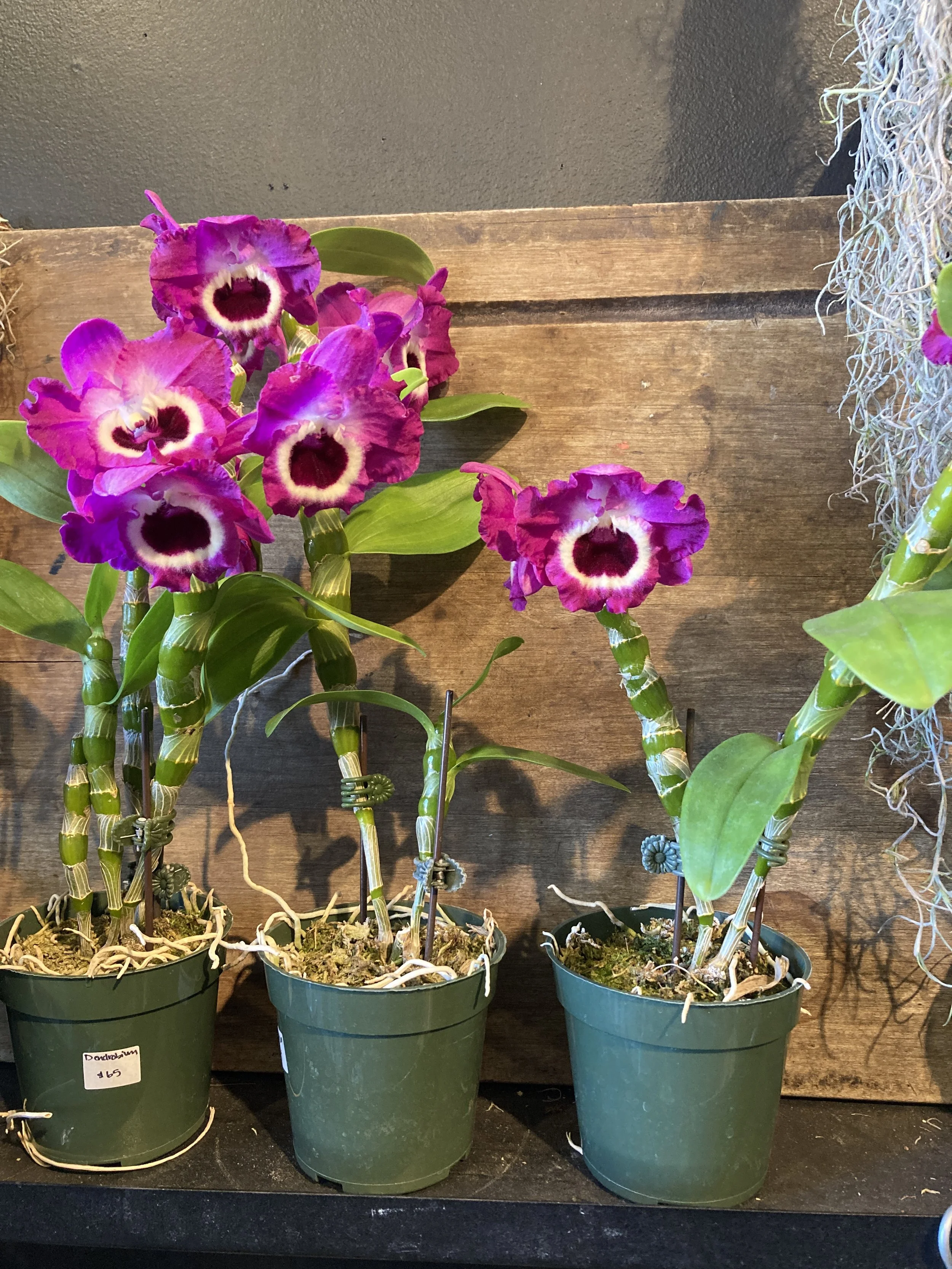
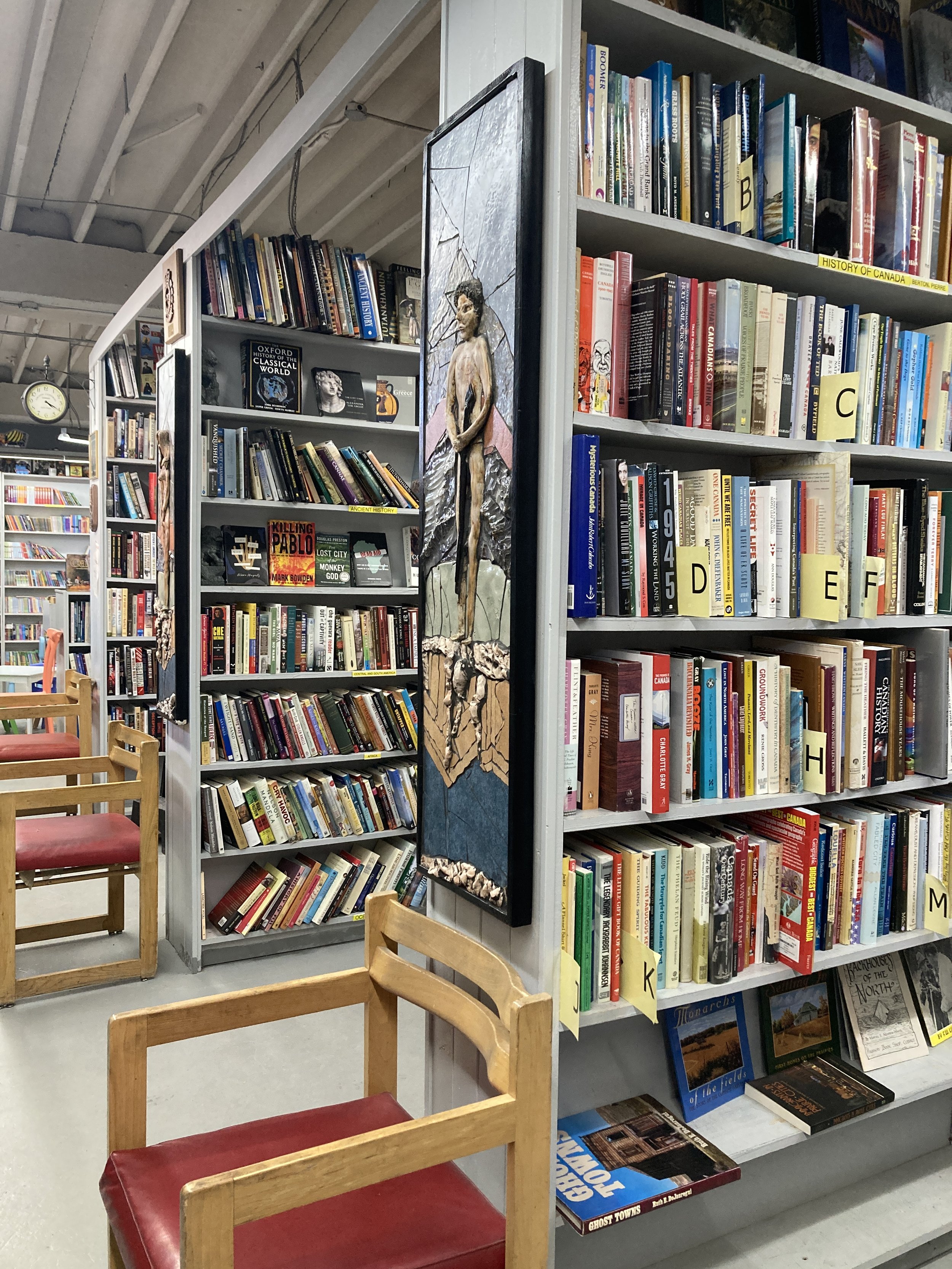
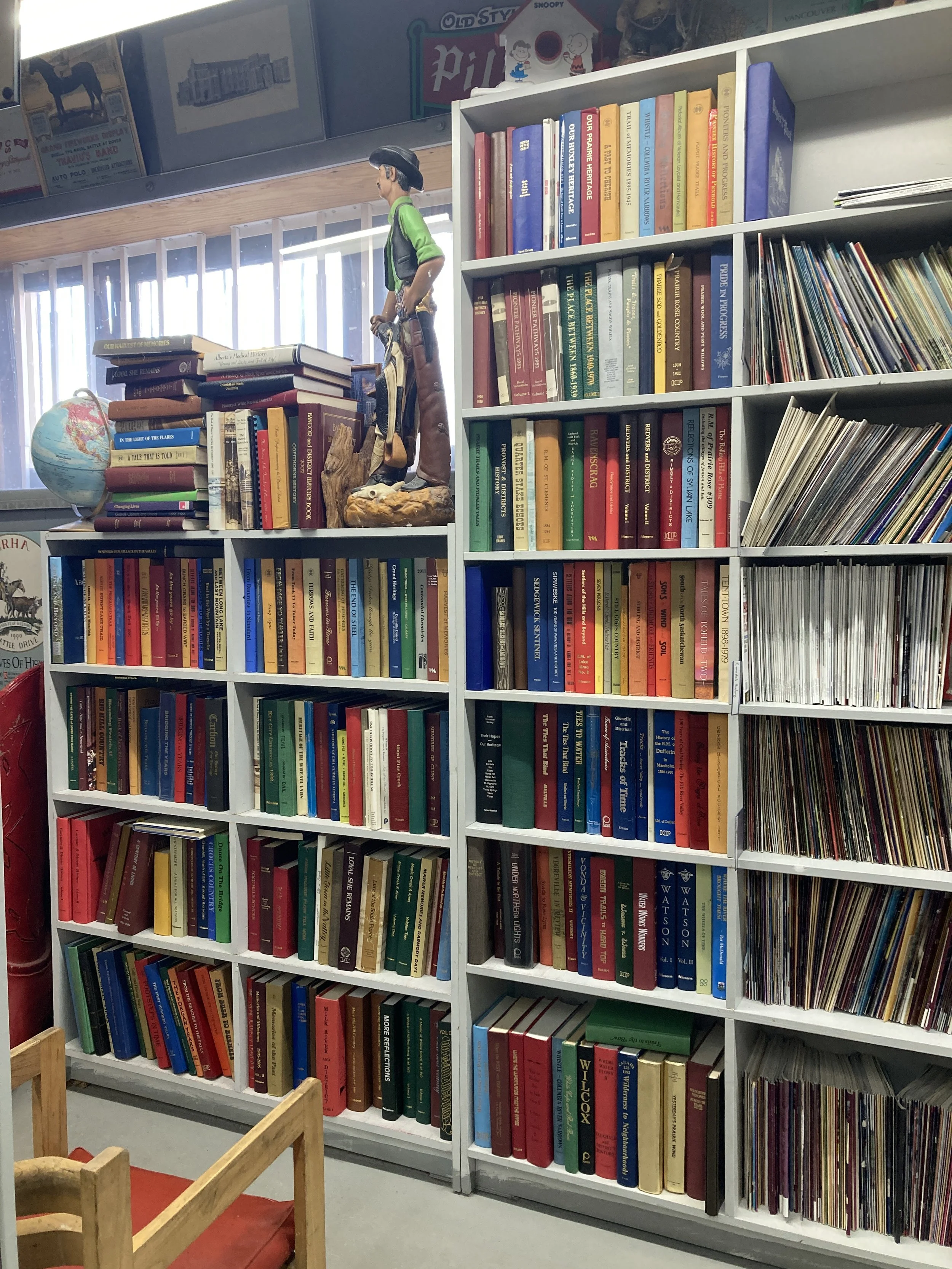
Eventually, we made our way to Fair’s Fair Books, a bustling second-hand bookstore that we spent most of our time in…
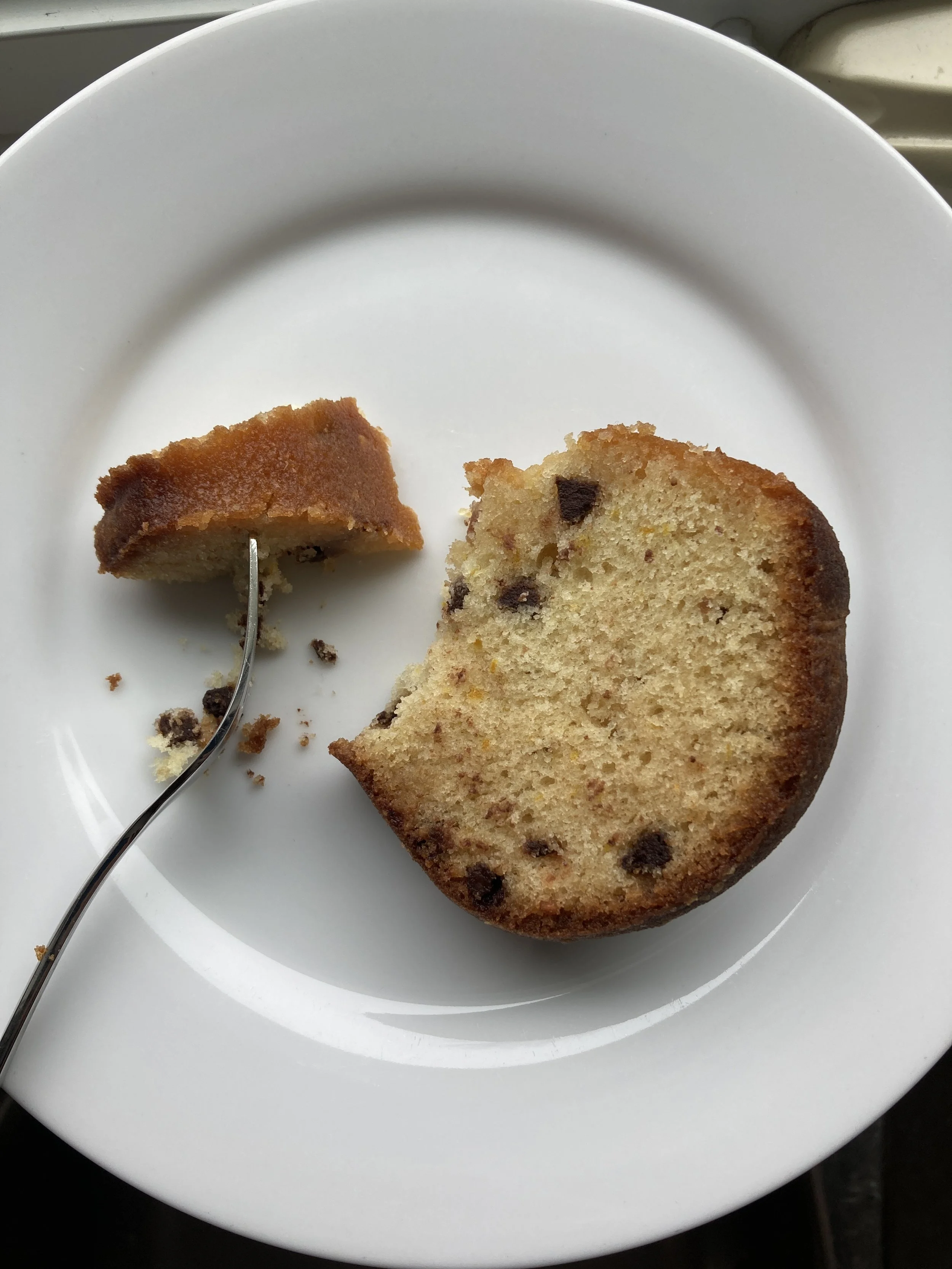
I picked up a copy of The Cake Bible by Rose Levy Beranbaum. I remember having read, years ago, of a man who decided to bake cakes from her book for his office, and who felt enriched in the process. When I came home, I made Golden Grand Marnier Cake and it felt like I’d performed a magic trick - from a book, something light and pillowy and delicious.
Enjoying
There’s a strip mall in our neighbourhood that has this sign… The typography of “Dakota Park”, the pleasing way it’s centered, the colours - red, beige, and brown - that still haven’t noticeably faded, all these elements make it one of my favourite business signs.

Two podcast series I listened through: Catching the Codfather and The Idiot. I particularly liked how Ian Coss describes how the story of the “Codfather” changed for him, from being unimportant, to illustrating much bigger themes.
When I first heard about the case of Carlos Rafael, it sounded like an intriguing but kind of small story. I looked into it, I interviewed Carlos, and then I put it aside. For all the big talk, this is not the fraud of the century. […] The Codfather was a colourful character in a colourful world that has nothing to do with most people’s daily lives. That was the conclusion I came to.
But then…, as he narrates it:
If you are someone who believes in expertise, who believes in science, who believes in procedure and rules and regulation as a force to make the world more just, then you should also look long and close at the friction points where those things actually touch people’s lives. (From episode 6.)
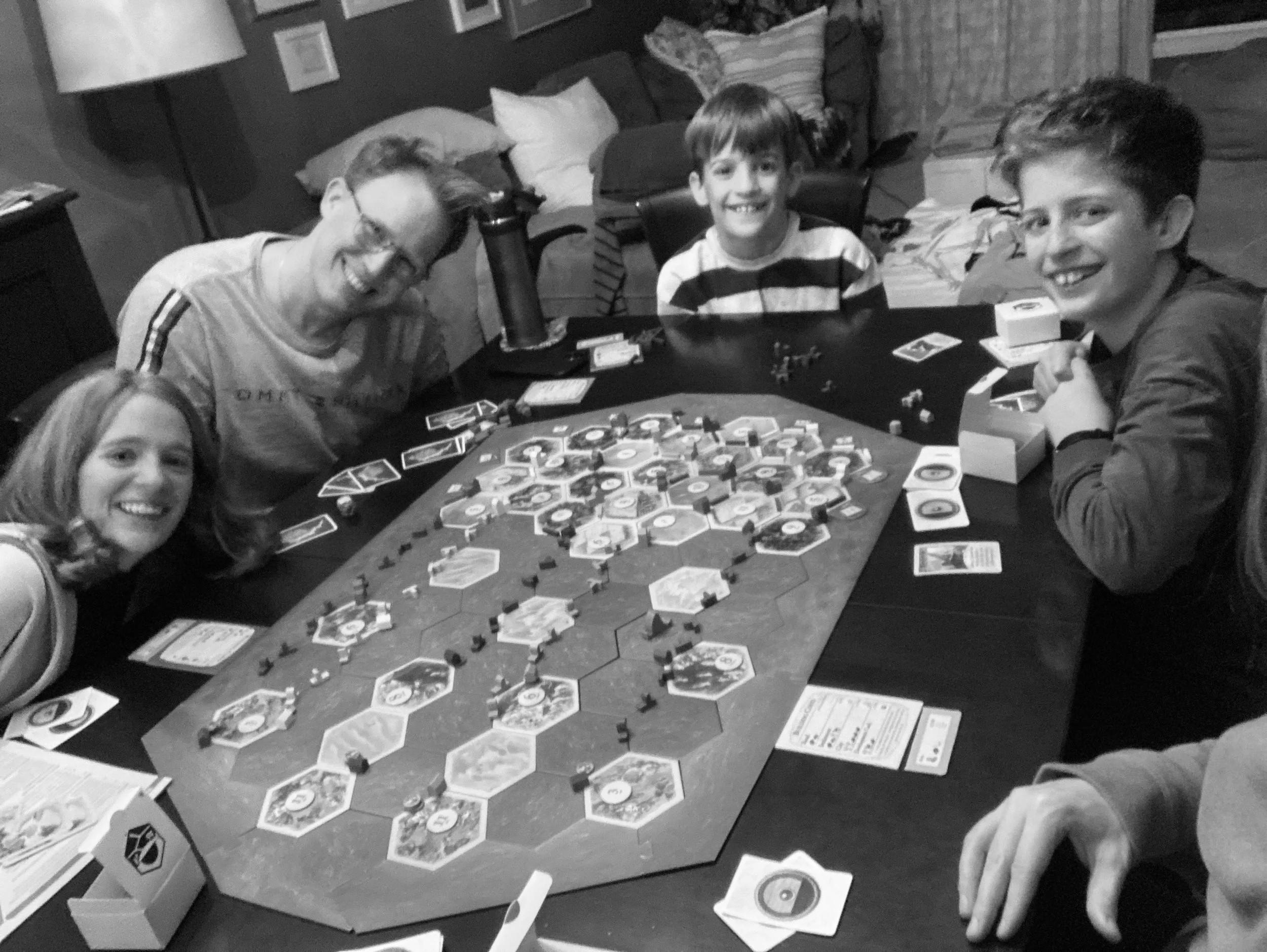
Also… playing elaborate games of Catan! In this setup we battled pirates and points were close!
Happy Sunday!